Dr. Worry’s verdict: Treat the announced €27,995 starting price for the Volkswagen ID. Cross as a theoretical floor that will not be accessible to early adopters or those needing immediate delivery in Germany and select European markets. The vehicle currently available for order starts at significantly higher prices with larger battery packs. Do not base your purchase decision on press-release figures alone; calculate total cost against used rivals like the Renault 4, Skoda Epiq, or depreciated ID.3 models before signing an order sheet.
Quick Takeaways
- The Price Gap: The base Trend trim (€27,995) is not yet in production for immediate delivery; current orders are for the 155-kW Life and Style versions starting at €36,525.
- Battery Reality: You must choose between a city-only 37-kWh pack (up to 343 km WLTP) or a highway-capable 52-kWh pack. The smaller battery saves upfront cost but creates range anxiety outside urban centers.
- The Platform Advantage: Unlike the T-Cross, this is dedicated MEB+ architecture with no ICE heritage compromises, offering superior packaging and front trunk utility (25 liters).
The factual baseline for this guide comes from the primary official or regulatory source and independent automotive reporting. I use those published details as inputs; the buyer and ownership judgment is my own.
What Changed: The Context of Launch Prices
Volkswagen launched advance sales on July 15, 2026. While the press release highlights a future Trend specification starting at €27,995 with an 85-kW motor and 37 kWh battery, this configuration is not currently orderable in Germany.
The first available versions are the 155-kW Life and Style trims equipped with the larger 52-kWh battery. These start at €36,525. A middle-ground 99-kW power level is also planned but remains undefined for immediate purchase. This creates an initial price gap of approximately €8,530 compared to the headline figure.
This discrepancy changes the value conversation entirely. The “cheap Volkswagen EV” narrative relies on a version that does not exist yet. Buyers must decide whether the equipment and range of the currently available 155-kW model fit their routine better than a larger used EV or a similarly priced new rival like the Kia EV3, which offers an established compact-EV buying case.
Options can erase any small-EV advantage quickly. Features such as Matrix lights, adaptive DCC suspension, massage seats, a panoramic roof, remote parking via Android devices, and premium audio systems move the ID. Cross away from simple transport toward luxury pricing. My preference is the larger battery with restrained equipment, provided the price remains below that of a meaningfully roomier alternative.
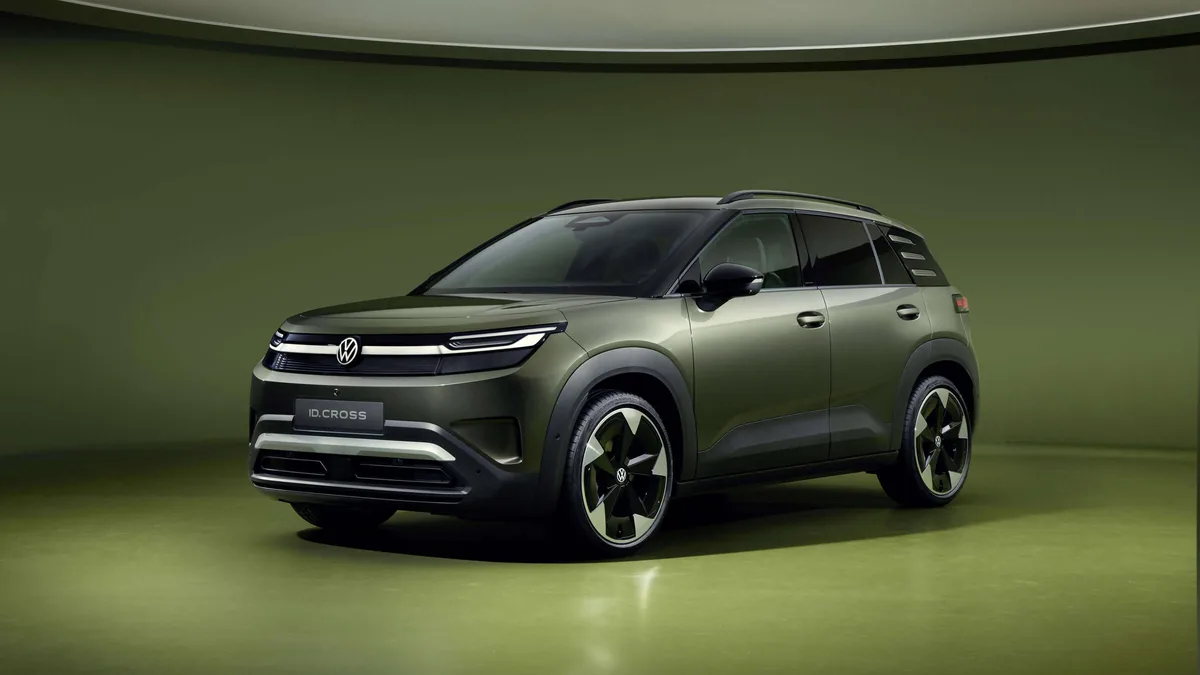
While Volkswagen has introduced its new “Pure Positive” design language featuring cleaner lines and light bars at both ends to combat aging aesthetics, buyers must verify if this styling premium justifies the cost over competitors like the Renault 4 or Skoda Epiq. The ID. Cross slots neatly into Europe’s subcompact segment with dimensions of 163.5 inches (4153 mm) long and a wheelbase stretched to 2601 mm, offering extra cabin space compared to conventionally powered counterparts.
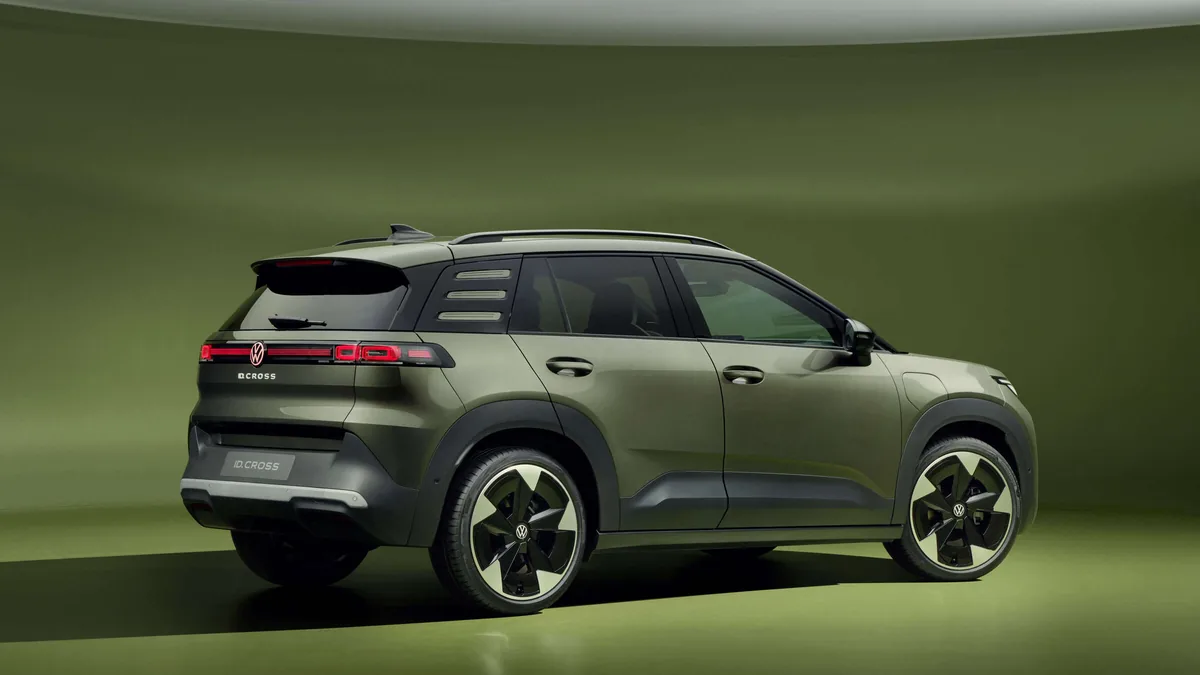
Choose the Battery From Your Worst Normal Week
This section addresses the most critical technical decision: selecting between the 37-kWh and 52-kWh packs. The manufacturer quotes up to 343 km WLTP for the smaller pack, while the 52-kWh version reaches up to 427 km.
These are laboratory figures that rarely reflect reality. Highway speed, rain, cold weather, heat, passengers, and air-conditioning reduce available distance before a sensible reserve is needed. I would map your longest trip made twice a month, not the shortest commute you make every day.
If that route leaves the 37-kWh car dependent on one unreliable public charger or requires frequent stops to maintain range, the larger battery is worth paying for immediately. If the car sleeps beside a home charger and rarely leaves the city limits of your daily life, carrying extra weight may not be necessary.
For those considering this vehicle in Southeast Asia (Vietnam, Thailand, Singapore), note that official specifications are currently unconfirmed for these regions. A grey import could lose the value proposition through tax, shipping, charging-standard differences, app restrictions, and weak battery-service support. My rule is simple: wait for an authorized local plan.
Confirm connector types (CCS2 vs others), navigation compatibility with your specific phone OS, connected services availability, high-voltage warranty terms, and parts supply chains before importing a modest European city EV that could become stranded by software faults or damaged charge-port doors.
Charging Speed: Adequate, Not Class-Leading
The charging architecture is functional but not revolutionary in this segment. The 37-kWh pack accepts up to 90 kW DC and Volkswagen states that filling from 10% to 80% takes about 23 minutes.
The larger 52-kWh version peaks at 105 kW, requiring roughly the same time (about 24 minutes) for the same charge window. Those times are useful because a smaller battery can finish quickly without posting a huge peak number that might not match your local infrastructure capabilities.
What matters is repeatability and preconditioning strategy. I would test charger handshake, curve consistency on a warm battery, and AC charging speeds (both support 11-kW). A full overnight recharge via wall box is a calmer ownership plan than chasing the headline DC numbers when you are in an apartment complex with limited parking.
For long-term owners of similar vehicles like the Tesla Model Y After 87,000 Miles: My Battery and Charging Check demonstrates that degradation curves matter more than initial charging speed. Ensure your specific charger reliability is verified before committing to a vehicle dependent on it for daily life.
The Practical Details Are The Strongest Argument
Volkswagen lists 475 litres behind the rear seats plus 25 litres under the bonnet (frunk). This front trunk space holds up to 0.9 cubic feet, useful for charging cables or groceries.
More than many small crossovers that leave their charging cable loose in the main boot due to lack of storage, this layout is practical. The 52-kWh version can tow up to 1,200 kg and supports vehicle-to-load (V2L) at up to 3.6 kW.
That output can run camping equipment or charge an e-bike while parked in the shade of a tree—a feature that distinguishes it from older EVs lacking V2L capabilities. However, I would still bring child seats, a stroller, and normal luggage to the showroom test drive. A large boot figure does not prove rear legroom, door access, or roof height work for your specific family configuration.
Front-wheel drive helps packaging and predictable efficiency in this compact format. Buyers wanting all-wheel traction need a different car; do not expect 4MOTION on the base ID. Cross unless explicitly offered as an option later.
Software, Options, And The “True Volkswagen” Strategy
The new Connected Travel Assist can respond to traffic lights within its operating limits, while Park Assist Pro handles remote parking through a phone app. However, I would not pay for the premium audio or luxury options until my own phone completes these maneuvers reliably.
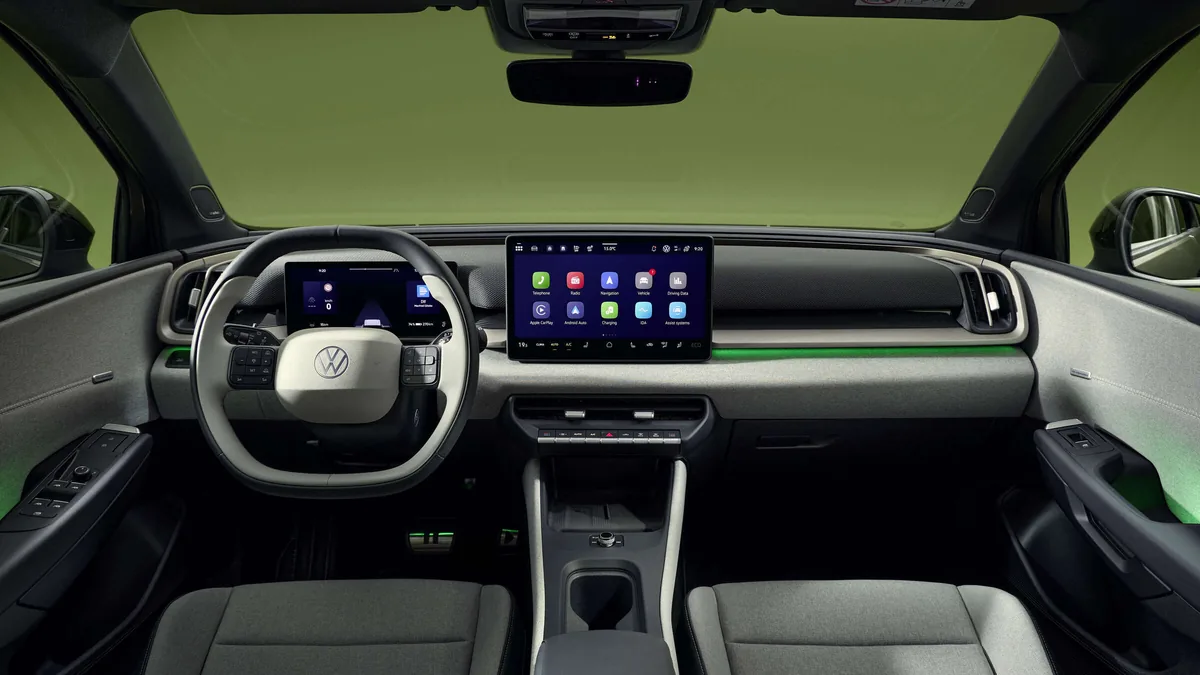
One-pedal driving is standard and useful in stop-and-go city traffic. The ID. Cross also brings back tactile details around audio controls—a direct response to criticism of earlier ID cabins where touch-only interfaces caused distraction issues while moving safely.
The interior mixes a 10.25-inch driver display with a 12.9-inch central screen paired by physical buttons for climate and volume, an encouraging return to form that reduces cognitive load during navigation tasks.
Direct Alternatives And Market Comparisons
The Kia EV3 offers a more established compact-EV buying case in many markets and may deliver comparable range depending on trim. Our Kia EV3 buyer check explains the service, charging questions, and warranty differences.
The Volkswagen also competes with the Renault 4 (which has a maximum range of roughly 278 miles in some markets), Skoda Epiq, and used larger EVs whose depreciation can make them tempting financial alternatives. Brand familiarity is valuable but cannot compensate for a small battery at the wrong price.
For those interested in Volkswagen’s broader electric lineup beyond this subcompact SUV, consider how it fits into your future plans alongside other models like the 2027 Volkswagen ID. Buzz Tourer, which offers a different utility proposition for those needing camper charm and charging reality checks.
How I Would Compare It: The Checklist
To make an informed decision, do not rely on marketing brochures alone. Use your own phone to test remote parking functions before ordering. Write down the real price of the battery and trim you can actually order today in your specific region.
- Calculate Range: Calculate range with a 20-percent reserve on your longest regular route, not the WLTP maximum.
- Test Charging: Test a public DC session and map your home-charging schedule against grid availability.
- Tire Costs: Check tire prices before choosing large wheels; 17-inch is standard on base models to save weight and cost.
- Warranty & Subscriptions: Confirm heat pump, battery warranty terms (often limited for grey imports), and connected-service subscription costs which can add up over five years.
Frequently Asked Questions
Is the Volkswagen ID. Cross really €27,995?
No, not yet in Germany or most European markets at launch. That is the announced starting price for the later 85-kW Trend with a 37-kWh battery which follows initial sales of more expensive Life and Style versions.
Which battery would I buy?
I would choose the larger 52 kWh pack if you do regular highway travel or live in areas without reliable home charging. The 37 kWh is only for buyers with a guaranteed wall box at home who mostly stay within city limits.
Is 105-kW charging too slow?
Not necessarily. Volkswagen quotes roughly 24 minutes from 10 to 80 percent, but I would verify the real curve and charger reliability before buying. AC charging at 11 kW is often more useful for overnight home top-ups.
Does it have all-wheel drive?
The base model uses front-wheel drive on the MEB+ platform to maximize range and packaging efficiency. All-wheel traction options are not standard in the initial launch configuration described here.
Can I tow with this car?
Yes, specifically the 52-kWh version supports towing up to 1,200 kg (approx. 2,645 lbs). This is a significant capability for its class compared to many rivals.
Dr. Worry’s Final Recommendation
I would shortlist the ID. Cross because it combines sensible size, useful storage including that front trunk, and an attainable base price once production ramps up. However, I would not order from the headline €27,995 figure alone.
The best version should be the 52-kWh car without luxury-option inflation; keep equipment restrained to preserve value for resale or lease return scenarios if needed. The cheapest version works only for buyers whose charging routine makes its smaller battery an advantage rather than a limitation.
Wait for authorized local plans in Southeast Asia before importing grey units that may suffer from app restrictions and lack of service support. If you need immediate transport, compare the current €36k+ ID. Cross against used rivals or wait for the Trend trim availability if your budget strictly requires it under €28k.
Remember: a modest European city EV becomes a poor bargain if a damaged charge-port door or software fault leaves you parked for months without support. Verify warranty and parts supply before signing any order sheet that promises features not yet available in the market where you live.