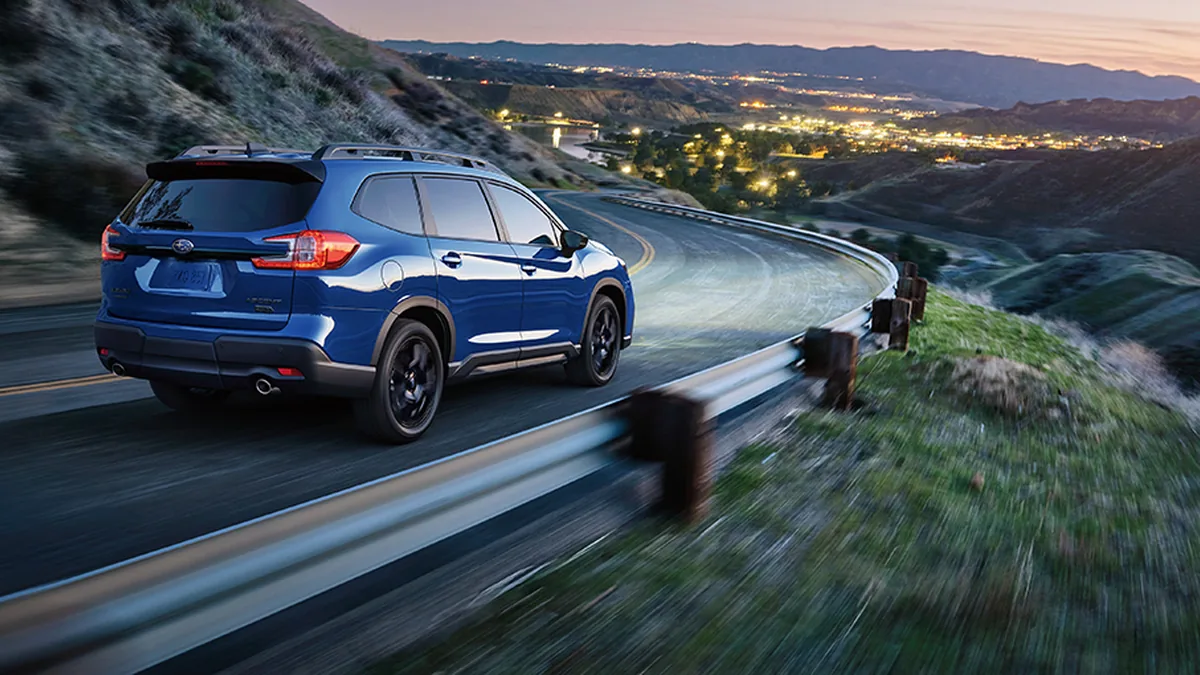
Dr. Worry’s verdict: the 2027 Subaru Ascent is not exciting, but that may be exactly the point. It is a practical three-row SUV for families who want standard all-wheel drive, decent towing ability, a familiar turbo Boxer engine, and small convenience updates rather than a risky full redesign.
The mistake would be treating the Ascent like a simple “has three rows, therefore family car” purchase. A three-row SUV lives or dies by messy details: child-seat access, third-row comfort, cargo space with all seats up, charging ports, visibility, fuel economy, and whether the trim price still makes sense against newer rivals.
Quick Takeaways
- Starting price: Subaru announced the 2027 Ascent from $40,795 MSRP before destination; Cars.com lists $42,290 including the $1,495 destination fee.
- Layout: the Premium trim can be configured for seven or eight passengers.
- Powertrain: 260-hp 2.4-liter turbo Boxer, CVT, standard all-wheel drive, and up to 5,000 pounds of towing capability.
- Best update: more USB-C access, including near the third row, because real families always run out of charging ports.
- Main caution: the 2027 Ascent is a mild update, so compare it carefully against newer three-row SUVs before paying upper-trim money.
The 2027 Ascent Is a Small-Update SUV
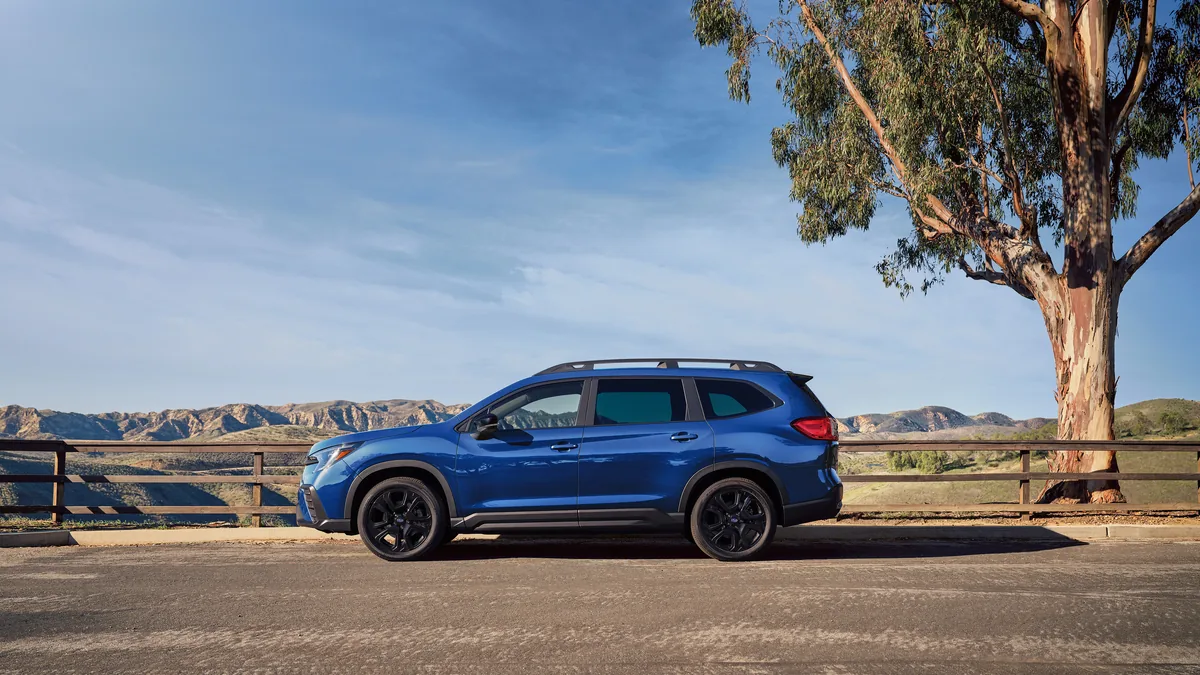
Subaru’s official release positions the 2027 Ascent as a family-focused SUV with familiar strengths. It keeps the 2.4-liter turbocharged Boxer engine, standard Symmetrical All-Wheel Drive, X-MODE, available seven- or eight-seat layouts, and a maximum tow rating of 5,000 pounds when properly equipped.
The changes are not dramatic. Subaru added convenience items such as USB-C charging ports, updated lighting and trim details, a new Deepwater Blue Pearl color, and equipment changes by trim. Cars.com notes that pricing changes are minimal, with several trims mostly unchanged before destination and only small increases on Limited variants.
That means the Ascent is not trying to win with shock value. It is trying to be predictable. For a family buyer, predictable can be good, but only if the cabin and ownership costs match your life.
The Third Row Is the First Test
Do not start your test drive by opening the hood. Start with the back doors. Put the second row where adults actually sit, then climb into the third row. If you have children, bring the booster seat or child seat. If you carry grandparents, bring the person who will complain later. A three-row SUV that looks big from outside can still be awkward inside.
Check the path into the third row, the height of the step-in, the angle of the seatback, the headroom, and whether a child can buckle themselves without a parent becoming a contortionist. Then open the liftgate with all three rows up. If the remaining cargo space cannot hold your stroller, sports bags, or airport luggage, the “family SUV” label is not enough.
For buyers cross-shopping in Southeast Asia or reading WorryCars from abroad, the same principle applies to any family car. My older guide to family cars under 800 million VND uses the same logic: buy around real people and real cargo, not brochure seating numbers.
Seven Seats or Eight Seats?
This decision is more important than many buyers think. Captain’s chairs make the second row feel nicer and can make third-row access easier. A second-row bench gives you eight-passenger capacity and can be better for families that often carry three kids across the middle row.
My advice is to choose based on your normal week. If you have two kids and often carry grandparents, captain’s chairs may make sense. If you carpool, run school pickup, or need the extra middle-row seat regularly, the bench is more useful. Do not buy captain’s chairs because they look premium if they remove the seat you actually need.
Powertrain: Familiar, Useful, Not Cheap to Ignore
The 260-hp 2.4-liter turbo Boxer and CVT setup is familiar Subaru territory. The standard AWD system is the Ascent’s strongest identity point. For snow, rain, hills, gravel roads, and bad-weather commuting, that matters. The 5,000-pound towing figure also keeps the Ascent relevant for small trailers, weekend toys, and light family towing.
But towing ratings need context. Payload, passengers, luggage, hitch equipment, tongue weight, and climate all matter. If you plan to tow often, ask the dealer to show the exact towing equipment on the trim you are buying. Do not assume every Ascent on the lot is equally ready.
Fuel economy also deserves a realistic look. Cars.com reports expected ratings around 19 mpg city and 25-26 mpg highway depending on trim, with 22 mpg combined. That is acceptable for a three-row AWD SUV, but not magic. If you drive mostly city miles, budget fuel accordingly.
The Convenience Updates Are Small But Real
USB-C ports near the third row sound boring until your family has phones, tablets, headphones, school devices, and a passenger who forgot to charge anything. The new interior light-off switch is also the kind of detail parents understand immediately. Sometimes you want the doors open without lighting up the whole cabin.
Upper trims add useful comfort features, but this is where I would be careful. A heavily equipped Ascent can climb into price territory where rival three-row SUVs may feel fresher, roomier, or more premium. The Premium trim may be the value play; the upper trims need a harder comparison.
Safety and Driver Assistance
Subaru says every 2027 Ascent comes with EyeSight driver assistance technology, and Cars.com lists equipment such as automatic emergency braking, Emergency Stop Assist, blind spot detection, rear cross-traffic alert, reverse automatic braking, and emergency steering. Higher trims add more features, including distraction mitigation on several versions.
Safety tech is useful, but test how it behaves. Some systems feel natural; some feel too eager. During the test drive, try parking, reversing, lane changes, and stop-and-go traffic. A family SUV should reduce stress, not add warning chimes you want to disable after a week.
What I Would Check Before Buying
- Third row: adults, children, and child seats should all be tested before you commit.
- Cargo space: check it with all seats up, not just with the third row folded.
- Trim price: compare Premium, Limited, Touring, and Onyx Edition Touring against real rival quotes.
- Fuel budget: use city-heavy driving estimates if your family life is mostly school runs and traffic.
- Towing: confirm hitch setup, payload, and trailer weight before trusting the 5,000-pound headline.
- Daily ergonomics: test cupholders, charging ports, vents, rear visibility, liftgate height, and driver-assist behavior.
FAQ
Is the 2027 Subaru Ascent redesigned?
No. It is a mild update with pricing and equipment changes, not a ground-up redesign.
How much does the 2027 Ascent cost?
Subaru lists the Premium trim from $40,795 MSRP before destination. Cars.com lists $42,290 including the $1,495 destination fee.
Is the Ascent good for families?
It can be, especially if you want standard AWD and three rows. But you should test third-row access, cargo space, and child-seat fit before buying.
Should I get seven or eight seats?
Choose seven seats if second-row comfort and third-row access matter more. Choose eight seats if you regularly need the extra passenger spot.
Dr. Worry’s Final Recommendation
The 2027 Ascent is a sensible Subaru family SUV, not a dramatic new benchmark. Its best arguments are standard AWD, practical packaging, familiar power, towing capability, and small convenience updates that families will actually use.
I would shortlist it if bad-weather confidence and three-row practicality matter more than luxury polish. I would not buy it without comparing upper trims against the newest Honda, Toyota, Kia, Hyundai, and Mazda three-row options. The Ascent’s strength is usefulness. Make it prove that usefulness with your real family inside.