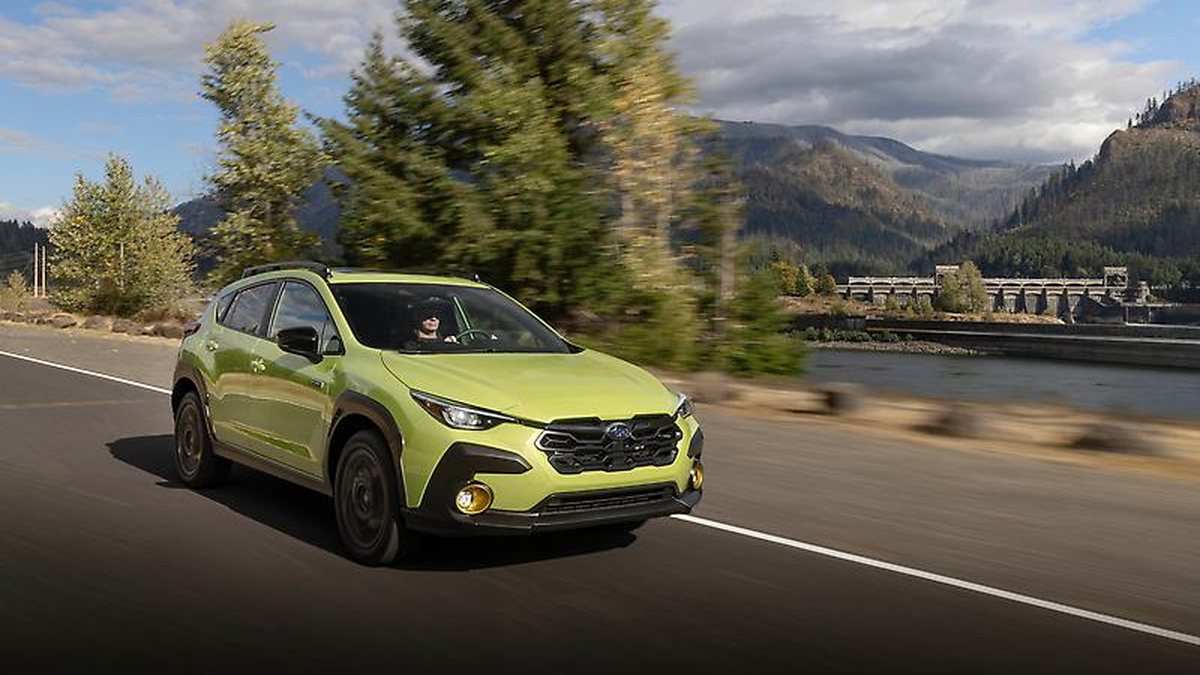
The 2026 Subaru Crosstrek Hybrid is the kind of car I respect more than I admire from a distance. It is not trying to be a luxury EV or a giant family SUV. It is a compact, rugged, all-wheel-drive hybrid for people who want lower fuel use without giving up Subaru’s small-adventure character.
My advice: if you cannot charge an EV at home but still want something efficient and bad-road friendly, the Crosstrek Hybrid deserves a test drive. I would still check rear-seat space, tire cost, hybrid warranty, and whether the fuel savings justify the price premium over a normal Crosstrek.
Why A Hybrid Crosstrek Makes Sense
Subaru buyers often care about traction, visibility, ground clearance, and simple usability. A full EV can complicate that with charging questions. A normal gasoline Crosstrek keeps things simple but misses the efficiency story. The hybrid version sits in the middle, which is exactly where many cautious buyers are now shopping.
Subaru says the 2026 Crosstrek Hybrid uses a next-generation series-parallel hybrid system that combines a 2.5-liter Boxer engine with electric motors and a lithium-ion battery. The buyer implication is straightforward: better urban efficiency potential without the behavioral change of plugging in.
The Best Use Case Is City Plus Weekend
I would not buy a Crosstrek Hybrid as a highway fuel-economy miracle. Its best case is mixed use: weekday traffic, wet roads, school or office runs, and occasional weekend routes where ground clearance and AWD confidence matter. That is a very Southeast Asian pattern.
For Ho Chi Minh City, Hanoi, Bangkok, or Phnom Penh, the hybrid system can help in slow traffic while the small footprint keeps parking manageable. For resort roads, gravel pull-offs, and heavy rain, the Crosstrek shape still feels more useful than a low sedan.
Where I Would Be Careful
Compact crossovers have limits. The Crosstrek Hybrid is not a CR-V replacement if you regularly carry tall adults in the back seat, bulky strollers, or airport luggage for five people. I would bring the family to the test drive and load the actual bags you use.
In my experience, buyers regret small SUVs when they ignore cargo shape. Liters on a spec sheet do not show whether a stroller fits under the cargo cover or whether rear doors open wide enough in tight parking. The Crosstrek Hybrid should be judged with real objects, not only numbers.
Hybrid Warranty And Service Matter
The most important ownership question is not whether Subaru can build a hybrid. It is whether the dealer network around you can diagnose, service, and explain it. I would ask for hybrid battery warranty terms, inverter coverage, cooling-system service, and parts lead times in writing.
This is especially important in import-heavy markets. A hybrid system that is common in one country may be rare in another. If your local dealer only sees a few Crosstrek Hybrids, even a simple issue can become slow and expensive.
My Buyer Checklist
- Compare the hybrid’s real price premium against fuel savings over three years.
- Check rear-seat and cargo fit with your actual passengers and luggage.
- Ask for hybrid battery, inverter, and high-voltage warranty details.
- Price tires and alignment, especially if you often drive rough roads.
- Test the brakes in traffic to see whether regenerative blending feels natural.
How It Compares With Other WorryCars Choices
The Crosstrek Hybrid is smaller and more outdoorsy than the Honda CR-V Hybrid. It is less fuel-focused and less mainstream than the Toyota RAV4 Hybrid, but it may feel easier to park and more honest for light adventure use. Compared with Subaru’s EVs, it avoids charging anxiety completely.
What Would Make Me Walk Away
I would walk away if the hybrid premium is too high, if the rear seat feels cramped for your family, or if the dealer cannot clearly explain hybrid service. I would also walk away if you mostly drive long, fast highway routes where the hybrid benefit may be smaller than expected.
A normal Crosstrek can still be the better value if your fuel cost is manageable and you keep cars for a long time. The hybrid has to earn its price with real usage, not just a cleaner badge.
Why I Would Still Prefer It Over Some EVs
The Crosstrek Hybrid’s biggest advantage is that it does not ask the owner to reorganize life around charging. That sounds less exciting than a full EV, but it is practical if you rent, park on the street, or travel to places where public chargers are unreliable. You still get some efficiency benefit, normal refueling, and a familiar small-SUV footprint.
The tradeoff is that you carry hybrid complexity without getting silent electric-only ownership. That is why the warranty and dealer competence matter so much. A good hybrid can be wonderfully low-stress; a poorly supported one can feel more complicated than the fuel savings are worth.
FAQ
Is the 2026 Subaru Crosstrek Hybrid good for city driving?
Yes, that is the use case I like most. Slow traffic, short trips, rain, and parking constraints make the hybrid small-SUV formula useful.
Is it better than a full EV?
It is better if you cannot charge at home or do not want route planning. A full EV can be cheaper to run only when charging is easy and dependable.
What is the biggest compromise?
Space. It is still a compact crossover, so families should check rear-seat comfort and cargo fit carefully.
Final Recommendation
The 2026 Subaru Crosstrek Hybrid is a sensible choice for buyers who want efficiency without charging homework. My final recommendation is to test it against the normal Crosstrek and a larger hybrid SUV on the same day. Buy it if the space works, the hybrid warranty is clear, and the price premium pays back in your actual driving.