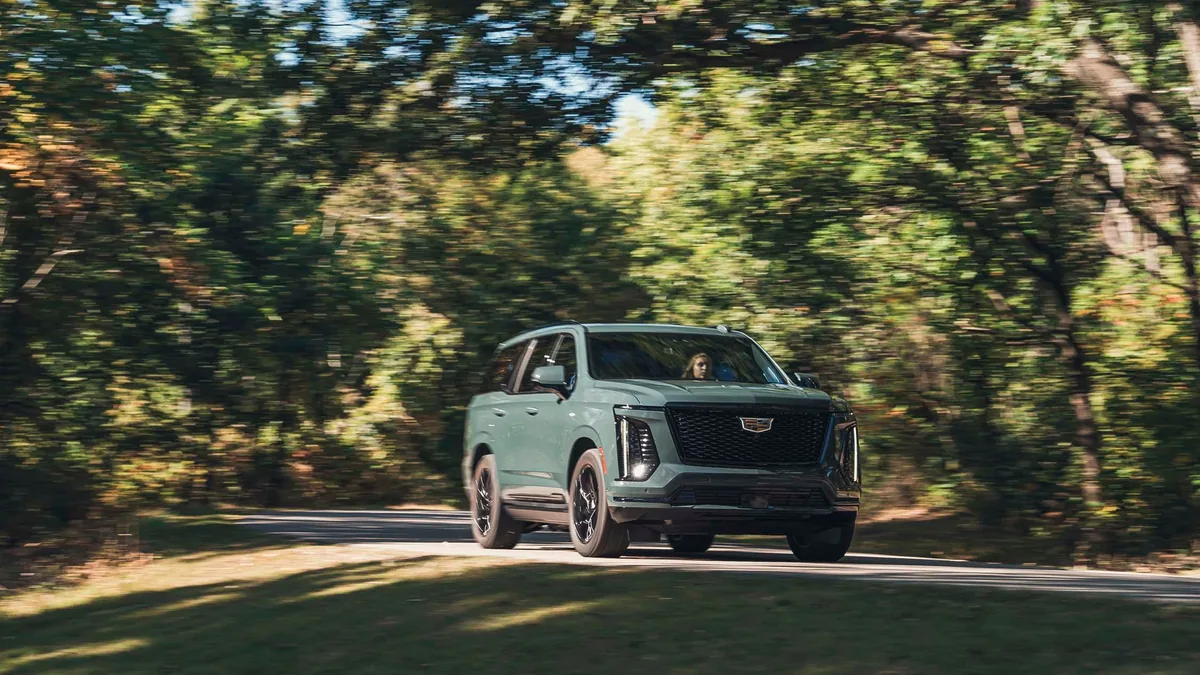
Dr. Worry’s verdict: If you are waiting for a 2027 Cadillac Escalade, pay attention to the lineup math before you fall in love with the badge. Car and Driver reports that Cadillac is removing the base trim and changing rear-wheel-drive availability on some Platinum models, which could push the real entry point above $100,000 depending on final pricing. That is not a small detail. It changes who the Escalade makes sense for.
WorryCars already covered the electric Escalade IQ and IQL from a giant-EV perspective in our previous reality check. This analysis is different. This addresses the traditional Escalade buyer problem: a big gasoline luxury SUV, heavy road presence, huge screens, towing ability, Super Cruise availability, and running costs that can punish anyone who buys for image alone.
Quick Takeaways
- The possible higher entry price matters because many buyers shop Escalade against Navigator, Grand Wagoneer, GLS, X7, and high-trim Sequoia.
- AWD standardization on some trims can be useful for traction and resale, but it also hides what used to be a lower-cost choice.
- For Southeast Asia markets like Vietnam or Singapore, I would focus on size, tire cost, software support, Super Cruise limitations, and body-part availability.
The factual baseline for this guide comes from the primary official or regulatory source. I use those published details as inputs; the buyer and ownership judgment is my own.
What Changed for 2027: The Lineup Math
The core shift in the upcoming model year is structural. Car and Driver reports that the base model disappears from the 2027 Escalade lineup entirely. Furthermore, rear-wheel drive (RWD) is no longer available on some Platinum versions; these models now come exclusively with all-wheel drive.
According to data released by Car and Driver, the removal of the base trim will most likely raise the Escalade’s price floor above $100,000 for the first time. The Luxury trim, which slots where the base model used to sit in 2026, starts at an MSRP that pushes it well into six figures ($104,995+).
While we do not yet have final pricing sheets from Cadillac confirming every dollar figure for the global market, the move is sure to raise the barrier to entry. By removing rear-drive variants of the Platinum trim levels, Cadillac effectively raised the price of those models by roughly $3,000 in the US context, though they will at least come with AWD as a consolation feature.
Other notable changes for 2027 include:
- New Sandstone paint option: Available for an additional charge but excluded from Platinum models initially.
- Digital-key support: Added via future software update, enhancing connectivity features.
- Trailer tire-pressure monitoring: A new safety feature added to the tech suite.
However, some packages have been deleted. The interior protection package, Onyx Lite Package for the V-Series, all-weather floor mats, and specific paints like Magnus Metal Frost and Aegean Stone are gone from the 2027 lineup. These changes sound small until you build a real deal; removing an entry trim can make the cheapest Escalade feel much more expensive to the average consumer.
The Buyer Case: Why Still Want One?
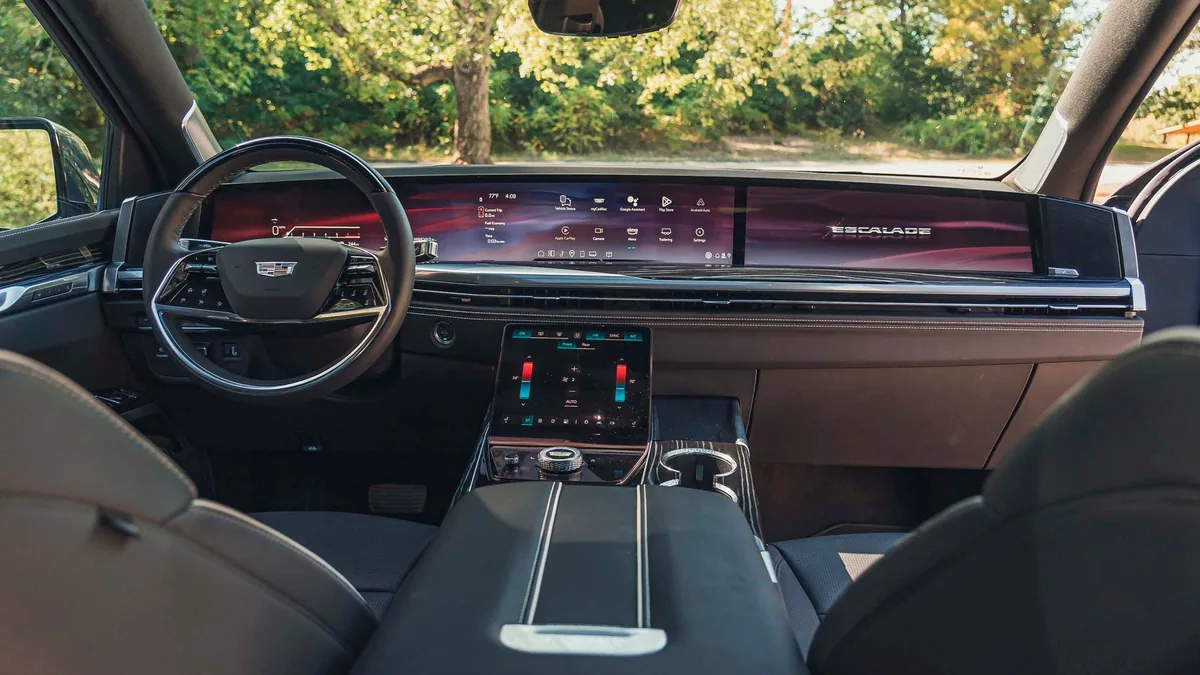
Despite these shifts, the Escalade remains compelling because it delivers the luxury experience in a very American way. It offers space, presence, a huge curved display, strong V-8 character, available performance hardware, and a cabin that feels designed for arrival.
If you need a large family SUV that can also tow boats or campers while impressing clients at dinner events, it still has a clear place in the market. I understand why some buyers prefer the gasoline Escalade over the Escalade IQ. Charging infrastructure, road-trip certainty, and battery-repair anxiety still matter in many markets. A gasoline Escalade may be thirsty, but it is predictable.
The Catch: $100K Plus Changes the Comparison
Once a vehicle starts above $100,000, the buyer should become more demanding. At that level, I would compare not just features but also ride quality, warranty terms, dealer capability, insurance premiums, tire price per unit, depreciation rates, and repair time.
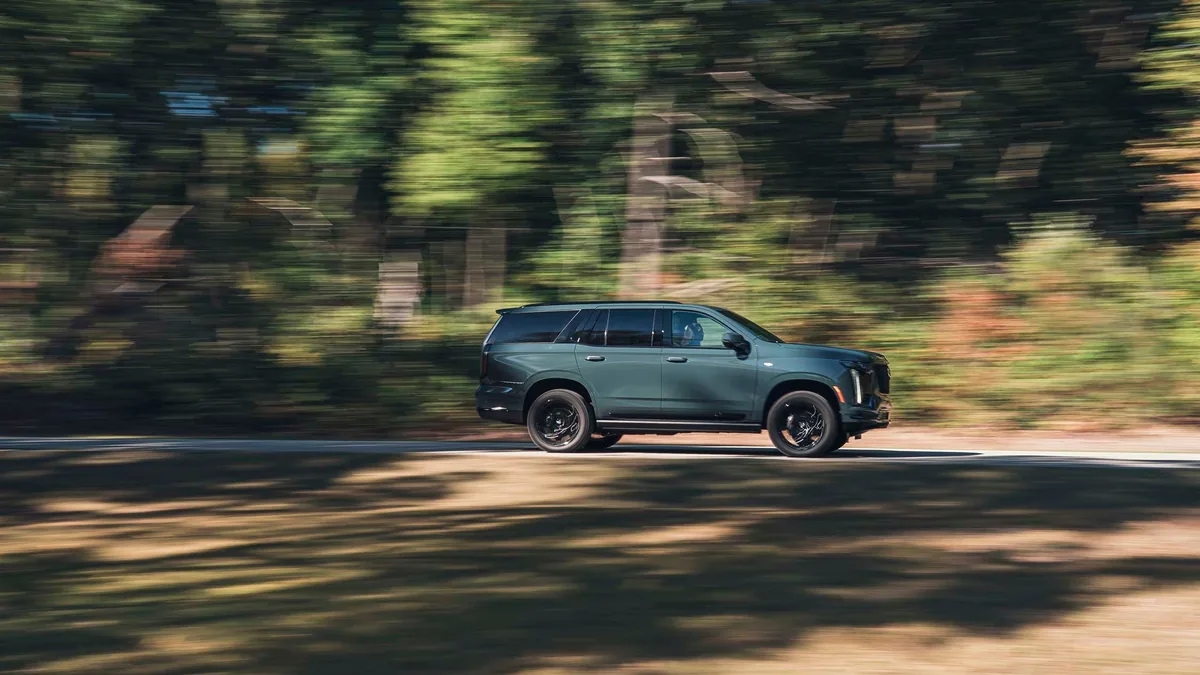
A luxury SUV that sits waiting for a headlight replacement or sensor calibration is not luxurious; it is expensive to own. The Escalade’s size also becomes a daily issue in specific contexts. It is comfortable on wide roads and highways, but many Southeast Asian cities punish length, width, and low-profile wheels.
If you spend most of your week navigating tight basements and narrow streets—common scenarios for luxury buyers in Vietnam or Cambodia—a smaller luxury SUV may feel more expensive in the right way: less stressful. For instance, if insurance costs on a full-size Escalade exceed those of an Audi Q7 by 30%, that is data you need to crunch before signing.
Daily Use and Ownership Reality
Ownership reality often differs from showroom experience. The V-8 engine provides immense torque, but the fuel consumption can be punishing if driven aggressively or in stop-and-go traffic common in urban centers like Ho Chi Minh City or Bangkok.
Tire costs scale with size. A set of 24-inch wheels on a Platinum Sport Escalade is not just an aesthetic choice; it dictates your annual maintenance budget. If you choose the V-Series, expect even higher fuel bills and more expensive brake pads due to weight and power output.
Furthermore, software support matters as much as the hardware wow factor. The digital key feature adds convenience but relies on a stable ecosystem. In markets where connectivity is spotty or carrier compatibility varies, features like this can become liabilities rather than assets. Always ask who will service the OLED display system and radar modules before buying.
Southeast Asia Ownership Angle
In Vietnam or Cambodia, the Escalade is often an import statement vehicle. That means parts access and diagnostics matter more than the U.S. MSRP. Ask your local dealer who will service the complex electronics found in modern Cadillacs.
For Singapore and Thailand, size and tax math can dominate. The car may be technically excellent with a smooth ride that contradicts its mass—traits missing from some rivals like the Infiniti QX80—but it still makes little sense if fees, parking restrictions, and road use turn it into a display item rather than a daily vehicle.
Consider this: If you live in Singapore where parking is at a premium, does an Escalade fit your lifestyle? Or would a BMW X5 or Mercedes-Benz GLS offer similar luxury with better maneuverability?
Direct Alternatives to Consider
If the new entry price jumps and the equipment difference does not matter to you, older inventory may be smarter. Compare the real 2027 transaction price with remaining 2026 models.
- Chevy Tahoe/Suburban: Offer similar size and space for far less money while sharing underpinnings with the Escalade.
- GMC Yukon/Yukon Denali: Split the difference between Chevy and Cadillac, offering a slightly different luxury feel without the premium badge tax.
- Lincoln Navigator: Often competes directly in terms of opulence but sometimes with better value propositions depending on market availability.
If you are looking for budget-friendly options that still offer family utility, check out our guide to best family cars under 800 million VND or explore deals on used cars under 300 million VND.
A Practical Buying and Owner Checklist
Before ordering, I would verify the following points to ensure you are not overpaying for features you do not need:
- Price Verification: Compare the real 2027 transaction price with remaining 2026 inventory. If the new entry price jumps significantly without a corresponding feature upgrade, reconsider.
- Feature Compatibility: Confirm whether Super Cruise and digital-key features work fully in your country. They are excellent where supported but not equally useful everywhere.
- Cost of Ownership: Quote insurance on the exact trim, wheel size, and V-Series option if relevant. Large luxury SUVs make owners forget that consumables scale with weight and power.
- Parts Availability: Ask for parts lead times on headlights, displays, sensors, and body trim. A confident seller should have clear answers regarding service capabilities in your region.
- Daily Fit Test: Test your parking routes before assuming a full-size Escalade fits daily life. If you struggle to park at home or work with the current vehicle, do not upgrade to an even larger one.
Frequently Asked Questions
Is the 2027 Cadillac Escalade getting more expensive?
Car and Driver reports lineup changes that could make the effective starting point higher, especially if the base trim disappears. The Luxury model starts at $104,995 in the US market. Assuming this serves as the new entry point—and its price isn’t significantly cut—the 2027 Escalade could be the first to start in the six-figure range globally.
Should I buy the gasoline Escalade or Escalade IQ?
Choose the gasoline Escalade if you need fast refueling, towing confidence, and simpler road-trip planning. Choose the IQ only if charging and EV service support are strong for your use case in your specific region.
Is AWD worth it on a Platinum model?
AWD can help with traction and resale value, but it is not free. If you never need it due to climate or terrain, forced AWD can simply raise the cost of ownership by several thousand dollars annually in fuel consumption.
What happens if I want rear-wheel drive?
In 2027, RWD availability on Platinum models is restricted. The Luxury and Sport trims should still offer it where applicable, but you must check the specific order guide for your region as Cadillac adjusts drivetrain options by market.
Are there any new colors or packages?
The Sandstone paint option joins the sheet, while Aegean Green and Magnus Metal Frost are dropped. The Onyx Lite appearance package is available on Sport trims but removed from others. Always check the official order guide for your specific market.
Dr. Worry’s Final Recommendation
I would buy the 2027 Escalade only after the final price sheet proves the lineup changes help my use case. If the new model forces you into features you do not need, a remaining 2026 or a rival full-size SUV may be smarter.
The Escalade is still desirable, but at $100K-plus, desire needs a spreadsheet. Do not let brand loyalty blind you to the math of ownership costs. Verify parts availability in your local market before committing to an import statement vehicle that might become a financial burden rather than a lifestyle asset.
Remember: The Don of full-size domestic luxury SUVs asserts its dominance with imposing presence and opulent trappings, but for many buyers, the Chevy Tahoe or Suburban offers similar size and space for far less money. If you are on a budget, look into affordable family cars that still deliver safety and comfort without the six-figure price tag.
In short, if you want an Escalade in 2027, be prepared to pay a premium for features like AWD on Platinum models. If those features are not essential, hold out for clearance prices or consider competitors that offer better value-to-size ratios. The market has shifted; adapt your strategy accordingly.
Stay safe and drive smartly. As always, check the latest news from Cadillac recall updates to ensure you are not buying a vehicle with unresolved safety issues before making your final decision.
This article reflects the current understanding of lineup changes as reported by Car and Driver in July 2026. Final pricing and availability may vary by region until official releases from Cadillac confirm global specifications for model year 2027.