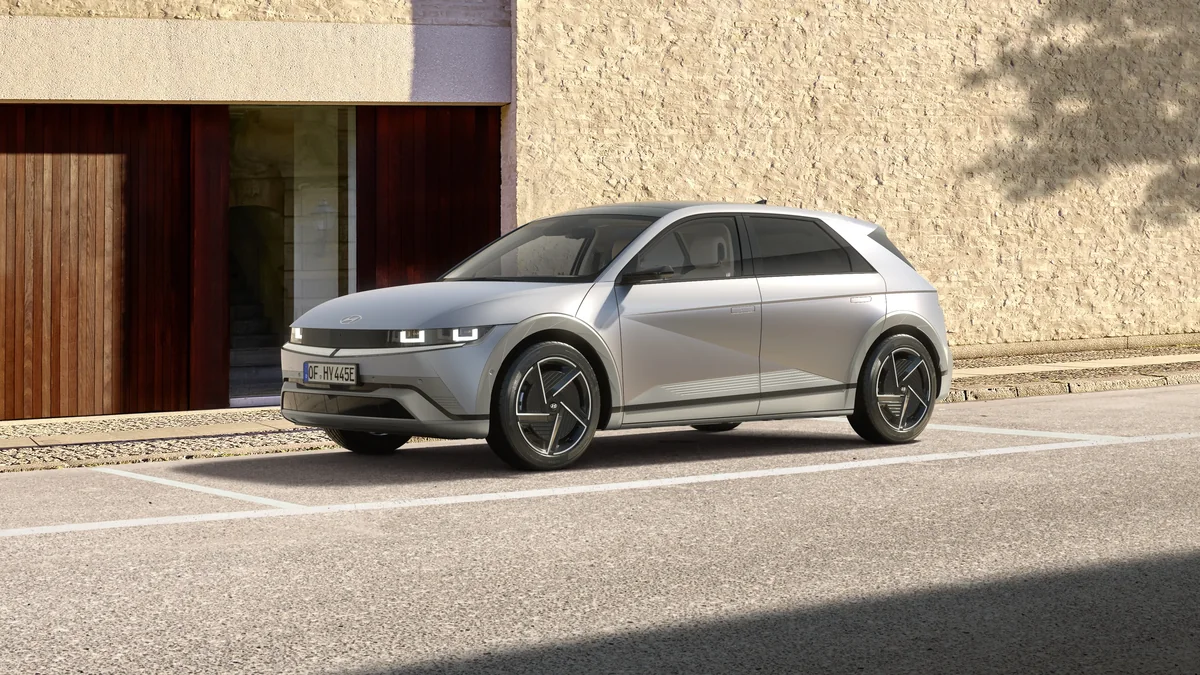
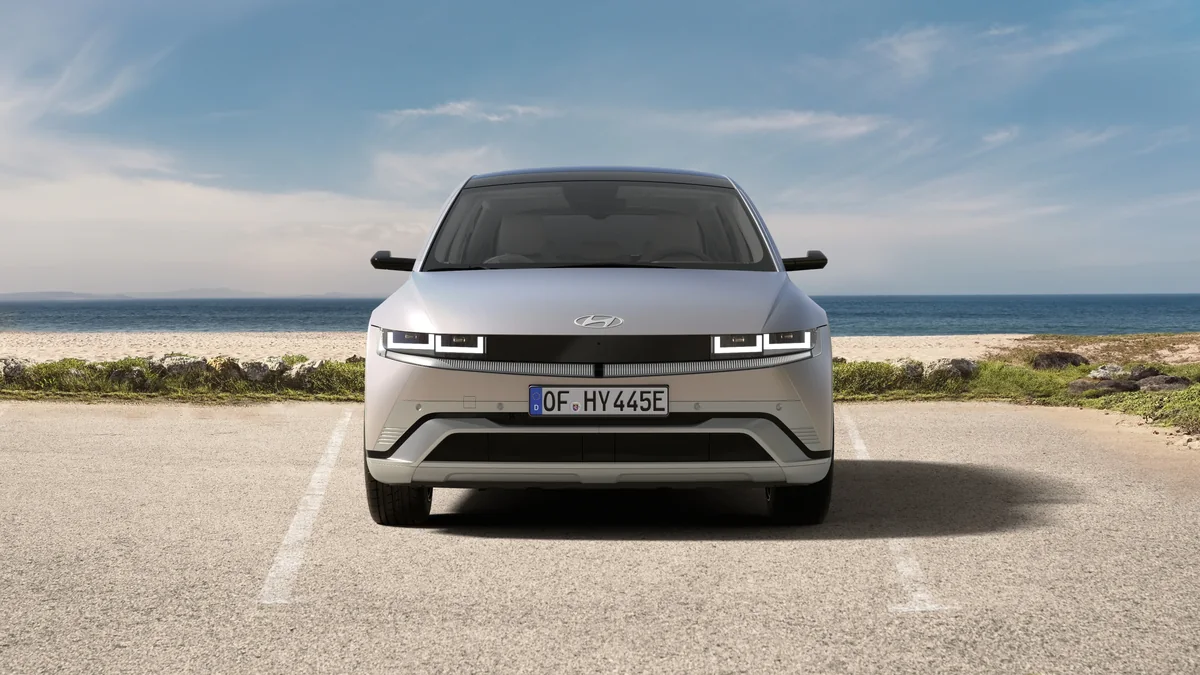
The Hyundai Ioniq 5 still looks unusual in the best way. It is not shaped like every other crossover, and it does not feel like Hyundai simply converted a normal petrol SUV into an EV. It has its own identity, and that identity is a major reason people keep paying attention.
My advice: I would consider the Hyundai Ioniq 5 if you want distinctive design, fast-charging potential, and a spacious EV cabin. I would still check charging access, tire cost, dealer support, and real-world range in your climate before buying.
Why the Ioniq 5 works
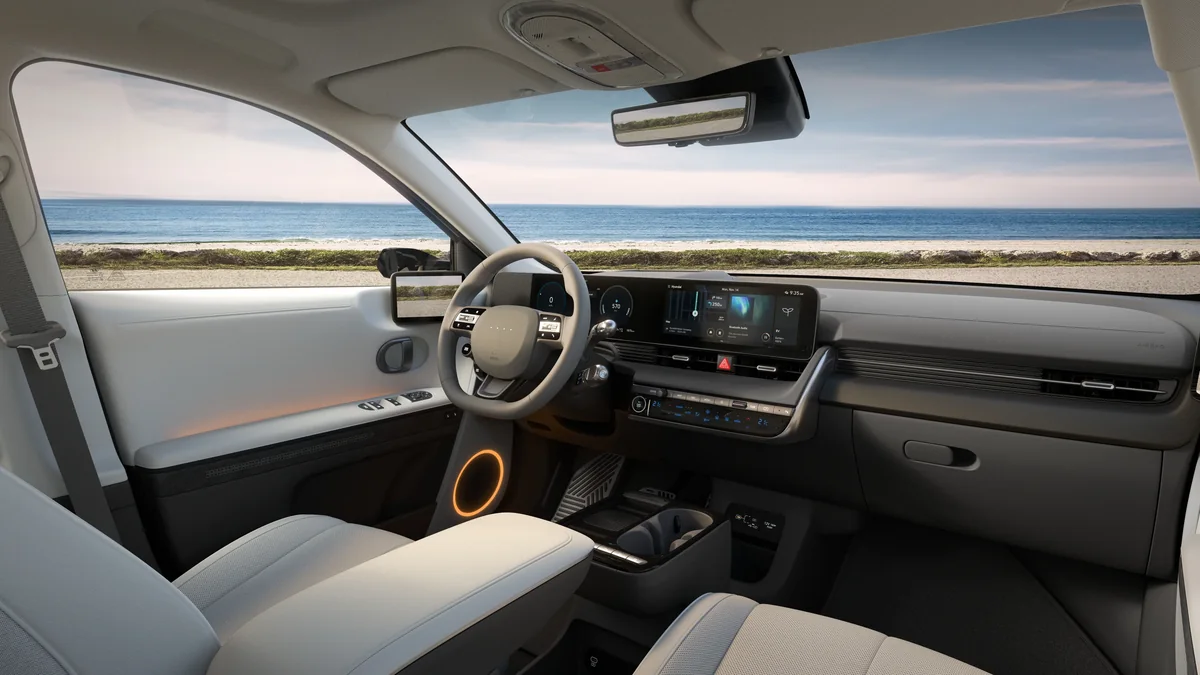
The Ioniq 5 combines retro-futuristic design with genuine EV packaging advantages. Its long wheelbase gives the cabin an airy feel, and the flat floor makes it more flexible than many petrol-based crossovers. It feels like a car designed around electric architecture rather than a normal SUV with a battery added.
That matters because EV buyers are not only buying fuel savings. They are buying a different daily experience: quiet starts, instant torque, less vibration, and a cabin that can feel more open.
Charging is the headline feature
In many markets, the Ioniq 5 is known for fast-charging capability when connected to the right high-power charger. This can make road trips easier, but buyers should read the small print. Charging speed depends on charger quality, battery temperature, state of charge, and software behavior.
If your local charging network is weak, the car’s theoretical charging speed matters less. A brilliant charging curve is useless at a broken or slow charger.
Where the Ioniq 5 may surprise buyers
The first surprise is size. It may look like a hatchback in photos, but it occupies more road space than some buyers expect. Test parking and garage fit before assuming it is compact.
The second surprise is tire and wheel cost. EVs are heavy and produce instant torque, so tire wear can be meaningful. Large wheels may look good but can reduce comfort and increase replacement cost.
The third surprise is range variation. Weather, highway speed, wheel size, and driving style can change real-world range significantly.
Who should consider it?
- Drivers who want an EV that feels visually distinctive.
- Families who can charge at home.
- Buyers near reliable high-power charging stations.
- People who value cabin space and quietness.
Who should skip it?
If you cannot charge at home or work, think carefully. If your highways are very fast and chargers are sparse, a hybrid may be less stressful. If you want a tiny city car, the Ioniq 5 may feel larger than expected.
Dr. Worry recommendation
The Hyundai Ioniq 5 remains one of Korea’s strongest EV statements. It looks different because it is different. Buy it if the charging ecosystem around you is ready. If not, admire the design and wait until the infrastructure catches up.
FAQ
Is the Hyundai Ioniq 5 a full EV?
Yes. It is a battery-electric vehicle.
Is it good for road trips?
It can be very good where reliable fast chargers are available. In weak charging areas, planning becomes more important.
Is the Ioniq 5 small?
No. It may look hatchback-like, but it has a long wheelbase and a roomy cabin.