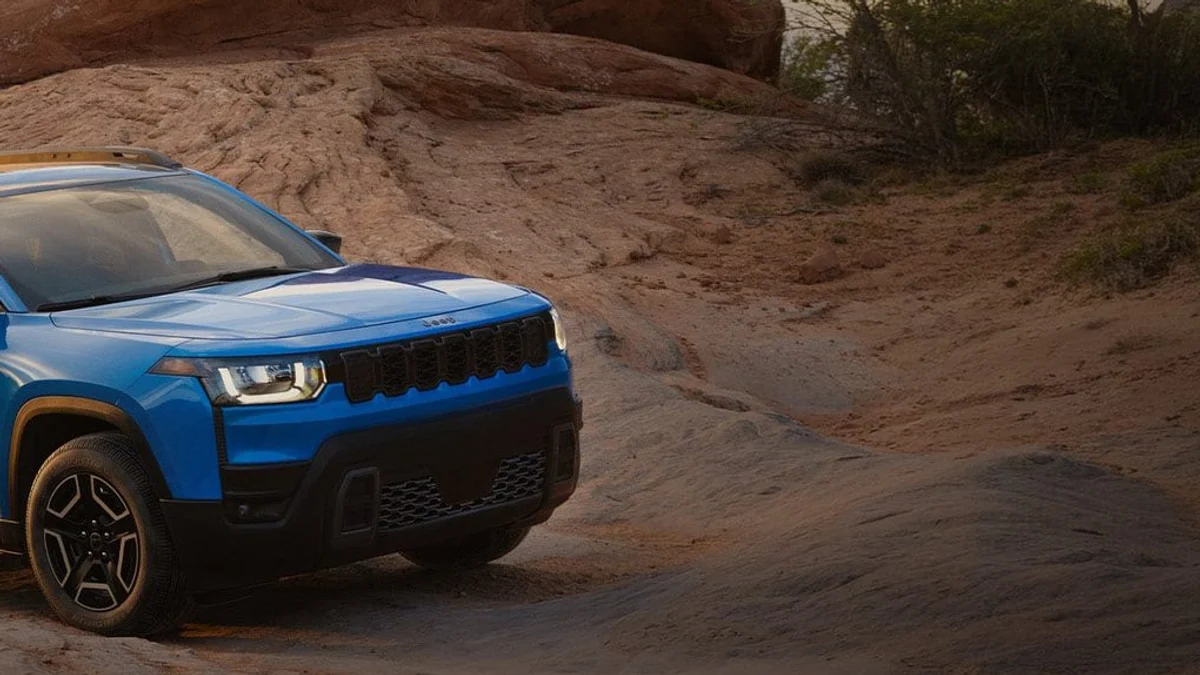
My advice: the 2026 Jeep Cherokee Hybrid is worth a serious look if you want a compact SUV with standard all-wheel drive and no charging homework. I would still test-drive it hard before buying, because the promise is not only fuel economy. The real question is whether Jeep has made a hybrid family SUV that feels smooth, roomy and reliable enough to beat the safer Japanese and Korean choices.
The Cherokee name is back after a break, and Jeep now positions the 2026 model as a turbo hybrid with up to 37 mpg combined, more than 500 miles of total driving range and 3,500 pounds of towing capability when properly equipped. Edmunds, Car and Driver and Cars.com all frame it as a roomy, hybrid-only compact SUV with standard AWD. That makes it timely for buyers who want efficiency but are not ready for a plug-in or full EV.
Quick takeaways for family SUV buyers
- The 2026 Cherokee uses a 1.6-liter turbo hybrid system with standard all-wheel drive.
- Jeep advertises up to 37 mpg combined and more than 500 miles of range on a tank.
- Independent reviews praise the room and easy daily manners but note value and acceleration concerns.
- It is not a plug-in hybrid, so there is no charging requirement and no electric-only commuting promise.
Why this Cherokee is more relevant than it looks
Many buyers want lower fuel bills but do not want to plan charging stops, install a wall box or explain plug-in habits to the rest of the family. A no-plug hybrid SUV solves that problem. You fill it like a normal car, get better city efficiency, and avoid the charging anxiety that still affects many apartment dwellers in Southeast Asia.
That is why I like the concept. A standard-AWD hybrid Cherokee could make more sense for monsoon roads, mountain trips and family errands than a front-drive-only economy crossover. The challenge is that Jeep has to prove execution. Toyota, Honda, Hyundai and Kia have strong hybrid reputations. Jeep is asking buyers to trust a fresh generation and a newer hybrid setup.
The good part: practical size and no charging drama
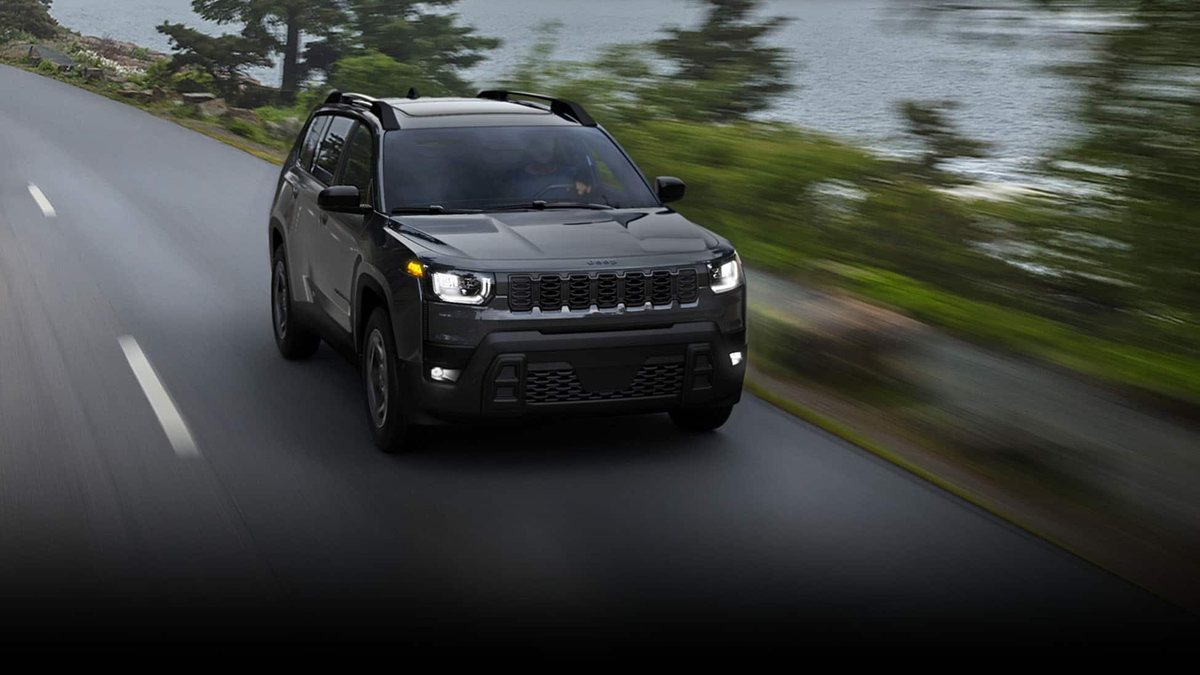
The official Jeep page highlights a bigger interior, up to 68.3 cubic feet of cargo room with the second row folded, available 20 inches of water fording, and a 12.3-inch touchscreen. For normal families, that is the right kind of spec sheet. I care more about seat comfort, cargo shape and easy controls than another performance mode nobody uses.
In my experience, a good hybrid SUV is often the most painless family car in dense cities. It saves fuel in traffic, stays quiet at low speed and does not punish you if public charging is unreliable. That same logic explains why I liked the no-plug approach in the Subaru Crosstrek Hybrid: simplicity is a feature when the car has to work every day.
The catch: value and acceleration
Edmunds gives the Cherokee a mixed verdict, praising easy driving but calling out sluggish acceleration in testing and a value problem against some rivals. That matters because compact SUVs are brutally competitive. If the Cherokee costs too close to a better-known hybrid competitor, Jeep needs to win with space, AWD confidence, towing, design or equipment.
I would pay close attention to highway passing. A hybrid can feel smooth around town and still feel strained with passengers on a fast merge. If you often drive loaded, climb hills, or pass trucks on two-lane roads, test the Cherokee with the family onboard. Do not judge it from a short solo test around a dealership.
What Southeast Asia buyers should think about
For Vietnam or Thailand, the Cherokee is more interesting as a concept than as an automatic import choice. Standard AWD, high seating and hybrid efficiency fit the region well. But Jeep aftersales depth, parts cost and hybrid-system support must be checked carefully. A fuel-saving SUV is not a bargain if hybrid diagnostic work becomes difficult after warranty.
I would also compare it with locally supported options before getting emotional about the badge. If a Hyundai, Kia, Toyota or Honda hybrid has better local parts supply and resale confidence, that may matter more than the Cherokee’s rugged personality. For buyers who love Jeep, the Cherokee’s no-plug hybrid setup is the most rational Jeep argument in years. It still needs a service-network reality check.
What I would check before buying
- Real-world fuel economy in city heat, not only the official combined number.
- Highway passing power with passengers and luggage.
- Warranty coverage for the hybrid battery, inverter and AWD components.
- Availability of hybrid-trained Jeep technicians in your area.
- Insurance and repair cost for sensors, screens and body panels.
- Whether a rival hybrid offers better resale and support for similar money.
FAQ
Is the 2026 Jeep Cherokee a plug-in hybrid?
No. It is a no-plug hybrid. You do not charge it externally, and you should not expect long electric-only driving.
Is standard all-wheel drive useful?
Yes, especially for wet roads, steep driveways and light trail use. I would still use proper tires before trusting AWD alone.
Would I choose it over a Toyota RAV4 Hybrid?
Only after a back-to-back drive and a service-cost check. The Cherokee has character and standard AWD, but Toyota’s hybrid reputation is a serious advantage.
My final recommendation
The 2026 Jeep Cherokee Hybrid is a smart comeback idea: rugged shape, standard AWD and fuel-saving hardware without charging drama. My recommendation is to shortlist it, but buy only after a full test drive and a hard service-network check. The concept is strong; ownership support will decide whether it is a clever family SUV or an expensive badge choice.