Dr. Worry’s verdict: Buy the 2027 Mercedes-AMG GT Coupe only if you already own a practical vehicle and view this purchase strictly as an emotional, high-performance second car. Do not buy it expecting rear-seat utility for adults or assuming low running costs in tropical climates with rough pavement.
The AMG GT Coupe occupies a unique niche: it blends the sumptuous luxury of Mercedes-Benz executive sedans with the raw thrust of a track-focused supercar. However, as we move toward the 2027 model year, expectations must be grounded in reality rather than brochure marketing. The car offers a wide spread of powertrains ranging from the turbo-four GT43 to the hybrid-electric monster, but not every version suits every buyer.
My advice is clear: buy this machine for its front seats, its engine note, and the way it transforms a boring commute into an expensive-feeling experience. Do not purchase it because you believe it solves your family transportation needs or that it will be easy to maintain in Southeast Asia’s challenging infrastructure.
While Car and Driver notes the 8.5 out of 10 rating for its balance, they also warn that “wallet-straining price tags” are a significant low point. In my experience, especially in markets like Vietnam or Thailand where ground clearance is non-negotiable, the value proposition shifts dramatically away from pure horsepower metrics.
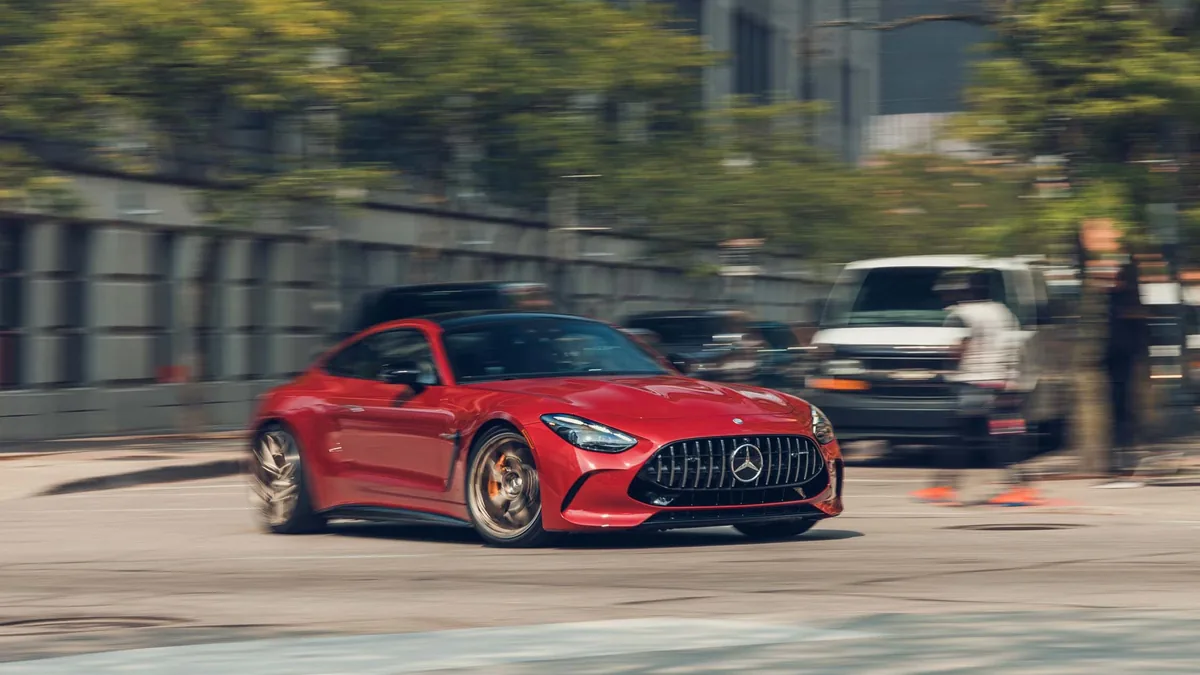
Why the 2027 AMG GT Coupe is tempting
The appeal of this coupe lies in its ability to straddle two worlds. It looks serious enough for a hotel arrival but handles like a sports car. The lineup offers distinct choices based on how you want to drive:
- GT43: Powered by a 2.0-liter turbo-four producing 416 horsepower, this model serves as the premium cruiser of the bunch.
- GT55 & GT63: These utilize twin-turbo V-8 engines (ranging from roughly 470 to over 600 hp), delivering “mighty thrust” and additional performance kits like adaptive suspension.
- GT63 Pro: Adds carbon-ceramic brakes, active ride control hydraulics linking dampers at each corner, and enhanced cooling for track use.
- GT63 S E Performance: The plug-in hybrid variant pushes total output to 805 horsepower but introduces complexity regarding battery health and charging infrastructure.
The spread is useful because not every buyer needs the most violent version. As noted in testing of similar high-performance machinery, “the car that feels best after six months is often not the one with the biggest number.” It is frequently the vehicle that rides properly on broken city edges and does not punish you during traffic jams.
If your preferences skew towards comfort without sacrificing too much pace, the base GT43 serves as a viable entry point. However, if “freakish speed” is the primary goal, the all-wheel-drive GT63 trims are designed to deliver tire-punishing thrills at the limit.
The sensible trim may not be the loudest one
I would start by driving the GT43 and GT55 before assuming the GT63 is the answer. The GT43 gives you the signature Mercedes cabin polish, style, and a muscular grand-touring feel with less weight than its V-8 counterparts.
The GT63 Pro and GT63 S E Performance are different propositions entirely. They are for buyers who truly want extreme acceleration or track capability. That is exciting, but in Vietnam or Thailand, the value of 600-plus horsepower can shrink quickly due to traffic congestion, rain, police attention on high-performance vehicles, and exorbitant tire bills.
A plug-in hybrid performance version also needs a rigorous charging and battery-health plan. If you never charge it because your local infrastructure is unreliable or you only want the badge for status, you may be carrying significant complexity without using the benefit of electric-only driving modes.
The catch: practicality has limits
Expert reviews of the GT Pro highlight that while it can be both wild and docile, practicality is a major constraint. Car and Driver is blunt about the rear seats being tiny; I agree with this framing completely.
The AMG GT Coupe may technically offer rear accommodations in some versions, but you must treat them as luggage space or emergency seating for small children or infants. If you need adult rear comfort for daily commuting to work or school, buy a different Mercedes-AMG, such as the four-door variant which offers more space.
Cargo space is useful compared to other low-slung coupes, but the car remains low and wide. Front splitters, large wheels with low-profile tires, and exposed underbody components are vulnerable on steep basement ramps in older buildings or broken city edges common in developing markets. Before buying, I would test the exact driveway of your home, office parking entrance, and any mall access points.
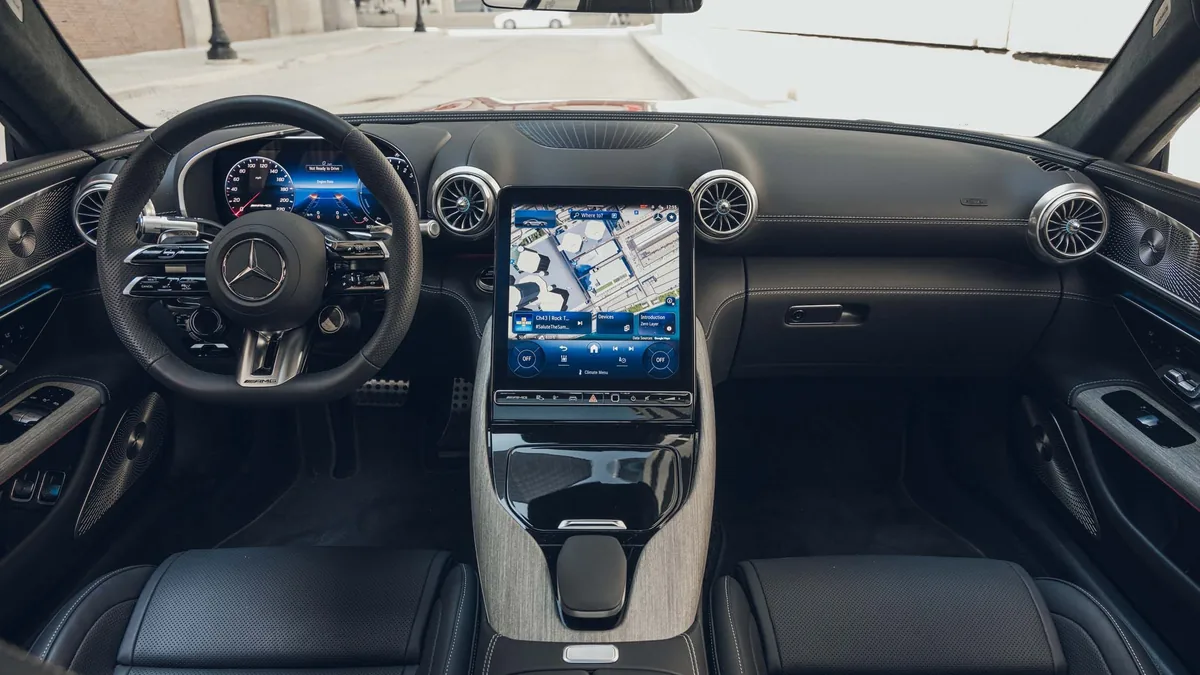
The infotainment issue also matters significantly. The touchscreen-heavy system can be frustrating when you need to adjust settings quickly during monsoon traffic. A performance car should reduce stress, not add menu hunting that distracts from the road ahead.
Ownership costs I would budget early
Tires come first. High-performance AMG tires are not cheap, and tropical heat plus rough pavement can drastically shorten their life span. You will find yourself replacing them more often than with standard sedans.
- Brakes: Carbon-ceramic hardware is expensive to replace if worn out.
- Insurance: A high-value AMG with expensive lighting, sensors, and body panels can be financially painful after even a modest accident involving another vehicle or object.
Fuel consumption for the V-8 models is obvious but still worth saying. They are not economy cars, and the hybrid version is not a fuel-saver in the normal commuter sense; it is strictly a performance hybrid designed to assist with acceleration rather than maximize MPG on highway merges.
Warranty coverage deserves attention. Mercedes-AMG typically lists basic warranty at four years or 50,000 miles in the U.S., but local coverage can differ significantly depending on your market’s terms before assuming anything regarding scheduled maintenance costs.
Who should buy it
The AMG GT Coupe fits a buyer who already has a practical car and wants a polished performance machine. It is not the right one-car solution for a family, nor is it the easiest exotic-style car to own in a market with rough roads.
I would choose this over a Porsche 911 if I wanted more Mercedes luxury interior materials and a more muscular grand-touring feel suited for long highway runs. Conversely, I would choose the 911 if I cared more about steering purity, compact size, and long-term sports-car resale value.
Against an AMG SL (S-Lounge), the choice depends on whether you want the open-top experience or the coupe’s harder performance image with a fixed roofline that offers better insulation from rain in Southeast Asia.
Daily-use and ownership reality
In Southeast Asia, specifically markets like Vietnam, Thailand, Indonesia, and Malaysia, the “ownership check” is different from the brochure. You need to think about heat management for electronics, ground clearance over speed bumps (common in older infrastructure), tire damage on rough roads, fuel quality consistency, insurance premiums which are often higher than advertised due to theft risks or accident severity, and whether the rear seats are useful enough to justify choosing it over an SL, 911, or a fast sedan.
For instance, if you live in Bangkok or Ho Chi Minh City during the rainy season, low-profile tires on this car will face significant challenges. The risk of hydroplaning is higher than on wider SUVs like the Mercedes GLC 300 or Ford Everest, which have more robust suspension geometry for potholes.
A practical buying and owner checklist
Before signing the papers or ordering a build-to-order vehicle, follow these steps:
- Drive the exact trim: Test drive the GT43, GT55, or GT63 over poor pavement before ordering. Do not rely on showroom demos.
- Test parking ramps: Visit your home, office, and mall to check front-end clearance against steep basement ramps and broken city edges.
- Get separate insurance quotes: Obtain quotes for GT43, GT55, GT63, and hybrid versions separately. Premiums vary wildly based on engine displacement and horsepower ratings.
- Check tire availability locally: Confirm that the specific high-performance tires required are available locally, not just checking tire size on paper specifications.
- Confirm warranty terms: Verify local coverage for hybrid-battery health and scheduled maintenance packages in your specific market.
FAQ
Is the 2027 AMG GT Coupe practical?
No, not as a family car. It is practical for a performance coupe enthusiast who treats it strictly as a second vehicle. Treat the rear seats as emergency space or luggage storage.
Which AMG GT Coupe would I choose?
For normal road use in challenging climates like Southeast Asia, I recommend starting with the GT55. It should give you the V-8 character and sound without the full cost, intensity, and tire wear of the top-tier models.
Is the GT63 S E Performance worth it?
Only if you want the technology and acceleration enough to accept extra weight, complexity, battery-service questions, and higher insurance costs. It is not a daily driver solution for those concerned with running costs.
How does it compare to an SL or 911?
The GT Coupe offers more Mercedes luxury interior materials than the Porsche 911 but less steering purity. Against the AMG SL, choose the coupe if you prefer a fixed roofline for better rain protection and a harder performance image.
Are there any known recalls or issues?
The primary concerns are related to tire wear in tropical heat and infotainment usability during heavy traffic. No major mechanical failures have been reported, but the “baby-sized” rear seats remain a consistent complaint across model years.
Dr. Worry’s Final Recommendation
I would buy the 2027 AMG GT Coupe as a second car, ideally in a balanced trim like the GT55 rather than the most extreme version unless you are prepared for track days and high maintenance costs.
It is a brilliant emotional purchase when the roads, warranty support, tire availability, and parking situation match the car’s requirements. If those basics do not align—specifically if your local infrastructure has deep potholes or steep ramps—the badge will not save the ownership experience. Buy it for the thrill of driving on smooth highways in cool weather, but keep a sensible SUV like an Mercedes CLA Electric or similar for your daily family duties.
The GT Coupe is a master of balance without compromise, delivering both sumptuous luxury and stout performance. However, it demands respect from the owner regarding its fragility on rough roads and high operating costs. Ensure you have the budget not just for purchase price, but for the lifetime cost of ownership in your specific environment.
If those basics do not match—rough roads, lack of charging infrastructure for hybrids, or need for rear passenger space—the badge will not save the experience. Stick to a GT43 if you want style with less weight and running costs, or choose an SL if open-top driving is your priority.
Ultimately, this car rewards those who understand its limitations as much as its strengths. It is not for everyone, but for the right buyer in the right market, it remains one of the most compelling performance coupes available today.