Dr. Worry’s verdict: I would never accept “the air-con only needs gas” as a harmless used-car excuse. On a genuinely hot day, I test cooling from a heat-soaked cabin, compare left and right vents, operate every mode and demand evidence for any recent recharge. Refrigerant does not get consumed like fuel. If cooling has faded because charge escaped, I price the leak and the correct repair before paying a deposit.
Air conditioning is not a luxury detail in Vietnam and much of Southeast Asia. It affects visibility during monsoon weather, driver concentration, battery range in an EV and whether a family can use the car comfortably at midday. A five-minute test in a shaded showroom can hide a weak compressor, dirty heat exchangers, blend-door trouble, refrigerant contamination or an evaporator leak that becomes expensive after purchase.
Quick Takeaways
- Test from a heat-soaked start, not only inside an air-conditioned showroom.
- Record ambient temperature, vent temperature, fan setting and time.
- A recharge may restore cooling temporarily but does not permanently repair a leak.
- Check every vent zone, recirculation, demist, fan speed and rear system.
- Confirm refrigerant type and reject unapproved mixing, additives and mystery cans.
The Hot-Day Test I Use
I park the car safely in realistic conditions long enough for the cabin to warm, then inspect before starting. I look for oily dirt around accessible hose joints and condenser damage, while remembering that many leaks are invisible. I start the engine or ready the EV, open the doors briefly to release trapped heat, select fresh air and high fan, then switch to recirculation as the cabin begins to cool.
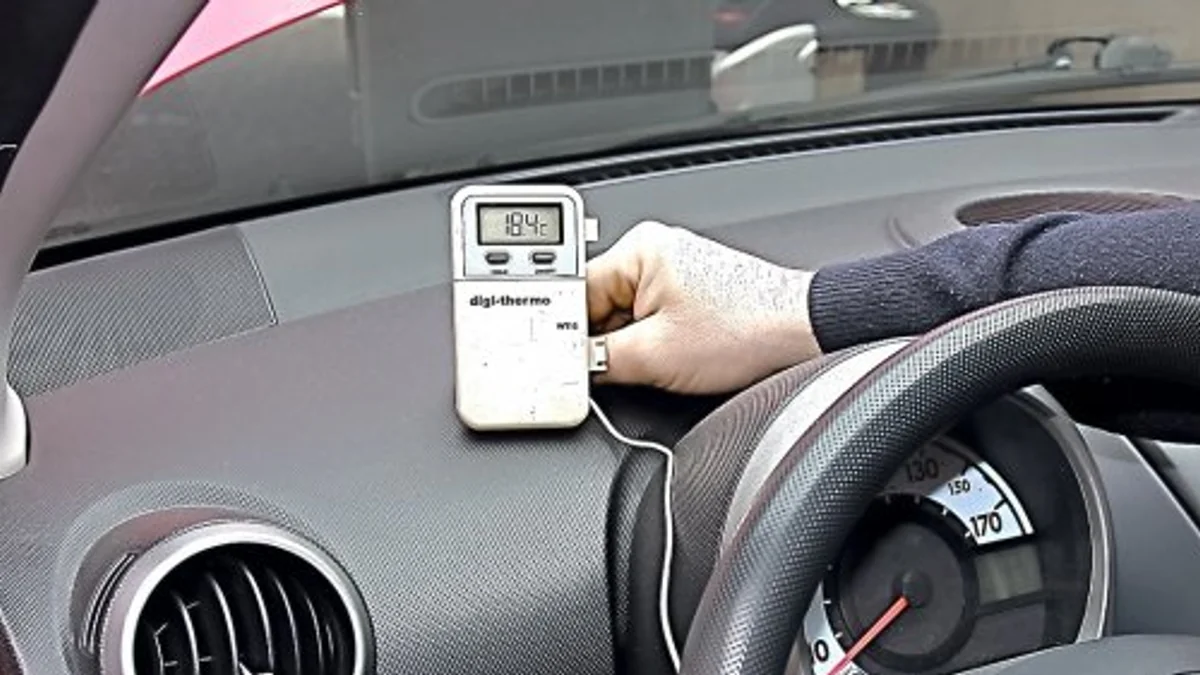
I place a thermometer in the center vent and record ambient temperature rather than demanding one magic vent number. Humidity, solar load, engine speed, vehicle design and control strategy all change the result. What I want is a strong, stable temperature drop, consistent airflow and no cycling, noises or warnings that suggest the system cannot hold performance. I compare driver, passenger and rear vents because a blend door or multi-zone control can fail on only one side.
Why “It Only Needs a Recharge” Is Not a Diagnosis
The US Environmental Protection Agency explains that topping off or recharging can improve cooling but neither permanently fixes a refrigerant leak. An evacuation and recharge can restore the manufacturer-specified amount, yet a buyer still needs to know why charge was low. A small leak, damaged condenser, shaft seal, hose, valve or evaporator can have very different repair costs.
I ask for the previous recovery and recharge record: date, refrigerant type, mass recovered, mass installed, oil or dye added, leak-test result and repaired component. “One can added” tells me almost nothing. Too much or too little refrigerant can reduce performance, and the EPA notes that a blind top-off cannot establish the amount already inside the system.
Refrigerant Identity and Workshop Safety
The under-bonnet label should identify the required refrigerant and charge quantity. The EPA requires unique fittings for approved refrigerants to reduce accidental mixing and warns against adapters. Its servicing guidance also requires proper recovery equipment and prohibits intentional venting in the United States. Local law differs across Southeast Asia, but the engineering lesson travels well: recover, identify, repair and recharge by measured mass.
I am cautious with imported cars because the original refrigerant, local equipment and replacement parts may differ. Mixed or contaminated refrigerant can compromise the workshop’s machine and complicate repair. I reject hydrocarbon substitutes, sealers and mystery additives unless the vehicle maker explicitly approves them. The seller should never pressure a buyer to accept an undocumented quick fill.
Airflow, Odor, Water and Electrical Checks
Weak cooling is not always a refrigerant problem. I test every blower speed and listen for a tired motor or debris. A clogged cabin filter restricts airflow; a blocked condenser or cooling fan hurts heat rejection in traffic. An evaporator temperature sensor, pressure sensor, control module, relay or electric compressor can also change performance. On hybrids and EVs, high-voltage compressor diagnosis belongs with a properly qualified technician.
Musty odor suggests moisture and contamination around the evaporator or filter, but perfume can temporarily hide it. I check that condensate drains beneath the car after operation and that the passenger carpet stays dry. Water inside may come from a blocked drain or rain leak. WorryCars’ flood-damaged used-car inspection checklist helps distinguish a simple drain issue from broader water exposure.
What I Would Check Before Buying
- Test after heat soak with ambient and vent temperatures recorded.
- Compare all zones, vents, fan speeds, recirculation and demist modes.
- Listen for compressor, fan, actuator and blower noise.
- Inspect condenser, accessible lines, drain output, carpets and cabin filter.
- Read the refrigerant label and scan climate-control modules for codes.
- Demand measured recharge and leak-repair records if recent work is claimed.
- Obtain a written repair estimate before agreeing on price or deposit.
How I Price the Risk
A cabin filter or minor seal is not equivalent to an evaporator buried behind the dashboard or an electric compressor. I do not guess a repair price across countries and models. I ask a qualified local workshop for parts availability, labor, refrigerant quantity and programming needs. For an imported luxury car, downtime and tool access may cost more than the part.
I also test the 12-volt system and scan before anyone erases codes. The used-car reset warning explains why cleared evidence deserves a rescan. If the seller refuses an independent inspection, the used-car problem action plan is a reminder to preserve every written claim and avoid paying first.
Frequently Asked Questions
Does car air conditioning normally use up refrigerant?
No. It circulates in a closed system. A meaningful loss points to leakage or service history that deserves explanation.
What vent temperature should a used car reach?
There is no universal pass number without ambient temperature, humidity, settings and model data. I measure the temperature drop, stability, airflow and zone consistency under repeatable conditions.
Is a recent recharge good evidence?
Only if the record shows what was recovered, the specified amount installed, refrigerant identity, leak diagnosis and any repair. A receipt for “gas” alone is weak.
Can I test the system in a showroom?
You can operate controls, but a shaded, cool cabin may hide weak capacity. Arrange a hot-day road test and idle-in-traffic check before purchase.
Dr. Worry’s Final Recommendation
I would make strong, stable air conditioning a purchase condition in a tropical market. Test it hot, save the measurements, scan the controls and demand a leak explanation for any recharge. If the seller offers only a cheap-can story, assume the repair could be larger until a qualified workshop proves otherwise.