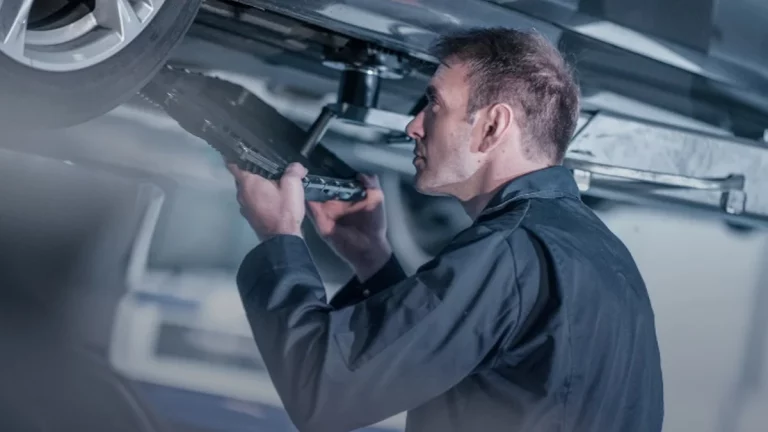
Dr. Worry’s verdict: After a hard pothole hit, I would inspect the tire and wheel before paying for an alignment. If the car pulls, the steering wheel moves off-center, a vibration begins or the tire loses pressure, I want the vehicle checked promptly. An alignment printout is useful evidence, but it cannot prove that a sidewall, rim, bearing, tie rod, control arm or subframe escaped damage.
Potholes are routine in monsoon-damaged roads across Southeast Asia. The dangerous mistake is assuming that a car which still drives must be fine. A tire can retain air despite internal damage, and a slightly bent component can produce gradual shoulder wear long after the impact. My order is safety inspection, measured diagnosis, repair, then final alignment.
Quick Takeaways
- Stop safely and inspect pressure, sidewalls and wheels after a severe strike.
- Do not align around a bent or loose steering or suspension part.
- Ask for before-and-after camber, caster and toe measurements.
- Vibration is not automatically an alignment symptom; wheel and tire damage often causes it.
- Save photos, pressure readings, repair findings and the final printout.
The Immediate Safety Check
NHTSA’s TireWise guidance says a tire can suddenly lose pressure after a pothole strike and recommends routine checks for inflation, tread wear and damage. I stop where it is safe, look for a cut, bulge, exposed cord or deformed rim, and compare pressures. I do not crawl under a car beside traffic, and I do not continue at speed on a new sidewall bulge.
Consumer Reports warns that internal tire damage may not be visible even when the tire still holds air. It also identifies rim, suspension and possible subframe damage. That is the correct risk hierarchy: first establish whether the tire and wheel are structurally safe, then inspect the hardware that controls them.
Alignment, Balance and Bent Parts Are Different Problems
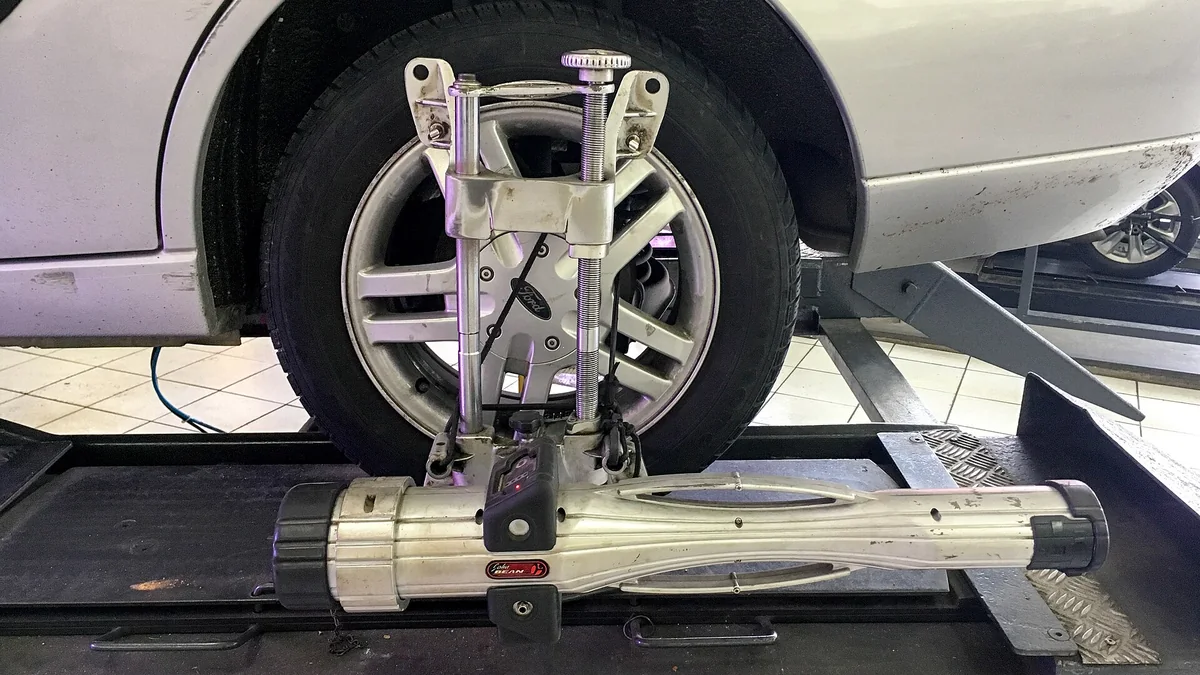
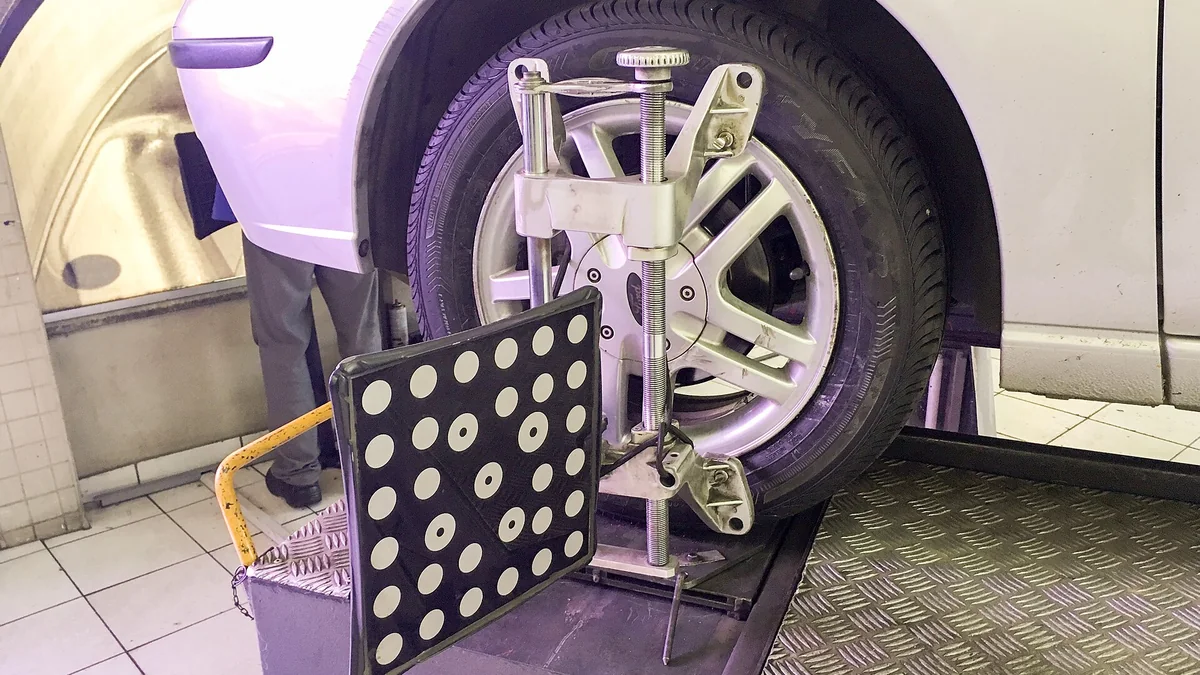
Alignment describes wheel angles relative to the vehicle and road. Toe strongly affects tire scrub; camber influences load across the tread; caster influences steering return and stability on many front suspensions. The correct targets are model-specific and may change with ride height, load or suspension design.
Wheel balance addresses uneven mass in the rotating wheel and tire. A bent rim, shifted belt or flat spot can create vibration even when alignment numbers are green. Worn ball joints, bushings, tie rods, bearings or damaged control arms can make readings unstable. I reject a workshop that adjusts toe first and asks about impact damage later.
Symptoms I Take Seriously
Ford lists uneven tread wear and steering-wheel vibration among reasons to check alignment. Michelin also highlights uneven tire wear and the need to decide between front-end and four-wheel alignment based on the vehicle. I add a crooked steering wheel, a new pull on a level road, changed steering effort, clunks, rubbing and a stability-control warning.
Road crown, crosswind, unequal tire pressures and tire conicity can also cause a pull. A careful road test compares behavior on a known level surface and checks whether the pull changes after tire-position diagnosis. I do not accept “the machine is green” when the car still drives differently.
What the Alignment Printout Should Show
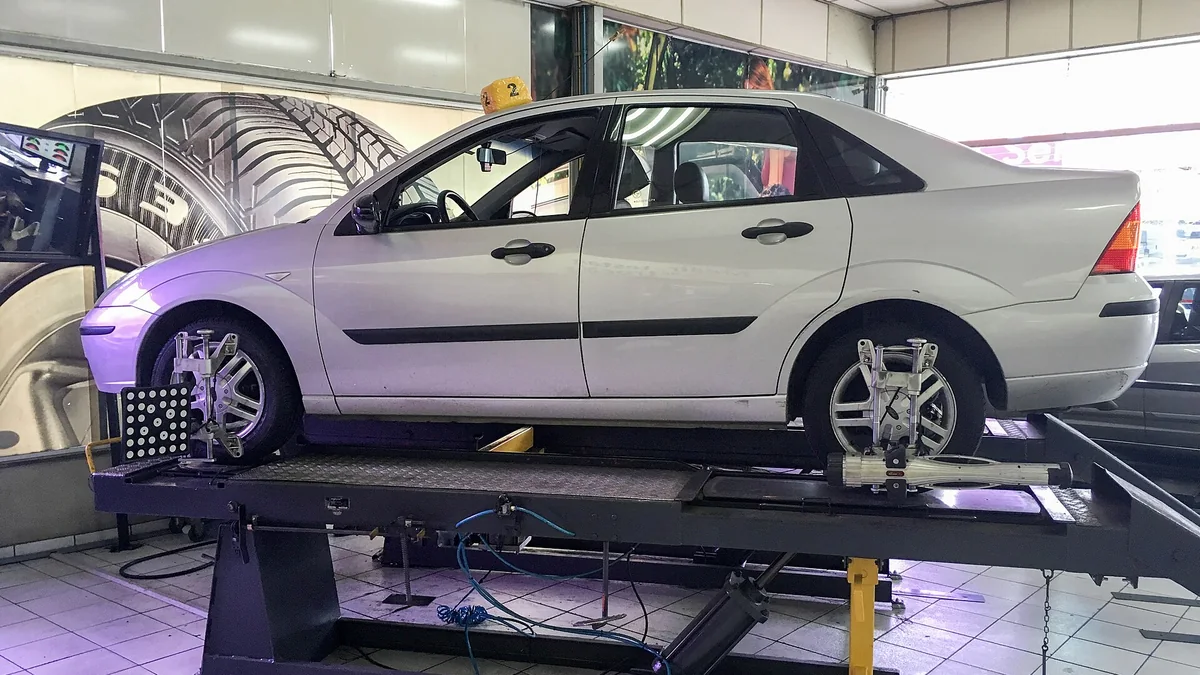
I want the vehicle identity, wheel positions, before values, target ranges and after values. A red-to-green page can still hide a problem if the wrong model was selected, tire pressures were uneven or the steering wheel was not centered. The technician should explain any angle that is outside specification and not adjustable.
If camber or caster remains unequal after a heavy strike, I ask what was inspected for bending or displacement. “Non-adjustable” does not mean “irrelevant.” It may mean the geometry relies on parts being undamaged. A thrust-angle problem can make a car dog-track even if the front toe looks acceptable.
What I Would Check Before Authorizing Work
- Record the impact corner, speed estimate, warning lights and immediate symptoms.
- Measure cold tire pressure and inspect both sidewalls, tread and bead area.
- Check wheel runout, cracks, dents and balance before alignment.
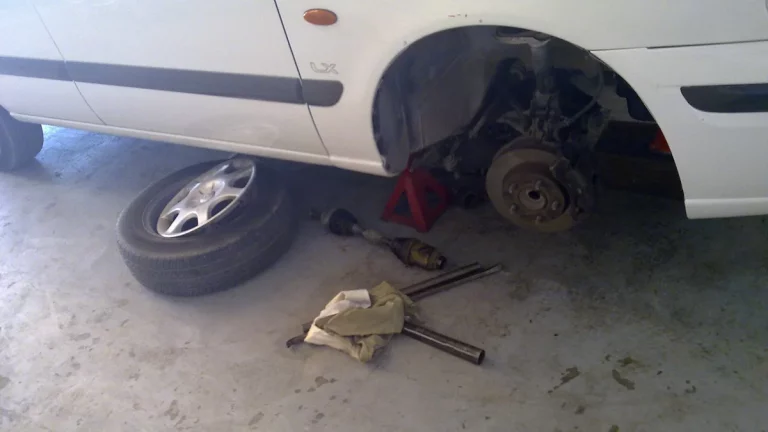
- Inspect tie rods, ball joints, control arms, bushings, struts, springs and bearings.
- Use the correct vehicle data and normal alignment loading condition.
- Request before-and-after values for all four wheels where applicable.
- Road-test, recheck steering-wheel center and monitor tire wear afterward.
How I Protect a Used-Car Buyer
On a used car, I compare tread depth across each tire and across the axle. A newly fitted pair can conceal the old wear pattern, so invoices and alignment records matter. The tire-age guide for hot climates explains why date and condition must be judged together, while the flood-damage inspection checklist covers broader underbody evidence.
If the seller says a pothole caused only cosmetic wheel damage, I want the repair invoice and geometry printout. Repeated alignments without stable results suggest wear, bending or a setup problem. I budget for diagnosis instead of negotiating from an unverified promise.
What I Monitor After the Repair
I reset tire pressures cold, note tread depths at the inner, center and outer ribs, and photograph the steering wheel on a level road. Over the next few hundred kilometers I watch for renewed pull, pressure loss, feathered tread and vibration at specific speeds. A final alignment can be correct on the day yet move again if a damaged bushing settles or a fastener was not secured. Early reinspection protects the tire and gives the workshop a clear timeline. I also keep the original impact photographs beside the final report.
Frequently Asked Questions
Do I always need an alignment after hitting a pothole?
No. A minor strike with no damage or symptoms may not change geometry. A severe hit, new symptom or visible wheel/tire damage deserves inspection and measurement.
Can an alignment fix steering-wheel vibration?
Sometimes poor geometry contributes, but tire damage, a bent wheel, imbalance, brake issues and loose components are common alternatives. Diagnose before adjusting.
What if all numbers are green but the car still pulls?
Verify tire pressures, road crown, tire conicity, brake drag, calibration, ride height and loose or bent parts. The road test still matters.
Should I replace the tire after a hard hit if it holds air?
Not automatically, but Consumer Reports notes that hidden structural damage is possible. Have the tire and wheel professionally inspected and replace if damage is found.
Dr. Worry’s Final Recommendation
I would treat a pothole strike as an impact inspection, not an alignment coupon. Prove the tire and wheel are safe, prove the steering and suspension are sound, then use a complete printout to set the geometry. If the vehicle still pulls or vibrates afterward, return immediately rather than sacrificing a new tire to an unresolved fault.