Dr. Worry’s verdict: If a seller will not allow an independent inspection for flood evidence, I would walk away. A clean cabin and clean paperwork do not prove a car stayed dry. Hidden silt, corrosion and electrical faults can appear months later, so the right response is a documented history check plus a hands-on inspection before any deposit becomes non-refundable.
Flood-damaged cars are especially relevant across Southeast Asia because intense rain, overwhelmed drainage and underground parking can put vehicles under water quickly. Some cars are honestly repaired and disclosed. Others are cleaned, deodorized and moved to another province or country. The buyer’s job is not to admire the shampooed carpet; it is to find evidence that cosmetic work cannot easily erase.
Quick Takeaways
- Check ownership and insurance history, but never rely on one database alone.
- Inspect the spare-wheel well, seat rails, belt webbing, wiring connectors and dashboard cavities.
- Be suspicious of heavy perfume, new carpet, mixed interior trim or unexplained module replacement.
- Scan every control module and test every electrical function repeatedly.
- Use an independent mechanic who knows the model and has no financial connection to the seller.
Why a History Report Is Only the First Layer
NHTSA warns that flood vehicles can be resold with misleading or “washed” titles, and the National Insurance Crime Bureau explains that uninsured damage may never enter an insurer’s total-loss records. A vehicle-history report can reveal a flood brand, salvage event, sudden relocation or suspicious ownership timing, but an empty report is not a certificate of dryness.
For an imported car, match the identification number on the body, windshield plate and documents. Check the export and auction records available in the origin market. Ask for repair invoices, insurance correspondence and photographs from before the sale. Dates matter: a sudden registration change after a major storm deserves a direct explanation.
Start With Smell, Texture and Hidden Low Points
NHTSA suggests a sniff test because mustiness can indicate water exposure, while excessive air freshener may be trying to cover it. Feel the carpet in front and rear footwells. Compare its color and fit with the cargo trim. A new floor covering in an otherwise worn cabin is not proof of fraud, but it creates a question the seller should answer.
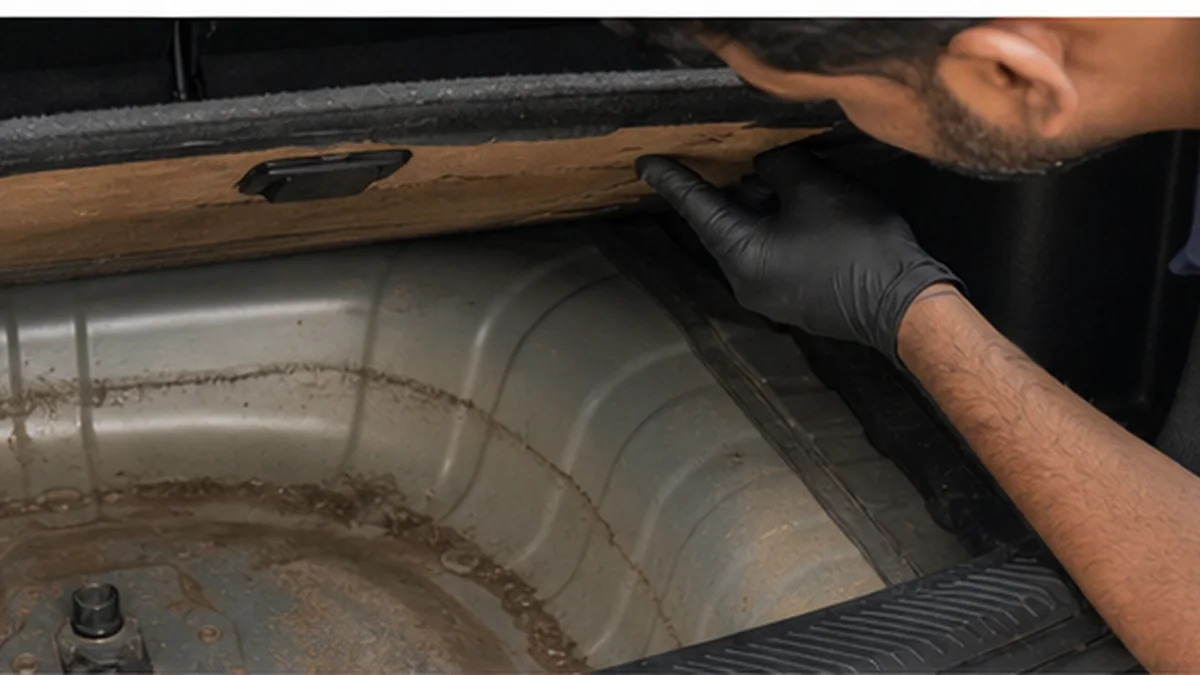
Lift the trunk floor and remove the spare or tool tray when the seller permits it. Look for dried silt, staining, a water line, unusual sealant, rust on tools or corrosion around fasteners. NICB also recommends checking beneath carpets, behind the dashboard and in small recesses around electrical and mechanical components.
Inspect the Places a Fast Detailer Misses
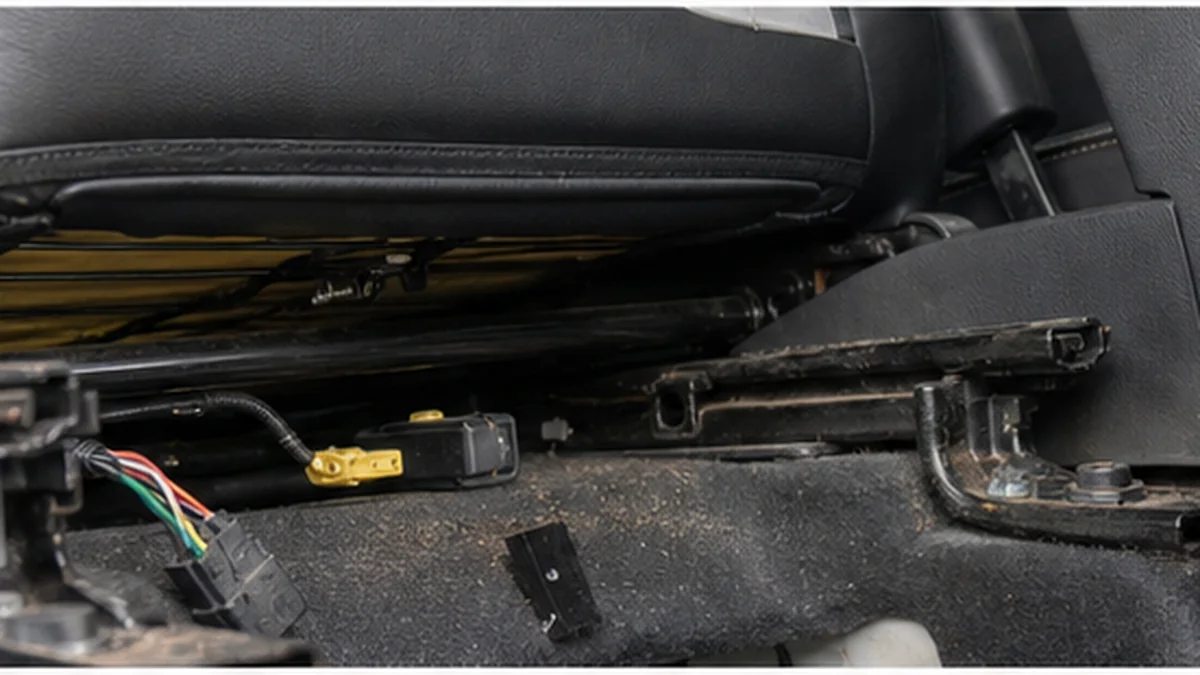
Pull each seat belt fully out and inspect the webbing for tide marks, grit, mildew or a date that does not match the car. Look at seat rails and their bolts. Rust in a dry interior location is more suspicious than ordinary surface corrosion underneath an older coastal car. Check screws inside the console, fuse-box areas and metal brackets under seats.
Electrical connectors deserve careful attention, but do not unplug safety-system wiring casually. A qualified technician can inspect for green copper corrosion, white deposits on aluminum, moisture residue and damaged seals. The mechanic should also look inside lamp housings and at low-mounted modules. One clean connector does not clear the entire vehicle.
Test Every System More Than Once
Turn the ignition on and confirm that expected warning lamps illuminate before going out. A missing airbag or ABS lamp can be as concerning as one that stays on. Test windows, locks, mirrors, seat motors, lights, wipers, washers, horn, audio, cameras, parking sensors, climate control, charging ports and steering-wheel buttons. Repeat the test after a road drive, because intermittent faults may appear with heat and vibration.
Run a complete diagnostic scan, not merely an engine-code reader. Water can affect body, restraint, braking, steering, camera, battery and infotainment modules. Save the scan. Recently cleared codes, multiple communication faults or modules reporting inconsistent vehicle identity require investigation.
Mechanical and Safety Checks
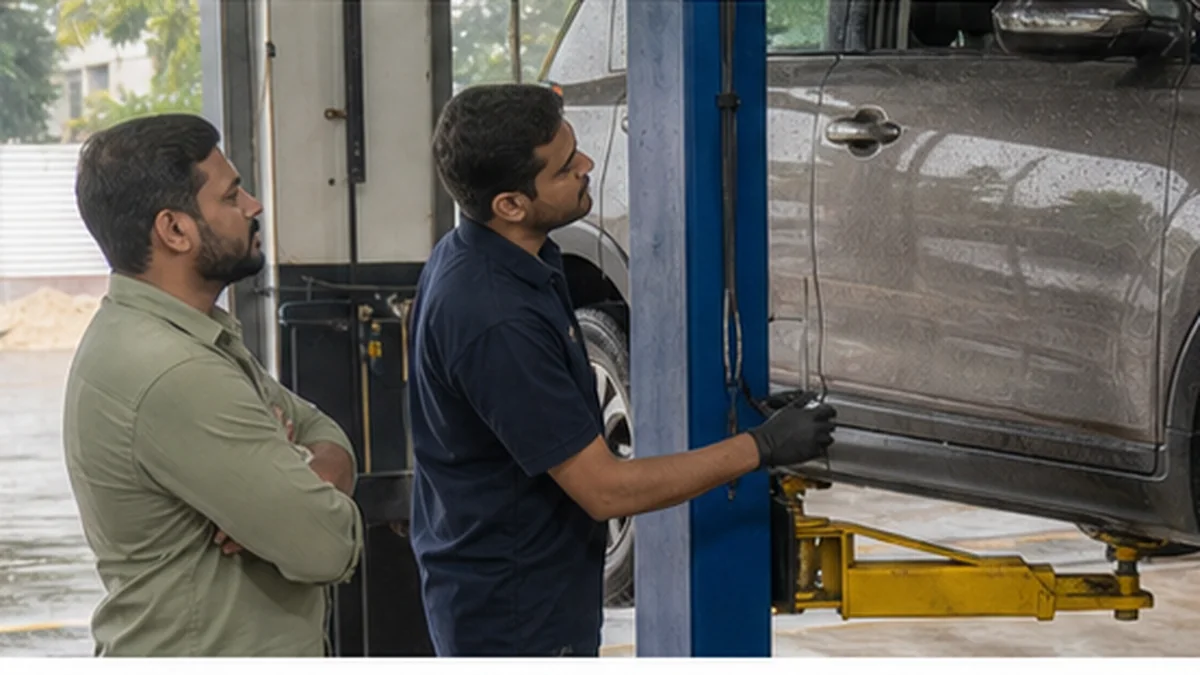
Do not start a recently submerged vehicle until a professional has assessed it. Water in the intake, cylinders, transmission or lubricants can turn limited damage into major damage. On a car being sold as roadworthy, inspect fluids for contamination, check filters and housings, and examine bearings, brakes and exhaust components. A road test should include smooth shifting, stable steering, braking and all driver-assistance warnings.
Electric and hybrid vehicles demand extra caution because high-voltage components require trained inspection. Do not touch orange cables or open a traction battery. Ask for battery isolation, diagnostic and repair documentation appropriate to the model. Market-specific warranty coverage may be limited for an imported or salvage vehicle.
What I Would Put in the Purchase Agreement
- The correct vehicle identification number and stated mileage.
- The seller’s written disclosure about flood, salvage and major electrical repair history.
- A condition allowing independent inspection and document verification.
- A clear refund route if material representations prove false before completion.
- Copies of the scan, inspection report, invoices and history records.
A low price does not compensate for an unknowable wiring harness. Compare the candidate with realistic alternatives in my Vietnam used cars under 300 million VND guide. If problems surface only after payment, preserve advertisements, messages and workshop evidence and follow the first steps after discovering used-car defects.
Frequently Asked Questions
Can a clean title prove the car was never flooded?
No. Damage may be unreported, uninsured or moved between jurisdictions. Combine records with an independent physical and electronic inspection.
Does a musty smell prove flood damage?
It is a warning clue, not proof by itself. Strong deodorizer is also a reason to inspect hidden areas and documentation more closely.
Should I buy a disclosed flood-repaired car at a large discount?
Only after specialist inspection, complete repair evidence and a realistic view of warranty, resale and future electrical risk. For most ordinary buyers, I prefer a dry-history alternative.
Can a basic engine scan find all water damage?
No. A proper scan should access body, safety, braking, steering, driver-assistance and other modules, followed by physical inspection.
Dr. Worry’s Final Recommendation
I would pay for an independent inspection before paying a deposit, and I would walk away from any seller who restricts access to hidden areas or records. Use history tools, but trust the combined evidence from documents, physical clues and a full-module scan. In a market with plenty of used cars, uncertainty about flood exposure is a risk you do not need to own.