Dr. Worry’s verdict: Treat the 2027 Jeep Grand Wagoneer as a serious utility tool for towing or large families, not as a casual status symbol for city driving.
The current market landscape presents a distinct choice: you either require the immense space and raw capability of this full-size SUV, or you risk inheriting a vehicle that is clumsy in traffic and expensive to maintain. Car and Driver’s 2027 guide frames it as a big, powerful machine with standard and long-wheelbase choices, strong towing ability, and a twin-turbo inline-six engine.
While those specs sound attractive on paper, the real ownership question is whether your family actually needs that much size, complexity, fuel appetite, and tire/brake cost. In my experience with large American SUVs, they are wonderful in the right use case—calm on highways, excellent for airport luggage loads, and reassuring when towing a boat or caravan—but they become clumsy and financially burdensome in tight cities, hot traffic, and markets where specialist parts do not sit readily on the shelf.
I would shortlist the Grand Wagoneer only after you have physically proven it fits your specific roads, parking constraints, and local service network. If a dealer cannot answer questions about suspension repair or cooling system lead times clearly, slow down.
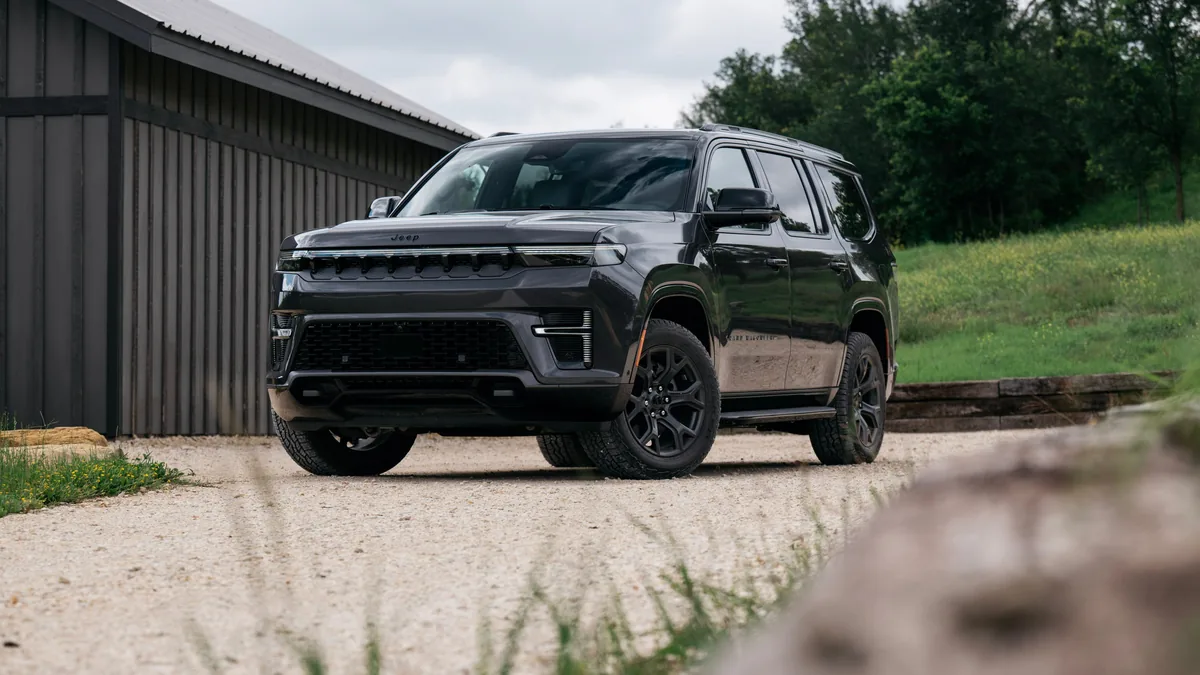
Quick Takeaways
- Utility over Status: The vehicle makes the most sense for buyers who tow regularly, travel with large groups and luggage, or require a luxury SUV with genuine off-road utility. Do not buy it solely as a city cruiser.
- The Mid-Level Value Case: Focus on well-equipped mid-level trims rather than chasing maximum decoration in the highest trim levels unless you specifically need every available option.
- Southeast Asia & Import Reality: Before importing or buying locally, verify cooling performance under heat, air-suspension support availability, tire supply chains, and body-panel lead times. These are critical failure points for rare imports.
The factual baseline for this guide comes from the primary official or regulatory source and independent automotive reporting. I use those published details as inputs; the buyer and ownership judgment is my own.
What Changed for the 2027 Buyer Conversation
The model year transition to 2027 is largely steady rather than revolutionary. Jeep simplified its naming structure previously, consolidating into a single “Grand Wagoneer” moniker. For 2027, Car and Driver notes that there are no major changes; the hardware remains proven.
This stability can be an advantage over a dramatic redesign if parts support is improving. The important details remain those families actually use: seating for up to eight depending on configuration (bench or captain’s chairs), a strong twin-turbo 3.0-liter inline-six engine, available four-wheel drive hardware with low-range gearing options, and a cabin full of screens.
It is crucial to understand that this is not a small crossover pretending to be premium. It is a large vehicle with large-vehicle strengths (towing capacity up to 10,000 pounds) but also large-vehicle bills. The engine choice here is particularly notable; it relies on the Hurricane twin-turbo inline-six rather than an old-school thirsty V-8 by default in many configurations.
While this modern powertrain can feel smoother and more efficient than buyers expect for a vehicle of its weight, do not buy it expecting small-car fuel costs. The EPA estimates hover around 18–19 MPG combined, which is decent but far from economical if you are driving alone through dense traffic regularly.
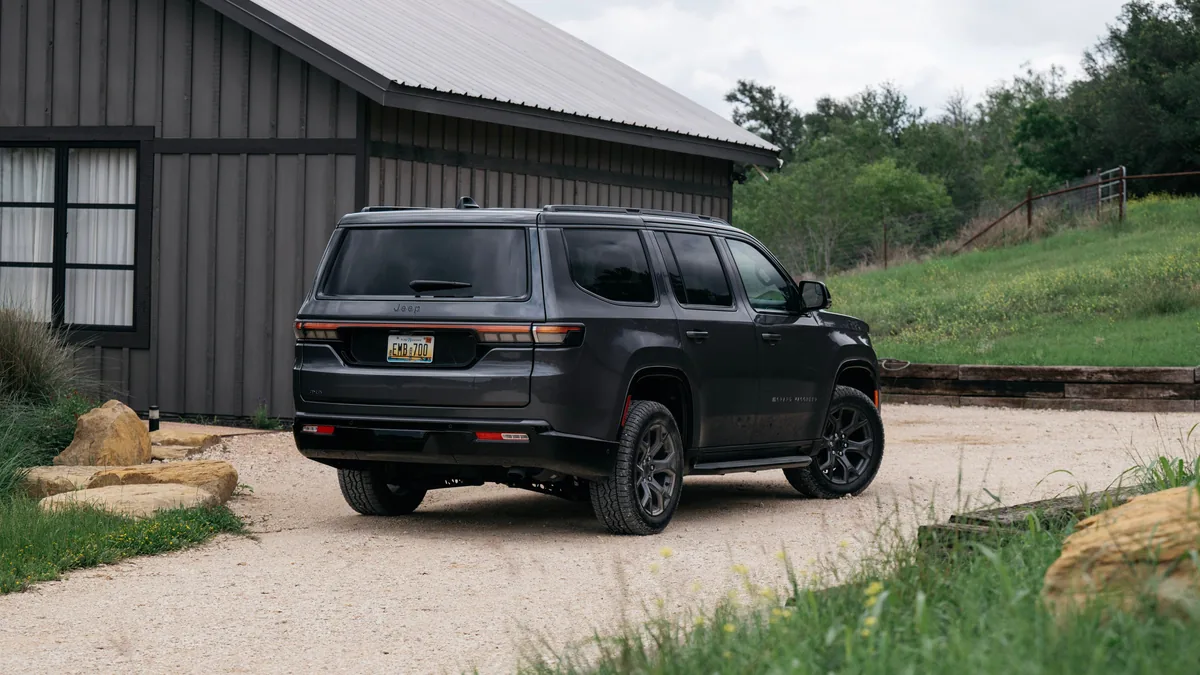
The Best Reason to Buy One
Grand Wagoneer buyers should justify this purchase based on specific needs: space for a large family or frequent travelers, towing requirements (boats, caravans), comfort over long distances, and road-trip calm. A buyer who has regular work requiring transport of equipment or materials can easily justify the SUV more than someone driving solo.
I also appreciate that the engine choice avoids defaulting to a massive V-8 in many cases. The twin-turbo inline-six delivers 420 horsepower and significant torque, feeling smoother on the highway. However, this is still a heavy, boxy luxury SUV weighing over 6,400 pounds.
If you are looking for a vehicle that feels majestic but requires constant negotiation with parking ramps or narrow local streets every day, this will become tiring quickly. The “majestic” feel on the highway does not translate to ease of maneuvering in tight spaces.
The Catch: Comfort Hardware as Ownership Risk
Air suspension, power seats for all rows, large wheels (often 20+ inches), premium audio systems like Harman Kardon or Bowers & Wilkins, driver-assistance sensors, rear entertainment screens, and advanced camera systems make a luxury SUV feel special. They also create more things that must be diagnosed correctly later.
In markets with strong Jeep support networks (like the US or Canada), these complexities are manageable. In markets where this is considered a rare import—such as parts of Southeast Asia—they become the main risk. If your local mechanic does not have experience with air suspension leaks, radar sensor calibration after bumper replacement, or cooling system failures in extreme heat, you will face significant headaches.
My first inspection focus must be on the parts that make daily ownership expensive: tires (which wear fast due to weight), brakes, suspension components, cooling systems, headlights which may need recalibration, and body trim. If a dealer cannot answer questions about these lead times clearly, I would slow down.
Vietnam and Southeast Asia Practicality
This is inherently a big vehicle for many local streets in Vietnam and similar markets with narrow lanes and steep parking ramps. Before buying, you must physically test the home garage, office basement, school drop-off route, and favorite shopping-mall entrance.
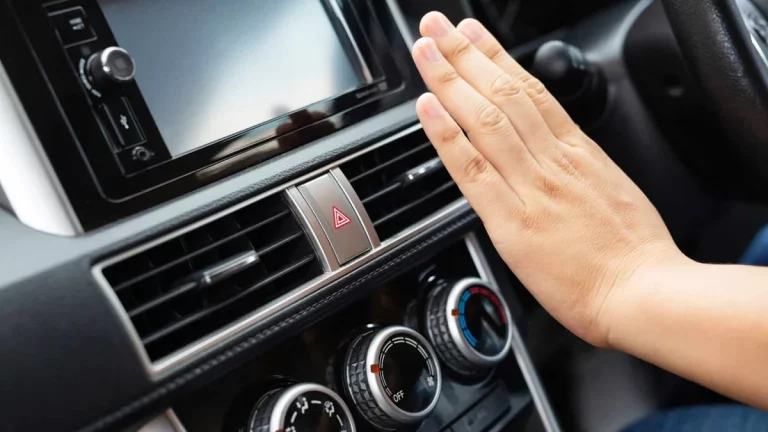
A big SUV that feels majestic on a highway can become tiring if every errand is a three-point negotiation to fit into tight spaces. Heat also matters significantly in this region. Run the air-conditioning with passengers in all rows after the vehicle has sat in the sun for hours. Check whether the third row cools quickly and whether the panoramic glass adds too much heat load.
For a family hauler, rear climate performance is not a luxury feature; it is a core safety and comfort item if you are transporting children or elderly passengers who cannot regulate their own temperature effectively.
How I Would Compare It With Rivals
Against the Cadillac Escalade: The Jeep needs to win on comfort value and towing confidence rather than pure badge power. The Escalade often feels more planted in luxury, but the Grand Wagoneer offers better off-road capability if you need it.
Against the Lincoln Navigator: It has to feel less flashy and more useful. Both are American flagships, but the Navigator is often perceived as slightly more traditional in its luxury approach, whereas the Jeep leans into a rugged-luxury aesthetic with air suspension that can be tuned for comfort or off-road.
Against the Toyota Sequoia or Lexus LX: It has to prove that the extra luxury screens and cabin hardware will not become a support headache after warranty. The Sequoia offers hybrid efficiency, while the Grand Wagoneer relies on gas power with high towing capacity (10k lbs vs roughly 7-8k for some hybrids). If you need reliability above all else in an import market, Toyota might be safer.
Against Minivans: I would also compare it with a high-trim minivan if the real job is moving people. That may sound unromantic to enthusiasts of this brand, but a minivan can be easier to enter and exit (crucial for children or older passengers), easier to park in tight spots, and often more fuel-efficient. The Grand Wagoneer makes sense when towing, road presence, and rough-road confidence are part of the requirement.
What I Would Check Before Buying
- Tire & Wheel Costs: Confirm the exact wheel and tire size (often 20 or 21 inches), then price replacement tires locally. Large SUVs consume a significant amount of rubber.
- Air Suspension Pricing: Ask specifically for air-suspension repair pricing and parts availability before buying. A blown bag can be costly to replace if the local shop is unfamiliar with the system.
- Parking Ramp Tests: Test every parking ramp, tight road you use weekly, and driveway entrance physically. Do not rely on video footage or showroom tests alone.
- Cooling System Check: In hot climates like Vietnam or Thailand, check second- and third-row air-conditioning performance after a “hot soak” (vehicle sitting in sun for 3+ hours).
- Insurance Quotes: Quote insurance before choosing a high trim with expensive lighting packages. High-value luxury SUVs often carry higher premiums.
Frequently Asked Questions
Is the 2027 Jeep Grand Wagoneer practical?
Yes, if you need big-SUV space and towing capability for your lifestyle. It is not practical if your normal life consists of narrow streets, tight parking spaces in a city center, and short solo commutes where fuel economy matters more than cargo volume.
Which trim would I choose?
I would start with a well-equipped mid-level trim rather than chasing the most expensive version immediately. Comfort features like captain’s chairs or specific audio packages matter more to daily life, but maximum decoration adds cost without proportional utility. Check if you need air suspension; it is often an option that defines the driving experience.
Is it a good Southeast Asia import?
Only with strong service support in your local region. I would want clear answers on suspension repair, cooling system maintenance under extreme heat, tire supply for large wheels, electronics diagnostics, and body parts lead times before committing to an order.
Does the 2027 model have new features?
No major mechanical changes are expected compared to the previous year. The focus remains on refining the existing platform with proven hardware. This is generally positive for buyers who want a stable vehicle rather than one undergoing teething issues from a redesign.
What about fuel economy concerns?
The twin-turbo inline-six engine provides good power but does not offer small-car efficiency. Expect around 18-19 MPG combined. If you drive mostly in the city, costs will be higher than expected due to vehicle weight and drag.
Dr. Worry’s Final Recommendation
I would buy the 2027 Grand Wagoneer for a real family that needs towing capacity or long-distance comfort on varied terrain. I would not buy it as a city status symbol where maneuverability is key.
The right buyer gets a comfortable luxury workhorse capable of handling heavy loads and rough roads with ease. The wrong buyer inherits a huge, complicated SUV that costs money even when parked due to depreciation risk in certain markets or high maintenance costs for specialized parts.
Before you commit your savings to this machine, ensure your local service network can handle the air suspension and cooling systems reliably. If they cannot guarantee support within 24-48 hours of a breakdown, walk away regardless of how luxurious the interior looks. This vehicle is a tool first; luxury second.
If you are unsure about this level of complexity or if your primary use case involves dense urban environments with limited parking, consider alternatives like the Honda Pilot (referenced in Car and Driver comparisons) which offers similar space without the towing penalty or maintenance headache. Or look at the 2026 Jeep Cherokee Hybrid for a smaller footprint that still brings some brand heritage to daily driving.
Ultimately, the Grand Wagoneer is an impressive machine when used as intended: hauling gear, traveling in groups, and conquering roads with confidence. But it demands respect from its owner regarding maintenance schedules and space requirements. Treat it accordingly, or find a smaller partner that fits your actual life better.
For those interested in other Jeep ownership realities, you might also review the Jeep Wrangler And Gladiator Fire Recall: My Park-Outside Owner Guide to understand how different models in the brand stack up regarding safety recalls and maintenance needs.
If you are looking for a more efficient alternative that still fits within the Jeep ecosystem, check out my 2026 Jeep Cherokee Hybrid: My No-Plug SUV Buyer Check for a perspective on electrification options that might suit city dwellers better.
And if you are considering used vehicles from other brands, read Honda SUV Recall: What Used-Car Buyers Should Check to see how recall histories impact value and safety decisions across the industry.
Makes a final decision based on your specific needs, not just the badge. The 2027 Grand Wagoneer is ready for you if you are ready for it—but that readiness must include financial preparedness for its upkeep and physical acceptance of its size constraints.