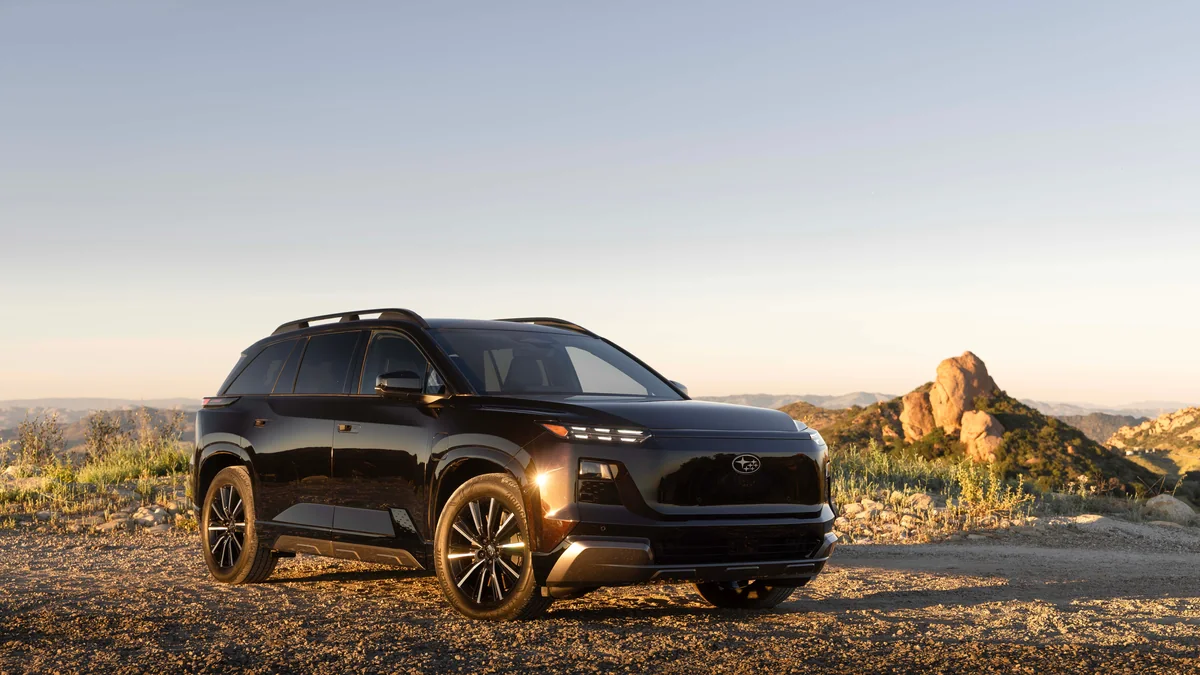
Dr. Worry’s verdict: Do not cancel a 2027 Subaru Getaway reservation solely because production has slipped, but do not arrange your family transport around an unconfirmed delivery date. I would keep any deposit refundable, preserve a backup vehicle through early 2027, and compare a real Getaway test drive with the Kia EV9 and Hyundai Ioniq 9 before signing.
Subaru confirmed on July 23 that the three-row electric SUV needs more time for final adjustments before launch. It did not publish a new production or dealer-arrival date. The Getaway had been scheduled for U.S. release in late 2026, so the useful fact today is uncertainty—not a rumored month pulled from the related Toyota Highlander EV delay.
Quick Takeaways
- Subaru has confirmed a delay but has not given a replacement launch date.
- The Getaway is a seven-seat EV co-developed with Toyota and planned for Kentucky production.
- The main version promises dual-motor AWD, 420 hp, and more than 300 miles of manufacturer-estimated range.
- A 95.8-kWh battery and native NACS port are strong on-paper assets; 150-kW peak DC charging is less exceptional.
- Families should protect trade-in value, finance timing, and charging plans while they wait.
What Subaru actually confirmed
Cars.com reported Subaru’s direct confirmation that the start of production is delayed to allow sufficient time for final adjustments before launch. Subaru did not describe a defect, regulatory problem, or revised schedule. Because the closely related Toyota Highlander EV is also delayed and both are slated for Toyota’s Georgetown, Kentucky, plant, it is reasonable to watch the two programs together. It is not reasonable to state that their delivery dates will be identical without confirmation.
The original Subaru Corporation launch release targeted late 2026 for U.S. release. Until Subaru replaces that timing publicly, I would regard a dealer’s estimated arrival as provisional. “Final adjustments” could cover manufacturing readiness, calibration, software, supply, or another launch task; Subaru has not said which.
The Getaway specification still deserves attention
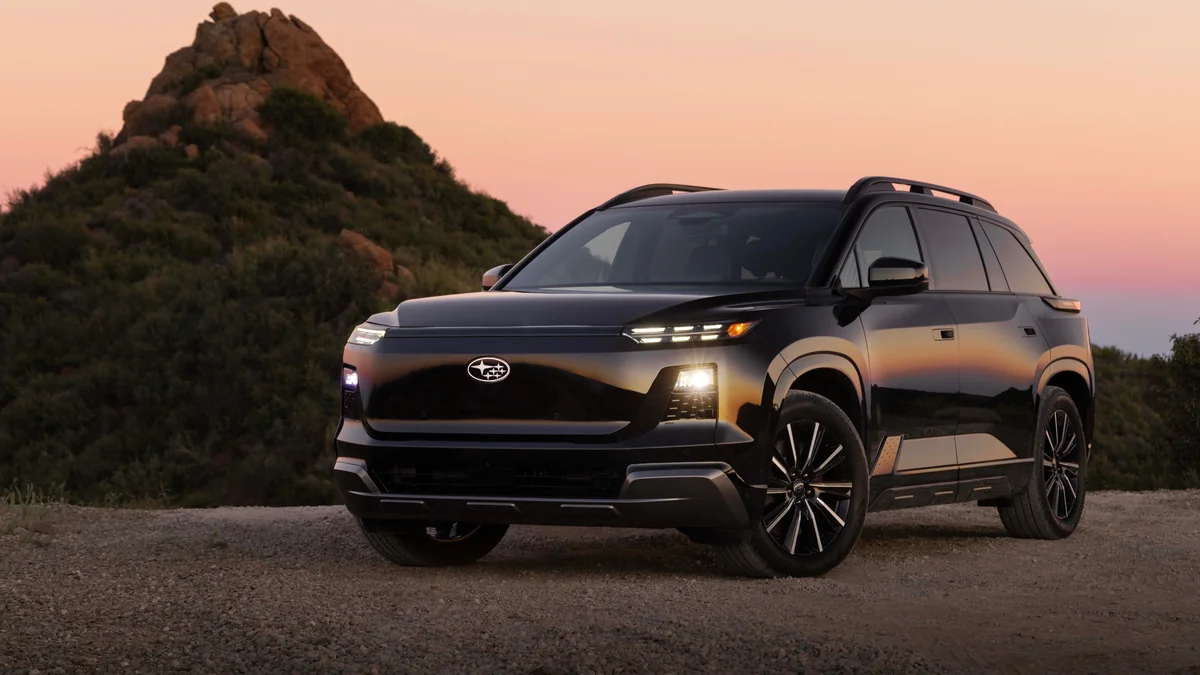
The delay does not erase the vehicle’s appeal. Subaru says the Getaway uses front and rear motors for 420 hp, standard all-wheel drive, seating for up to seven, and a flat-floor cabin. The large-battery model is expected to exceed 300 miles of manufacturer-estimated range. It also has 8.3 inches of ground clearance and a 3,500-pound towing rating.
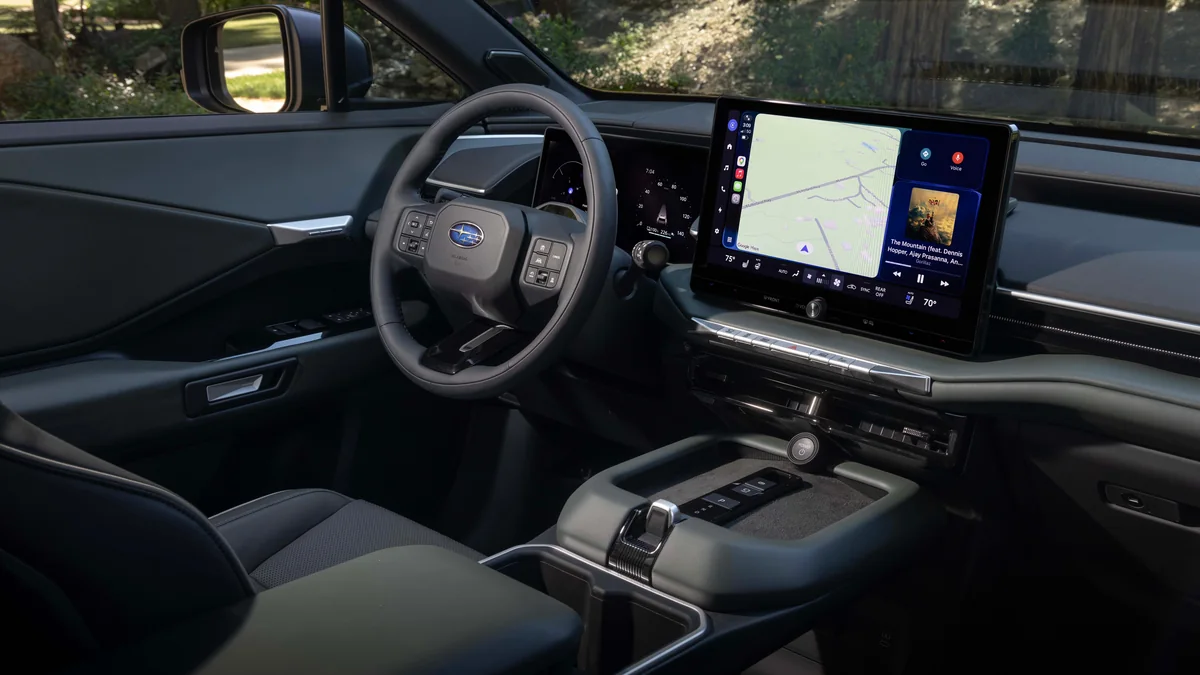
Independent launch coverage lists a 95.8-kWh battery for the long-range version, with a future 77-kWh option. A native NACS port should simplify access to compatible Tesla Superchargers. The reported 150-kW DC peak and roughly 30-minute 10-to-80-percent target are adequate, but not class-leading for such a large battery. I care more about a stable charging curve, cold and hot battery conditioning, and cable reach with a large SUV.
What the delay can cost a family
A delayed vehicle can become expensive before it arrives. A current lease may expire, a trade-in may lose value, an incentive may disappear, and a home charger may be installed for a car with changing specifications. I would avoid selling a dependable vehicle or taking bridge finance until Subaru provides a build and delivery window tied to the order.
Ask the dealer to put refund terms, price protection, trim, color, and the treatment of incentives in writing. A refundable reservation is a place in line, not a promise that the final transaction remains attractive. If the order requires a non-refundable sum while price and timing are unknown, I would wait.
Wait, choose another EV, or buy a hybrid?
I would wait if the Getaway’s combination of Subaru chassis tuning, standard AWD, ground clearance, seven seats, and NACS access solves a specific need that competitors do not. I would switch if a vehicle is needed by a fixed date, local charging is ready, and an EV9 or Ioniq 9 passes the family’s space and finance tests now.
The Hyundai Ioniq 9 ownership guide covers a three-row electric alternative already closer to normal retail reality. Families who want Subaru but need less space can also review the Subaru Trailseeker EV. A gasoline or hybrid three-row SUV remains the calmer option for apartment dwellers and remote-route drivers without dependable charging.
Why the Toyota relationship is both strength and caution
Joint development gives Subaru access to manufacturing scale and a shared electric platform while allowing its engineers to tune suspension and AWD behavior. That can reduce risk compared with an isolated first-generation program. It also means a production issue at the shared plant or a common-system adjustment can affect both brands.
WorryCars already examined the related Toyota Highlander EV delay. The important distinction is buyer intent: the Highlander decision centers on Toyota’s family-SUV transition, while the Getaway adds more claimed power, Subaru tuning, and a separate dealer and warranty relationship. I would test those differences rather than assume the badges are interchangeable.
My family test before accepting delivery
Put adults in the second and third rows at the same time. Install the exact child seats, open every door in a narrow parking space, and load the stroller with the third row raised. A seven-seat label is not proof that seven people and their luggage fit. Then drive on broken pavement and listen for suspension noise from the large wheel option.
For the electric side, arrive with a warm battery at a public NACS charger and record the full session. Check navigation preconditioning, payment, charger availability, and how the car estimates arrival range with passengers and climate control. If towing matters, demand a route demonstration with trailer-aware range logic rather than relying on the 3,500-pound headline.
Southeast Asia is a separate availability question
The announced specifications and Kentucky production plan concern the U.S. market. Subaru has not confirmed a Vietnam, Thailand, Singapore, or Cambodia launch. A grey import could introduce charging, connected-service, map, warranty, and high-voltage-parts problems that overwhelm the vehicle’s technical strengths.
I would wait for an authorized local specification. Confirm connector access, app support, battery warranty, collision repair, windshield and body-panel supply, and technician training. In tropical heat, also ask for charging-curve and battery-cooling data rather than assuming a North American estimate transfers unchanged.
What I would put in writing before ordering
- The deposit remains fully refundable until final price and delivery date are accepted.
- The ordered battery, trim, wheel size, and seating layout are identified.
- Price protection and incentive treatment are clear.
- The dealer explains what happens if delivery moves into another model year.
- Home-charger work waits until connector and electrical requirements are final.
- The trade-in is not surrendered before the new car is physically ready.
FAQ
When will the 2027 Subaru Getaway arrive?
Subaru has confirmed a delay and has not issued a new launch date. Late-2026 timing is no longer dependable for planning.
Is the Getaway canceled?
No. Subaru describes the change as a delay for final adjustments, and the vehicle remains in its future lineup.
How much range will it have?
Subaru says the long-range version should exceed 300 miles, but final certified figures and real-world results remain to be verified.
Should I buy an EV9 instead?
I would if you need a three-row EV by a firm date and the EV9’s price, charging, space, and local support work today. Wait for the Getaway if its AWD and Subaru-specific setup matter more than timing.
Dr. Worry’s Final Recommendation
I would keep a refundable place in line, but I would not let an uncertain launch control my family’s transport plan. The Getaway has credible ingredients: real power, standard AWD, useful ground clearance, three rows, and a large battery. It still needs a confirmed date, final price, certified range, and an ordinary-road charging test. Wait with options, not with crossed fingers.