Dr. Worry’s verdict: I would not replace a 12-volt car battery because it has reached a fashionable birthday, and I would not trust a single voltage reading taken immediately after a jump-start. In tropical heat, batteries often age faster, but the honest decision needs a visual inspection, a fully charged test, the correct battery rating, and a charging-system check. Replace a battery that fails those tests; diagnose the car when the evidence points elsewhere.
A weak starter battery can create an absurd range of symptoms: slow cranking, clicking relays, flickering displays, lost settings and fault messages from modules that are perfectly healthy. Heat accelerates chemical activity and corrosion, while short trips and long parking periods can leave a good battery undercharged. That is why “it started today” and “the meter showed 12 volts” are both incomplete answers.
Quick Takeaways
- Charge a low battery before judging its health unless it has an obvious physical failure.
- Match battery type, size, terminal layout and manufacturer rating.
- Inspect cables, hold-down hardware and charging voltage as part of the same job.
- A battery warning lamp often points to the charging system, not simply the battery.
- Keep the printed test result and installation date for warranty and future diagnosis.
Why Tropical Heat Changes the Risk
AAA’s current guidance says batteries in hot southern climates commonly have shorter lives than those in cooler regions and notes that under-hood temperature can be extreme. I treat that as a reason to test sooner, not permission to sell every three-year-old battery. Battery location, heat shielding, driving pattern, charging strategy and vibration all matter.
Heat can accelerate water loss and grid corrosion inside a conventional lead-acid battery. Frequent short trips may not restore the energy used during starting, especially with air conditioning, lights and electronics operating. A car left for weeks may also have normal standby draw that slowly lowers charge. Before blaming age, I ask how the vehicle is actually used.
What a Proper Battery Test Should Establish
I begin with battery identity: flooded lead-acid, enhanced flooded battery or AGM; the correct group size or regional case code; cold-cranking amps or amp-hour requirement; and the date code. AAA advises matching the factory battery type because modern charging systems are calibrated around it. A physically fitting substitute can still be the wrong electrical choice.
Open-circuit voltage mainly tells me state of charge after the battery has rested. It does not directly prove starting capacity. A conductance tester estimates available cranking performance, while a controlled load test observes voltage under demand. The test method and entered rating must match the battery. If a tester is told that a 500-CCA battery is rated at 700 CCA, the result is meaningless.
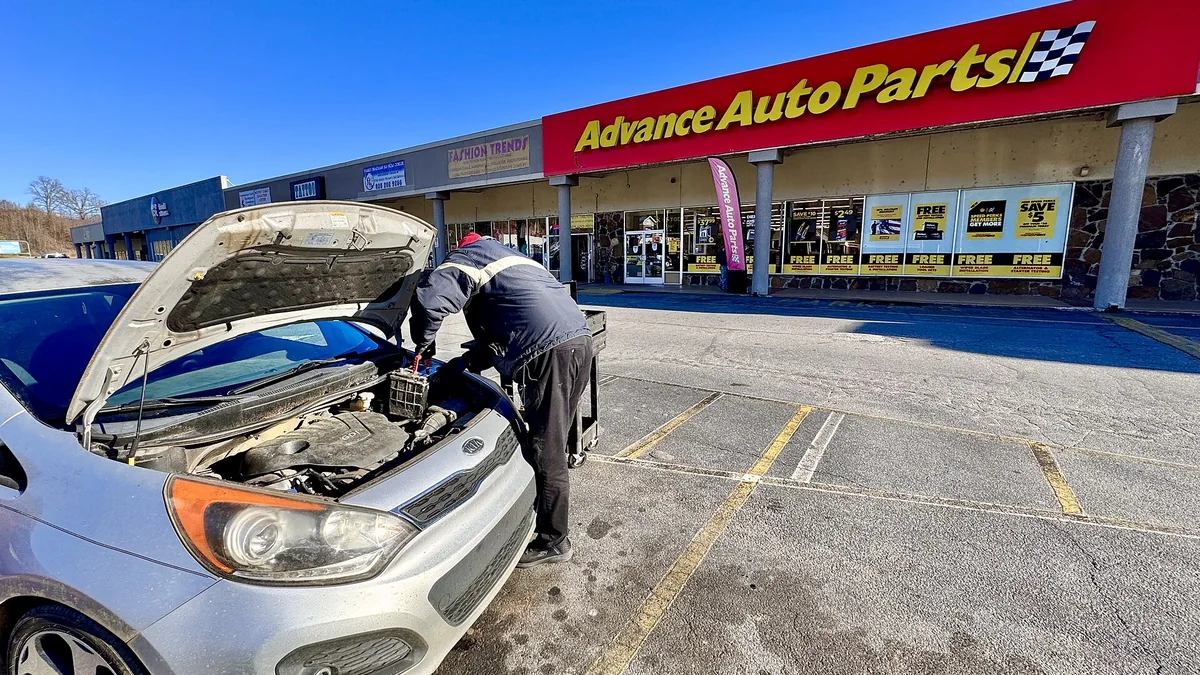
AAA’s battery-test explanations separate “good,” “good-recharge,” “charge and retest,” and “replace” outcomes. I like that discipline. A deeply discharged battery may be impossible to judge accurately until it is charged and retested. A bad cell, swollen case, crack, leak or persistent sulfur smell is different: I stop using it and arrange safe replacement.
Connections and Charging Can Imitate Failure
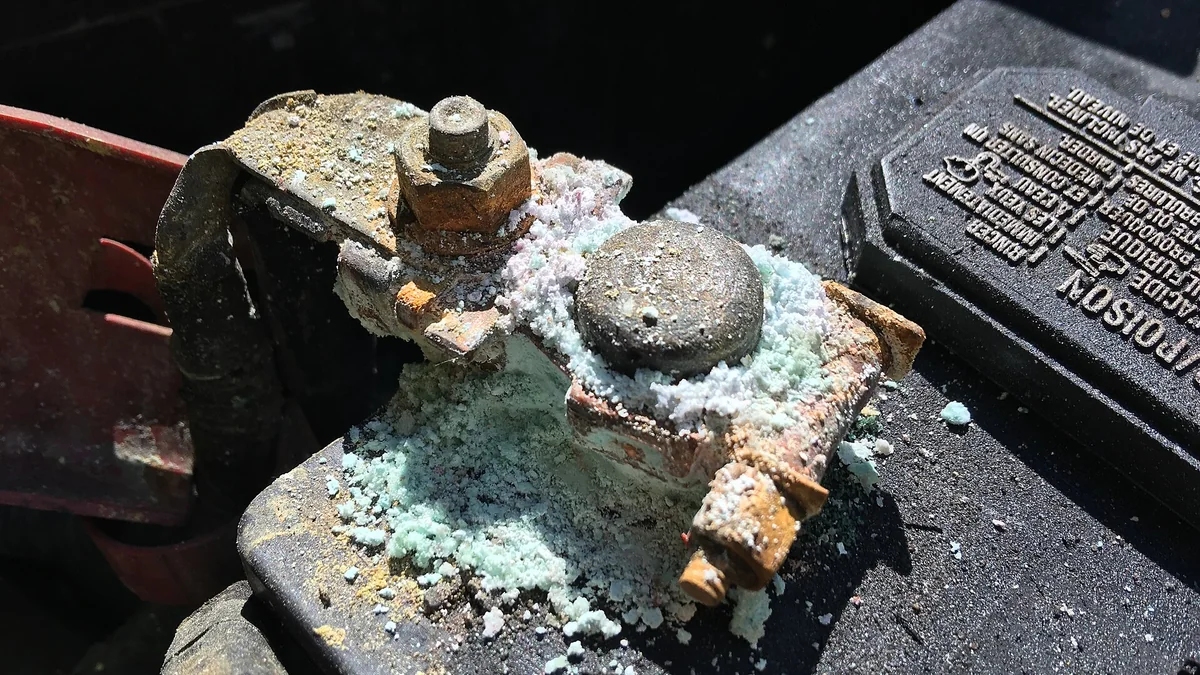
Corrosion, a loose terminal or a damaged ground strap adds resistance. The battery can test well at its posts while the starter receives inadequate voltage. I inspect both terminal faces, cable crimps, the engine ground and body ground. The hold-down must be present and tight because vibration damages internal parts; improvised packing around a loose battery is not acceptable.
I then check the charging system with the vehicle-specific procedure. Alternator output varies on smart-charging cars, so one universal running-voltage number is not reliable. I look for charging-system codes, belt condition where relevant, voltage drop and current behavior under load. The used-car reset warning guide explains why cleared codes and freshly disconnected batteries deserve extra scrutiny.

What I Would Check Before Approving Replacement
- Photograph the old battery label, type, rating, date and terminal orientation.
- Inspect the case, vents, terminals, cables, grounds and hold-down.
- Charge and retest when the analyzer says the state of charge is too low.
- Request the printed result with measured and rated cranking performance.
- Check the starter draw and charging system if symptoms do not match the battery result.
- Confirm whether battery registration or energy-management reset is required.
- Record the new battery serial, warranty, date and installation mileage.
Replacement Details That Prevent Repeat Trouble
I fit the specified chemistry and never downgrade the required rating. More capacity is not automatically better if the case, venting, weight or charging calibration is wrong. On batteries mounted in a cabin or luggage area, the correct vent connection matters. On stop-start cars, replacing AGM or EFB with a basic flooded battery can create short life and unreliable stop-start behavior.
Some cars require battery registration so the energy-management system knows a new battery is installed. That is not universal, so the workshop should cite the procedure for the exact model. I also ask why the old battery failed. If the vehicle has been sitting, the service-history evidence approach used for sealed transmissions is useful here too: records and measured condition beat assumptions.
When a Parasitic-Draw Test Makes Sense
If a charged, healthy battery repeatedly goes flat while parked, I investigate key-off current after the vehicle’s modules have had time to sleep. Opening doors, waking a keyless system or attaching a meter incorrectly can spoil the result. The technician should compare the stabilized draw with model guidance, isolate the responsible circuit and confirm the repair. I do not install a larger battery to mask a glovebox lamp, tracker, dash camera, faulty module or aftermarket audio system that stays awake.
Frequently Asked Questions
Is 12.6 volts enough to prove a battery is good?
No. It suggests a high state of charge after rest, but the battery can still lack cranking capacity. Use the correct capacity or load test.
Should I replace a car battery every three years in a hot country?
Not automatically. Hot climates increase risk, so test proactively and inspect more often. Replace on failed capacity, physical damage or a model-specific requirement.
Does the red battery light mean the battery is bad?
Often it signals a charging-system fault. Minimize electrical loads and have the charging system diagnosed promptly rather than installing a battery blindly.
Can driving recharge a deeply discharged battery?
Not reliably. AAA notes that a proper charger may be needed. Charge safely, then retest; also find the reason it discharged.
Dr. Worry’s Final Recommendation
I would test a tropical-climate battery before the hottest travel season and before a long trip, but I would buy only after the evidence is coherent. Demand the battery identity, charged test result, connection inspection and charging-system check. That small paper trail prevents both a roadside failure and the expensive habit of replacing healthy parts.