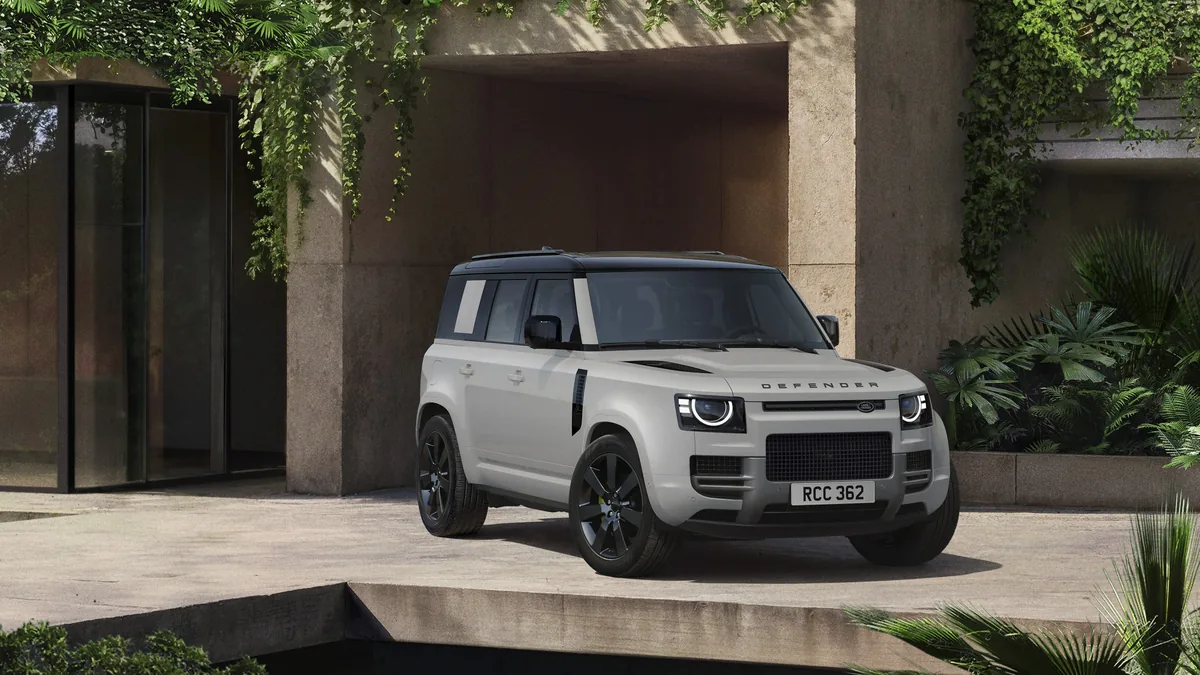
Dr. Worry’s verdict: Do not let the glossy exterior of the new Vertex trim distract you from fundamental ownership realities. The 2027 Land Rover Defender has undergone a significant powertrain shift, dropping the beloved supercharged V-8 and entry-level turbo four in favor of an all-new lineup centered on the inline-six. While the Vertex styling offers undeniable presence with its extended bumpers and gloss-black accents, it is merely cosmetic packaging over existing mechanical foundations. For families or those requiring genuine utility, prioritizing body length (90 vs 110 vs 130) and tire sidewall height remains far more critical than choosing a specific aesthetic package.
Land Rover’s July announcement confirms that the OCTA performance model now utilizes a twin-turbo V-8, while every other body style relies on turbocharged engines. This means buyers seeking an eight-cylinder experience must specifically target the top-spec OCTA or consider used examples of the discontinued 5.0-liter unit. The new Vertex specification adds visual flair but does not alter the underlying off-road capability or drivetrain architecture. Buyers must verify local pricing, as market specifications vary significantly outside the U.S., and assume that every country will not follow the same lineup immediately.
Quick Takeaways for the 2027 Buyer
- The Vertex trim is a design overlay (bumpers, grille, spoiler) rather than a new mechanical platform or capability upgrade.
- The Defender 110 remains the balanced choice; the short-wheelbase 90 sacrifices access for charm, while the long 130 requires genuine third-row usage to justify its length and garage constraints.
- Second-row captain chairs offer comfort but reduce seating flexibility and cargo capacity compared to a bench seat.
- The revised engine range renders used supercharged V-8 examples a distinct ownership category with different maintenance profiles than the new inline-six or OCTA models.
The factual baseline for this guide comes from the primary official or regulatory source. I use those published details as inputs; the buyer and ownership judgment is my own.
What the Vertex Package Actually Adds
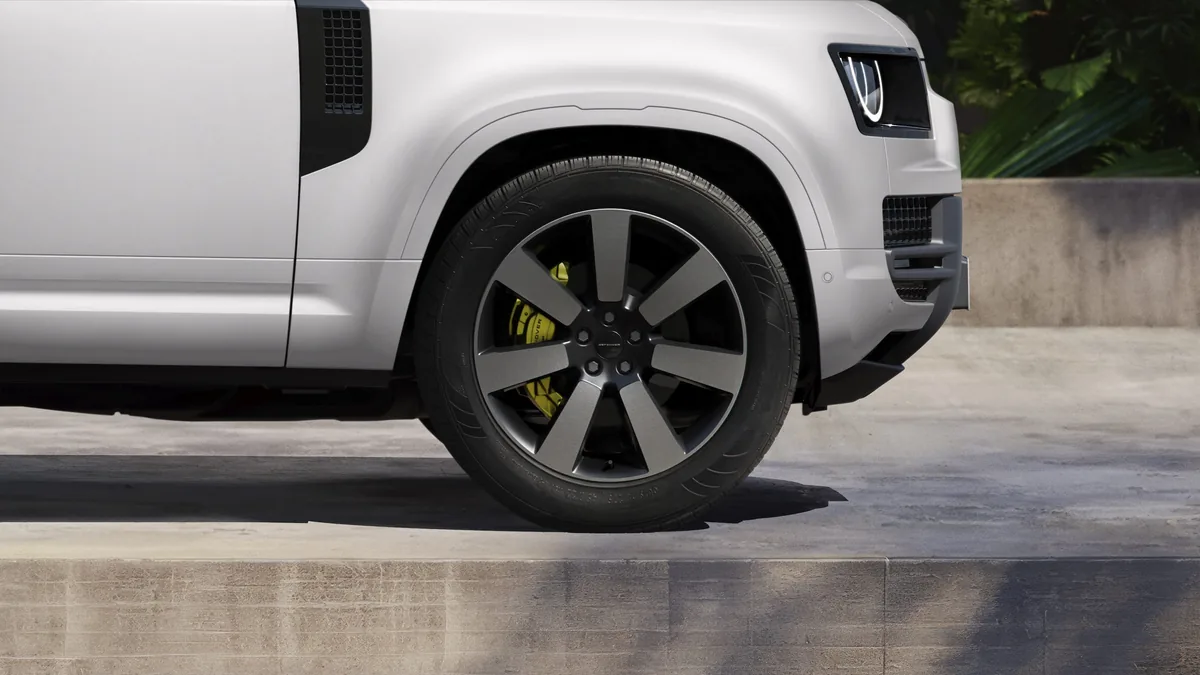
To understand what you are paying for, one must inspect the specific hardware changes. Land Rover describes the Vertex as featuring extended front and rear bumpers, a larger profiled grille, revised fog lamps, a gloss-black rear spoiler, yellow brake calipers matching tow hooks, and color-matched lower sections.
I would urge caution regarding these cosmetic exclusivities. Larger painted trim pieces and unique bumper designs can significantly increase repair costs for minor parking damage or stone chips that were previously negligible on standard black plastic bumpers. Furthermore, a rear spoiler and spare-wheel cover may compromise roof accessory mounting points or obstruct visibility in tight spaces.
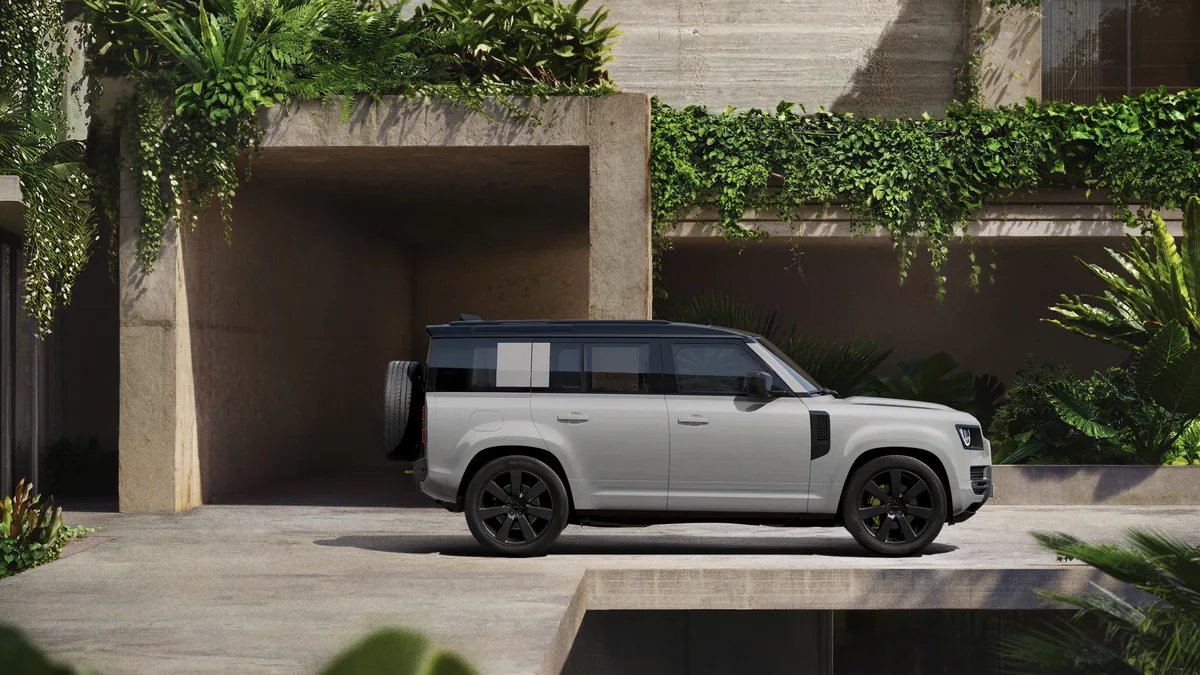
An Extended Exterior Pack offers similar visual treatments on other trims without necessarily including the color-matched lower section. This tells me that the Vertex is primarily about personalization and presence, not extra mechanical capability. If you choose this trim, ensure your local dealer has a robust supply chain to replace these unique parts quickly; cosmetic exclusivity becomes an annoyance when a damaged bumper takes months to arrive.
The Engine Decision Matters More for 2027
This is the most critical technical change. Reports confirm that the four-cylinder entry engine has been removed from the U.S. lineup, leaving the turbocharged inline-six as the starting point. Simultaneously, the supercharged 5.0-liter V-8 producing up to 500 horsepower has been axed for new model years.
For most owners, I recommend choosing the inline-six. It offers sufficient performance for a large SUV without the excessive fuel consumption, tire wear rates, and insurance premiums associated with high-output models like the OCTA. The OCTA makes sense only if you specifically require its chassis dynamics and raw power; do not buy it solely to retain a V-8 badge.
If your heart still belongs to that 5.0-liter engine, buying a used example is now a separate ownership decision requiring careful vetting of maintenance history. However, the new twin-turbo V-8 in the OCTA represents a different engineering approach entirely.
Six Seats Sound Useful, But Test the Layout
The Defender 110 now gains a six-seat configuration featuring individual captain chairs in the second row. While this improves comfort for adults by providing defined seats and easier rear access, it is often less practical for parents requiring wide bench seating or three child safety seats.
I would insist on bringing your family to the showroom before ordering. Install real child seats, fold every seat back, load a stroller, and verify whether passengers can reach the third row without navigating a complicated dance around fixed obstacles. A luxurious seating layout is not automatically practical if it compromises cargo space or safety installation.
90, 110, or 130? The Body Style Reality
The Defender 90 possesses the strongest visual charm but offers the weakest everyday access. I recommend this only for single occupants or couples who accept awkward rear-seat entry and limited cargo volume.
The 110 is my default recommendation because it balances parking maneuverability, cabin space, and road comfort. The 130 is reserved strictly for buyers who genuinely utilize the third row regularly or require maximum luggage capacity and can accommodate its length in their daily driving environment.
In dense urban environments like those found in Southeast Asia, the 130 can become tiring to navigate basement ramps and narrow streets. Measure your garage door opening height and width before committing; do not rely solely on brochure dimensions. Test the same route you drive every week and pay close attention to mirror blind spots and rear swing space around the side-hinged tailgate.
Tires Decide Whether It Feels Like a Defender
Large wheels, often paired with Vertex or performance trims, make the vehicle look sharp but reduce sidewall protection. On broken roads common in many regions, a sensible wheel setup with more tire sidewall can improve ride quality and significantly reduce damage risk.
If you genuinely drive off pavement regularly, prioritize an approved all-terrain tire package over aesthetic 20-inch wheels that offer little clearance benefit. Always carry a full-size spare if possible; temporary spares are insufficient for the Defender’s weight class in remote scenarios.
Ownership Risks Have Not Disappeared
Defenders remain complex luxury vehicles equipped with air suspension, advanced camera systems, driver-assistance hardware, and numerous powered features. I would insist on a strong warranty package and a dealer network capable of diagnosing these specific electronic issues.
In Southeast Asia specifically, parts lead times can matter more than labor prices due to shipping logistics for unique components like the Vertex-specific bumpers or lighting assemblies. Before buying, read our comprehensive guide on recent safety campaigns affecting this brand family: Land Rover Airbag Recall Action Guide. Verify the VIN for open airbag or software recalls before delivery.
Buyers cross-shopping a smaller, fashion-focused Land Rover like the Evoque should also review our Range Rover Evoque ownership-risk guide, as shared platform technologies mean some electronic vulnerabilities may overlap across models.
Practical Buying and Owner Checklist
- Select the 90, 110, or 130 body style only after testing real parking scenarios and passenger access with your specific family members.
- Confirm the exact local engine lineup available in your region; do not assume global specs apply to your market immediately.
- Price replacement tires for the chosen wheel package before finalizing the build order.
- Ask explicitly about lead times on Vertex-specific bumpers, trim pieces, and lighting units from your local dealer.
- Test captain chairs with child seats installed to ensure rear access is not compromised by fixed seatbacks.
- Verify VIN recall status via official channels before delivery or lease signing.
- Get insurance quotes based on the actual engine output (V-8 vs inline-six) and trim level, as premiums vary drastically.
Frequently Asked Questions
Is the Defender Vertex more capable off road?
No. Land Rover states that capability is preserved, but the main changes are purely design and equipment focused. Tire choice (sidewall height) and the underlying drivetrain matter significantly more for off-road performance than the presence of a spoiler or gloss-black bumper.
Which Defender body style would I buy?
I recommend choosing the 110 for most families as it balances parking, cabin space, and road comfort. The 90 is suitable only if you accept access compromises, while the 130 suits genuine third-row usage.
Should I buy a used 5.0-liter V-8 instead?
Only if you specifically value that engine architecture and are prepared to accept its higher fuel consumption, maintenance complexity, and potential warranty risks compared to the new inline-six or OCTA models.
Does the Vertex trim affect insurance costs?
Yes. The OCTA performance model with a high-output V-8 will carry significantly higher premiums than an entry-level turbo-four (where available) or standard inline-six configuration, regardless of whether you choose the Vertex styling package.
Are there hidden costs in choosing the Vertex?
Beyond the purchase price premium, yes. Unique parts like color-matched lower sections and extended bumpers are more expensive to repair if damaged. Additionally, some accessories may interfere with roof rack mounting points or rear visibility.
Dr. Worry’s Final Recommendation
I would buy the Defender Vertex only if I genuinely prefer its styling after first choosing the correct body length (110), engine type (inline-six for most, OCTA V-8 for enthusiasts), seating layout (bench vs captain chairs), and tire package. The 110 inline-six remains the sensible center of the range.
The Vertex can make it feel more special with its bold urban look, but it should be treated as a final layer of personalization in your decision-making process, not the primary reason to ignore fundamental ownership fundamentals like service support and mechanical reliability. Prioritize utility over vanity when selecting this adventure tool.