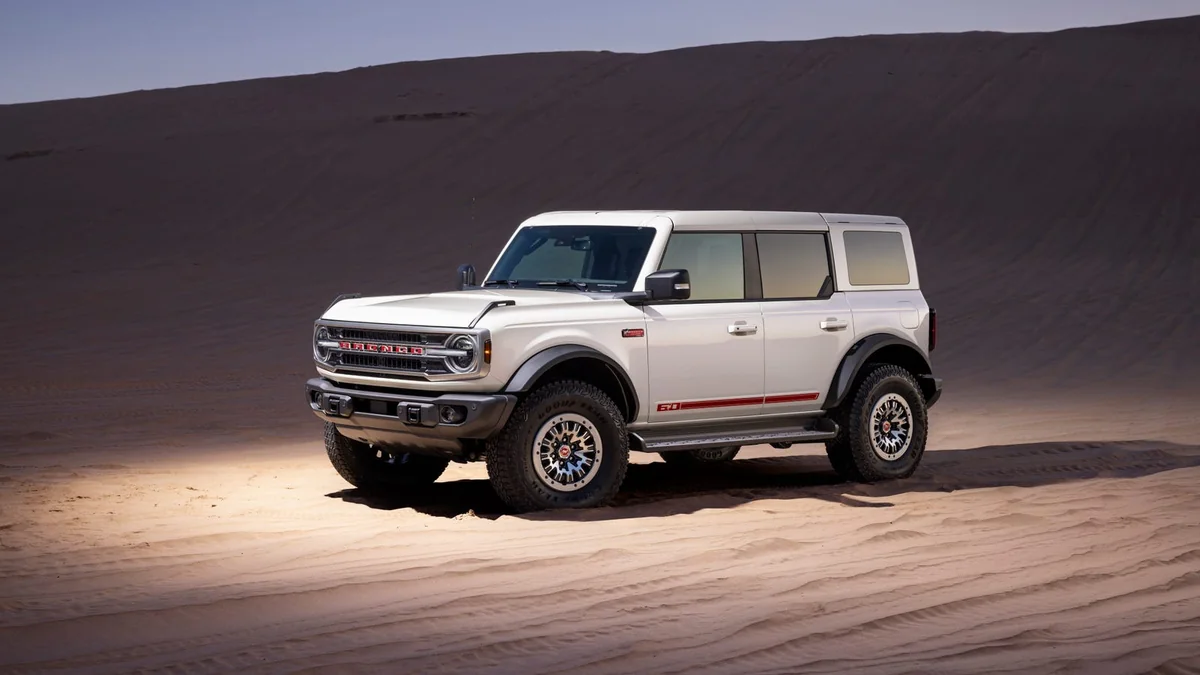
Dr. Worry’s verdict: If your 2021–2026 Ford Bronco or Bronco Raptor is included in recall 26V468, check the VIN now and book the free repair as soon as your dealer can perform it. I would not ignore smoke, an electrical warning, or an unusual hot smell, and I would not buy an affected used or imported Bronco without written proof that recall 26S55 has been completed.
This is not the older Bronco Sport fuel-injector story. It concerns the full-size Bronco and Bronco Raptor, where insufficient abrasion protection can let an engine-compartment wiring harness rub against nearby parts. Ford’s filing with the National Highway Traffic Safety Administration says exposed circuits may short to ground, arc, create heat or sparks, and ignite nearby material. The filing covers 565,691 U.S. vehicles and records 15 incidents in which Ford found evidence that a fire may have originated at the harness. Ford reported no known crashes or injuries as of July 13, 2026.
Quick Takeaways
- The U.S. campaign is NHTSA 26V468; Ford calls it 26S55.
- It covers certain 2021–2026 Bronco vehicles, including Bronco Raptor, but not the smaller Bronco Sport.
- The fault is inadequate protection around an engine-bay wiring harness, not an engine or fuel-system defect.
- Ford dealers will add convolute sheathing and abrasion tape free of charge.
- VINs are searchable now; owner letters are scheduled for August 24–28, 2026.
Which Broncos are affected?
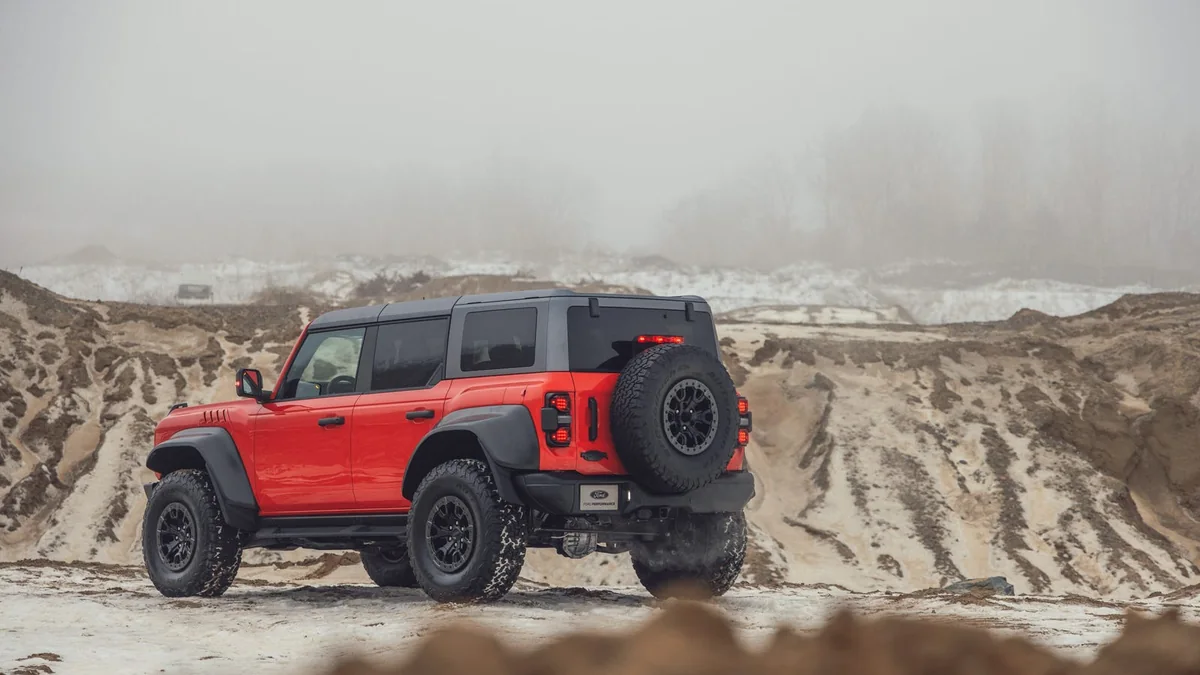
The recall population spans the revived Bronco’s first six model years. NHTSA’s Part 573 report identifies certain 2021–2026 Bronco vehicles and lists harness components across those years. Do not decide eligibility from the badge, engine, trim, or build year alone. A 17-digit VIN check is the dependable answer because recall populations are defined by production records and component use.
The distinction between Bronco and Bronco Sport matters. They are different vehicles on different platforms, and campaign 26V468 concerns the full-size Bronco family. Owners who have seen earlier fire headlines about a cracked fuel injector or an engine-block heater should not assume this is the same repair. Ask the service adviser to list every open campaign against the VIN and close each campaign separately.
What can happen when the harness chafes?
The problem begins mechanically: the harness can move against surrounding components where its protective covering is insufficient. If insulation wears through, internal wiring may be exposed. The electrical consequence can be an intermittent short and arcing. NHTSA says the resulting heat or spark may produce smoke or ignite flammable components, increasing injury and crash risk.
Ford’s chronology is useful because it keeps the risk in proportion. The automaker reviewed reports, field information, owner questionnaires, warranty cases and legal claims, identifying 15 incidents between October 15, 2024 and June 20, 2026 that may have originated at this harness. Ford estimates roughly one percent of the recalled population contains the defect. That is not the same as saying one percent will catch fire, but it is also not a reason to postpone a free safety repair.
What I would do before the repair
First, run the VIN through Ford’s recall lookup and the NHTSA database. Save a screenshot or printout showing the campaign status, then call a Ford dealer and ask whether parts and workshop instructions are available. If the vehicle is an import in Vietnam, Thailand, Cambodia or another market, contact the regional Ford distributor with the VIN. U.S. campaign eligibility does not automatically guarantee that a local dealer can claim reimbursement, so get the local process in writing.
Ford and NHTSA have not issued a general park-outside or do-not-drive instruction for this campaign. I would not invent one. I would, however, stop safely, switch off the vehicle, move occupants away, and call emergency services if smoke appears through the vents, a strong electrical-burning smell develops, a warning appears with other symptoms, or flames are visible. Do not open a hot hood to investigate a suspected engine-bay fire.
Owners should also avoid home-made tape repairs. The dealer remedy specifies protective sheathing and abrasion tape applied under an approved procedure. A casual visual check cannot prove that internal insulation is intact, and an unofficial repair can complicate both safety accountability and resale documentation.
What the dealer repair changes
Ford’s remedy adds convolute sheathing with abrasion tape to the affected portion of the engine-compartment harness. The goal is to prevent the contact and chafing that can expose the circuits. The work is free for an eligible U.S. vehicle. Before leaving the dealer, I would ask for a repair order showing the VIN, campaign 26S55, completion date, mileage, parts or operation code, and a zero customer balance.
This is the same documentation discipline I recommend in the Ford and Lincoln rollaway recall owner guide. A recall is not truly finished for a future buyer until the manufacturer database and the paper trail agree. If the online status stays open several days after the visit, ask the dealer to verify that the claim was submitted correctly.
Used and imported Bronco buyer advice
I would not reject every recalled Bronco. A completed recall with clean documentation is usually a manageable issue. The buying risk is an open campaign combined with an uncertain repair path, particularly on a privately imported vehicle far from an authorized Ford workshop.
Before paying, check the VIN yourself, inspect service history, and make the sale conditional on completion if the remedy is open. Ask whether the seller has seen smoke, electrical warnings, unexplained battery drain, burning odors or prior harness work. Those answers do not replace a professional inspection, but they help the technician focus on the right area.
Also check for unrelated campaigns. A model can have several open recalls at once, and closing 26S55 does not close a camera, seat, driveline or other safety action. My broader Ford recall documentation checklist explains why buyers should obtain a VIN-specific list rather than rely on a seller’s memory.
What I would check before buying
- Run the VIN through both Ford and NHTSA recall tools.
- Confirm whether 26S55 is open, completed or not applicable.
- Obtain the dealer repair order, not merely a verbal claim.
- Check all other open campaigns on the same VIN.
- For an import, confirm which local dealer will perform and fund the repair.
- Have any warning, odor, smoke history or non-factory wiring inspected independently.
Ford Bronco recall FAQs
Does this recall include the Bronco Sport?
No. Campaign 26V468 covers the full-size Bronco and Bronco Raptor population described in Ford’s filing. Bronco Sport is a separate model and has had different recall campaigns.
Is every 2021–2026 Bronco definitely defective?
No. Ford estimates about one percent of the recall population has the defect. The recall population is intentionally wider so eligible vehicles can receive the preventive repair. Use the VIN to determine inclusion.
Should owners park outside?
Ford’s filing does not give a general park-outside instruction for this campaign. Follow current Ford and NHTSA directions for your VIN. If you notice smoke, fire, or a strong burning smell, stop safely and move away from the vehicle.
When will owners receive letters?
Ford expects to mail owner notifications between August 24 and August 28, 2026. VINs were scheduled to become searchable earlier, so owners do not need to wait for the paper letter before checking.
Dr. Worry’s Final Recommendation
Treat 26V468 as a prompt-repair recall, not a reason to panic and not a reason to do nothing. Check the VIN, arrange the approved free protection for the harness, and keep the completed repair order. If you are buying an imported Bronco, make the local repair path part of the purchase decision before money changes hands.