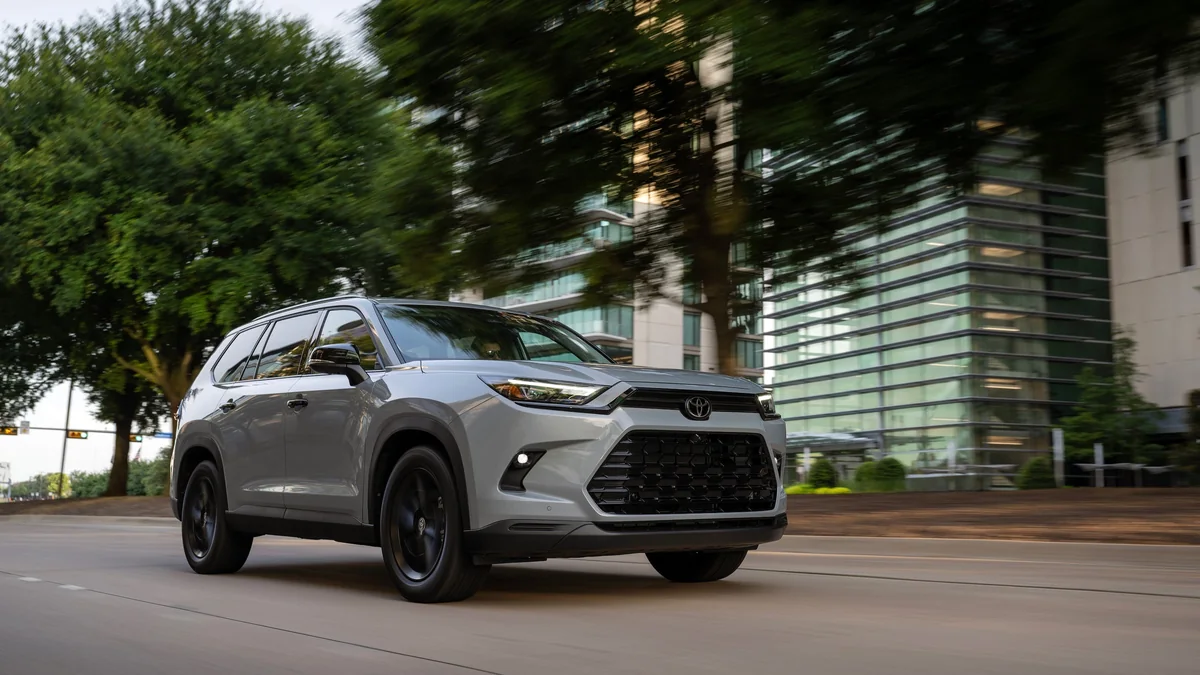
Dr. Worry’s verdict: If you own or are about to collect a 2026 Toyota Grand Highlander or Lexus TX in North America, check the VIN before the next long drive and before handing over final payment. This is not a cosmetic campaign: an affected rear axle carrier can break and reduce rear stability. I would not reject the entire model line, but I would not accept vague dealer assurances either.
The important detail is scope. Toyota’s campaign covers a limited batch of 2026 vehicles, not every Grand Highlander or TX. It also reaches across gasoline, hybrid, and plug-in-hybrid versions. That makes the VIN and the dealer’s repair record more useful than the badge, trim, or powertrain.
Quick Takeaways
- NHTSA campaign 26V437 covers 5,408 U.S. vehicles from the 2026 model year.
- The affected component is a forged-aluminum rear axle carrier that may have below-specification material strength.
- A break at the toe-control-arm attachment can reduce rear stability and increase crash risk.
- Toyota and Lexus dealers will inspect identifying codes and replace affected carrier sub-assemblies free of charge.
- I would pause a used or nearly-new purchase until the VIN result and repair status are documented in writing.
What Toyota and NHTSA Confirmed
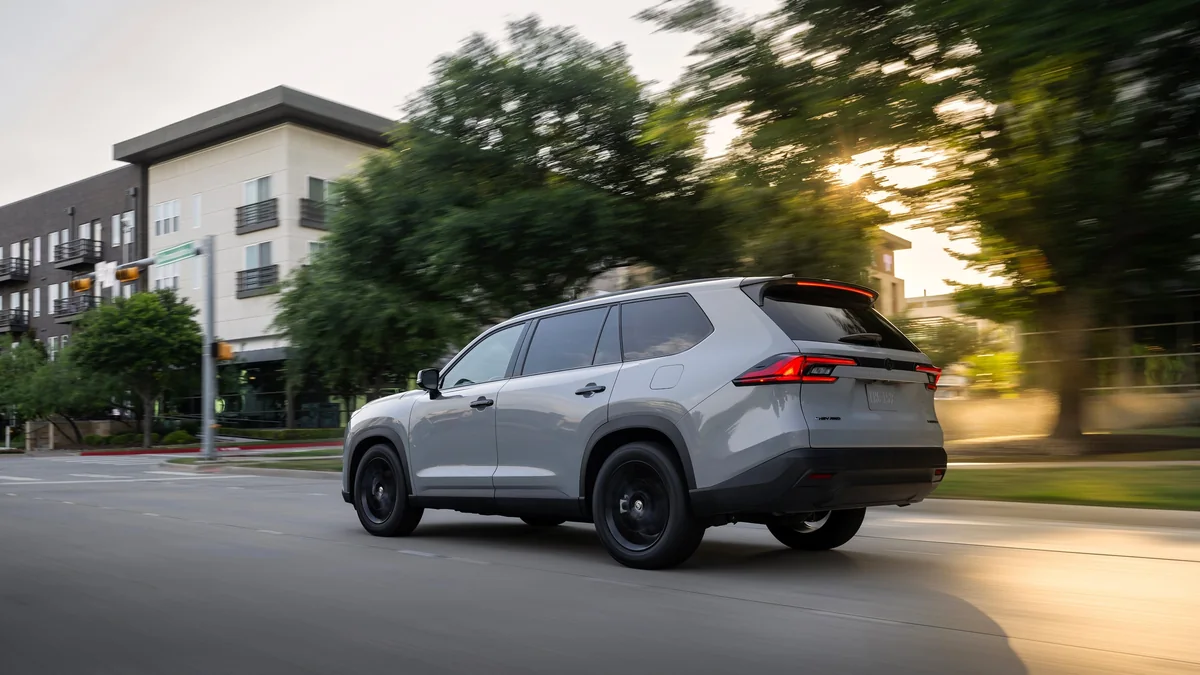
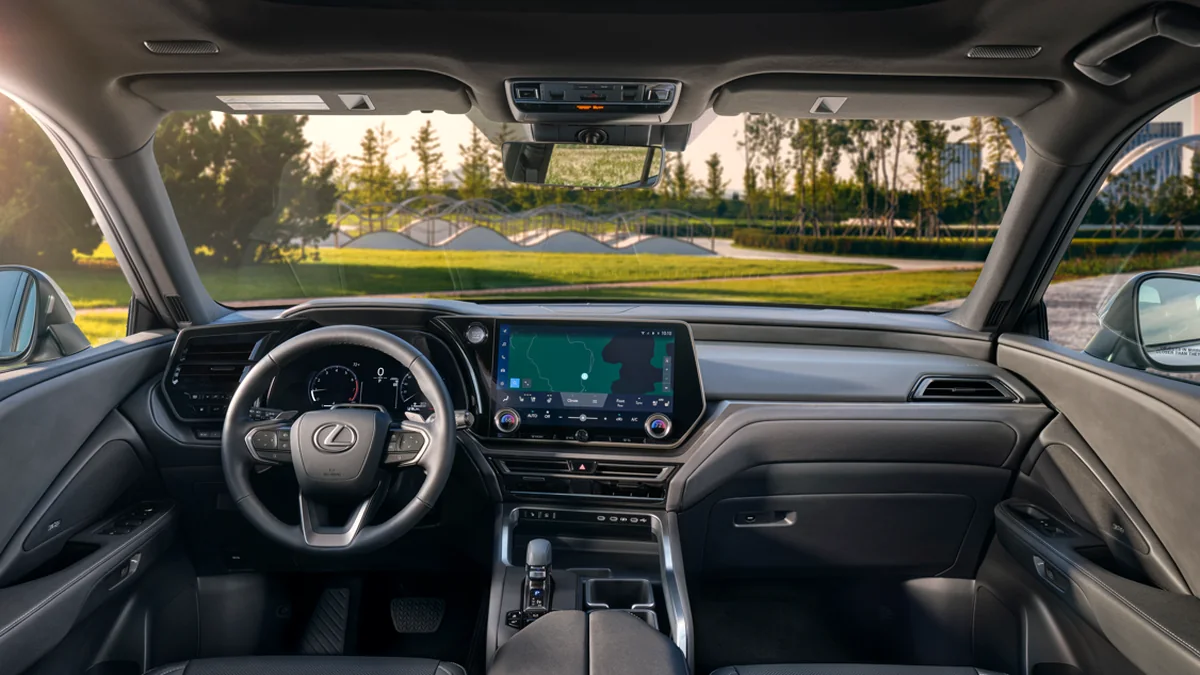
Toyota filed the recall with NHTSA on July 8, 2026. The official report lists 2026 Toyota Grand Highlander, Grand Highlander Hybrid, Lexus TX, TX Hybrid, and TX Plug-In Hybrid vehicles. The total U.S. population is 5,408, and Toyota estimated that about five percent of that population may actually contain the affected part.
The report breaks the population down further: 2,449 Grand Highlander Hybrids, 1,510 gasoline Grand Highlanders, 1,191 gasoline Lexus TX models, 212 TX Hybrids, and 46 TX Plug-In Hybrids. Production dates generally fall between April 10 and April 27, 2026, with the plug-in Lexus batch ending earlier. Those dates are useful context, but they are not a substitute for a VIN check.
Toyota’s investigation found that some rear axle carriers had missed an ageing-furnace process at a supplier. Testing indicated lower tensile and proof strength than the design specification. The likely break point is where the carrier attaches to the toe control arm. If that connection fails, rear-wheel toe can no longer be controlled as designed, so the vehicle may become less stable.
What I Would Do Before Driving or Buying
First, run the VIN through the official manufacturer or NHTSA recall lookup. If the result is open, call an authorized Toyota or Lexus dealer and ask whether the inspection procedure and replacement parts are available. Record the date, adviser’s name, and appointment details. If the vehicle is already at a dealer, ask for the repair-order number rather than relying on a verbal “it should be fine.”
Second, avoid trying to diagnose this at home. A normal-looking suspension does not prove that the carrier went through the correct manufacturing process. The remedy depends on carrier identification codes, and an affected sub-assembly must be replaced. This is different from checking a loose trim panel or worn tire.
Third, pay attention to any new rear-end instability, unusual alignment behavior, clunk, or change in handling and stop driving if the vehicle feels unsafe. The official filing does not provide a dependable warning symptom, so I would not wait for noise before arranging the recall inspection.
For a used-car purchase, make the VIN report and completed repair order part of the deal file. My broader advice on documenting problems with a newly purchased used car applies especially well here: screenshots, written promises, and invoices matter more than a salesperson’s memory.
Does This Recall Mean the SUVs Are Unsafe to Buy?
No blanket conclusion is justified. The population is specific, Toyota says only a fraction is estimated to contain the weak part, and the remedy is a physical inspection followed by replacement where required. A properly cleared vehicle can still be a reasonable family SUV. The useful question is not “Are all Grand Highlanders bad?” It is “Has this VIN been checked and, if necessary, repaired?”
I would treat an unresolved recall differently from a repaired one. An open campaign is leverage to delay delivery or require completion before purchase. A documented repair by an authorized dealer removes the known campaign issue, though it does not replace a normal pre-purchase inspection.
Owners comparing Toyota safety campaigns can also read my Toyota bZ recall owner checklist. The components are unrelated, but the disciplined process is the same: confirm the exact campaign, use the VIN, understand the remedy, and retain proof.
The Southeast Asia and Import-Car Catch
This filing concerns North American vehicles. It does not prove that every Grand Highlander or Lexus TX in another market is included, and it does not guarantee that a parallel campaign uses the same number or timetable. These models can reach Southeast Asia through private or grey-market import channels, where service responsibility may be less obvious.
If I were inspecting an imported example in Vietnam, Thailand, Cambodia, or Singapore, I would identify the original market, obtain the full VIN, and contact the brand representative that can see the source-market campaign. I would also ask who pays for parts and labor before buying. A U.S. free-repair promise may not automatically transfer to an independently imported vehicle.
Family buyers considering a future three-row alternative may find the timing discussion in my Toyota Highlander EV wait-or-buy article useful, but it addresses a different vehicle and purchase decision. Do not confuse that model with the recalled Grand Highlander.
What I Would Check Before Buying
- Match the VIN on the dashboard, registration, invoice, and recall lookup.
- Ask whether campaign 26V437 is open, inspected, or completed.
- Require a dated dealer repair order showing the carrier-code result and any replacement.
- Inspect tire wear and obtain an alignment check if the vehicle has covered meaningful mileage.
- Confirm the original market and warranty path for any privately imported vehicle.
- Do not accept “not all of them are affected” as proof that this specific VIN is clear.
FAQ
Which vehicles are included in Toyota recall 26V437?
Certain 2026 Toyota Grand Highlander, Grand Highlander Hybrid, Lexus TX, TX Hybrid, and TX Plug-In Hybrid vehicles are included. The VIN lookup is the reliable way to determine whether a specific vehicle is in the campaign.
What can happen if the rear axle carrier breaks?
The carrier can break near the toe-control-arm attachment. That can reduce control of the rear-wheel toe angle and vehicle stability, increasing crash risk in some driving conditions.
Is there a free repair?
Yes. Dealers will inspect carrier identification codes and replace affected rear axle carrier sub-assemblies at no charge under the North American recall.
Should I stop driving immediately?
The filing is not labeled as a blanket do-not-drive order. I would check the VIN promptly, follow Toyota or Lexus instructions, and stop if the vehicle shows unusual rear instability, noise, or handling changes.
Does the U.S. recall automatically cover an imported SUV in Vietnam?
Not necessarily. Confirm the original market, VIN eligibility, local service responsibility, parts supply, and who will pay before assuming the U.S. remedy transfers.
Dr. Worry’s Final Recommendation
I would still consider a 2026 Grand Highlander or Lexus TX, but only after the VIN and recall status are clear. For a vehicle in the affected population, I would prefer dealer inspection and any required replacement before delivery, not after a family road trip.
The right response is calm and documented: check the VIN, book the authorized inspection, keep the repair order, and do not let a narrow production batch become a vague judgment about every vehicle wearing the badge.