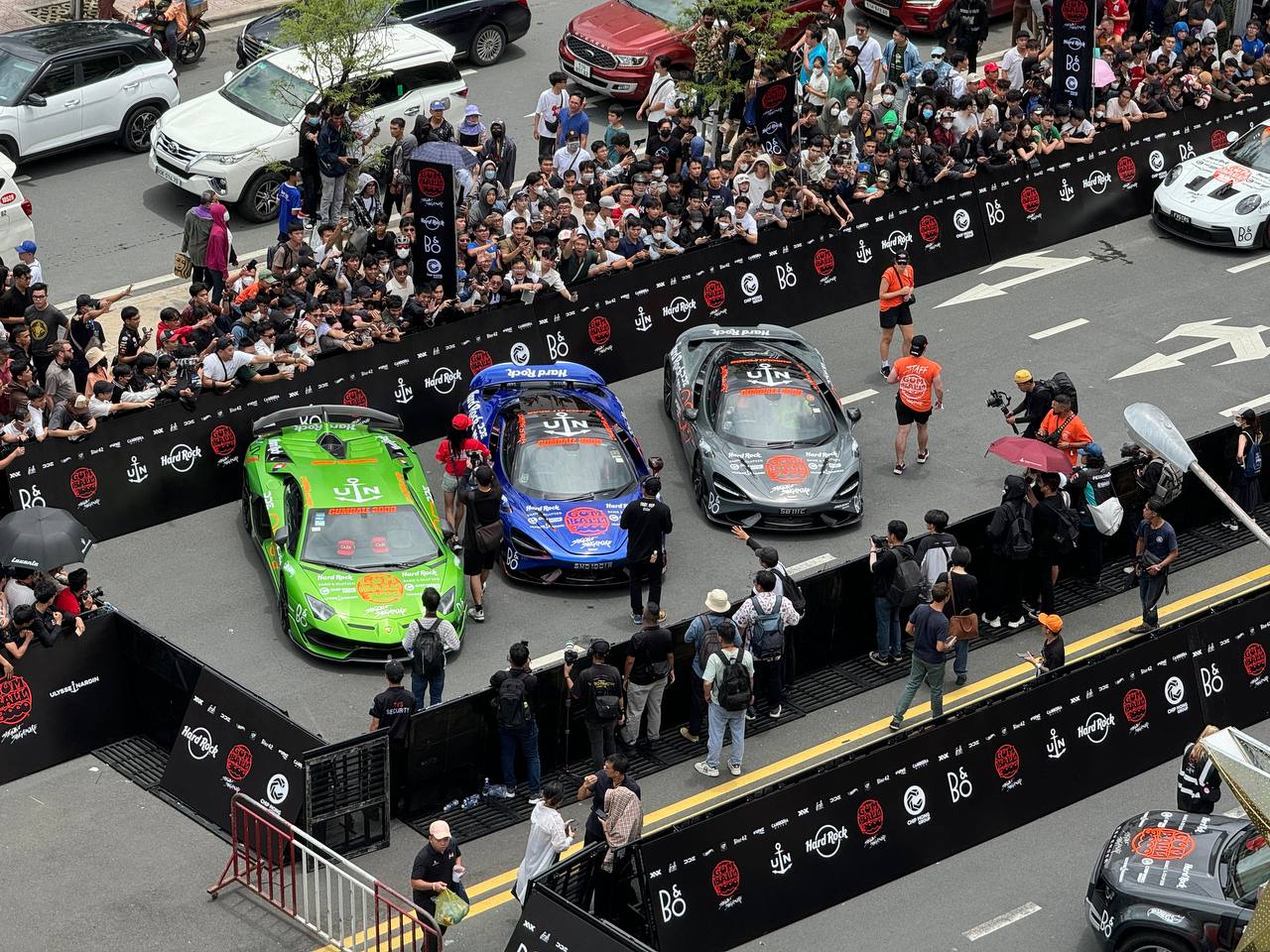
Dr. Worry’s verdict: Gumball 3000 coming to Vietnam in 2024 mattered less because of the hypercars and more because it showed how Southeast Asia can now host global car culture at a serious scale. The cars were the easy headline. The real story was logistics: heat, traffic, border crossings, road quality, crowd control, and whether a Saigon-to-Singapore route could feel credible rather than chaotic.
My view is simple. For Vietnam’s car scene, Gumball 3000 was a useful spotlight. But if you are a buyer or enthusiast here, do not read it as proof that supercar ownership in Vietnam is suddenly easy. A rally is a controlled spectacle. Living with a low, wide, expensive car through monsoon rain, basement ramps, customs paperwork, and local servicing is a very different game.
Quick Takeaways
- Event: Gumball 3000’s 25th anniversary Southeast Asia rally.
- Route: Saigon/Ho Chi Minh City to Singapore, via Cambodia, Thailand, and Malaysia.
- Why it matters: it put Vietnam on a global enthusiast map, not just a local meet-up scene.
- The catch: rally excitement does not remove the real ownership problems of exotic cars in Vietnam.
What Happened In 2024?
The 2024 rally started in Saigon and ran toward Singapore for Formula 1 weekend. Thailand’s official business events agency described the route as Saigon, Phnom Penh, Siem Reap, Angkor Wat, Bangkok, Krabi, Kuala Lumpur, and Singapore, with more than 100 cars and participants from over 40 countries. PR Newswire’s event release also framed it as a 3,000 km anniversary route through Vietnam, Cambodia, Thailand, Malaysia, and Singapore.
That route is important. It was not a simple city parade. It crossed the exact kind of regional realities I worry about when people romanticize driving in Southeast Asia: border timing, tropical weather, surface changes, police coordination, fuel stops, and the occasional road that looks friendly on Google Maps but feels very different in a low supercar.
Why Vietnam Was The Right Starting Point
Starting in Ho Chi Minh City made sense. Saigon has the crowd energy, the luxury-car curiosity, and the social-media density to make a global rally feel loud from minute one. It also has the traffic to humble anything, even a Bugatti.
That is the part outsiders miss. Vietnam is not short on car enthusiasm. It is short on easy conditions for expensive performance cars. Heat soak is real. Sudden rain is real. Low front splitters meet steep driveways every day. Even normal sports sedans can feel oversized in older streets and apartment ramps. A convoy of exotics through Saigon is entertaining precisely because the environment is not built around them.
The Cars Were Spectacular, But The Logistics Were The Test
Ferraris, Lamborghinis, McLarens, Porsches, and the occasional hypercar will always draw cameras. I get it. I would stop and look too. But the professional achievement was not merely gathering expensive machines. It was moving them across multiple countries with enough coordination that the event felt like a festival rather than a traffic problem.
That is where Gumball 3000 differs from a local supercar meet. Local meets can be fun, but they usually live within one city and one legal system. A route from Vietnam to Singapore has to deal with regional paperwork, insurance, route timing, support vehicles, hotels, police escorts, sponsor obligations, and public safety. For Southeast Asia, that is the meaningful proof point.
What It Means For Vietnam’s Car Culture
Vietnam’s enthusiast scene has grown quickly, but it often gets judged from the outside by stereotypes: scooters, traffic, and imported-car taxes. Gumball 3000 helped show the other side: a younger, louder, more connected audience that follows global car culture in real time.
Still, I would keep expectations grounded. This event does not make Vietnam a supercar-friendly ownership market overnight. Import duties remain painful. Specialist service is limited compared with Singapore or Thailand. Parts can take time. Roads can punish expensive wheels. And resale on rare cars is not as liquid as the Instagram crowd wants to believe.
My Ownership Reality Check
If the rally made you dream about buying an exotic in Vietnam, here is the boring advice that saves money:
- Check ground clearance first. Your apartment ramp may matter more than horsepower.
- Know your service path. A cheap purchase becomes expensive if diagnostics and parts are a gamble.
- Budget for tyres and heat. Tropical use is hard on rubber, batteries, fluids, and interiors.
- Think about border use realistically. Driving across SEA sounds romantic; paperwork and support matter.
- Do not buy for attention alone. Attention is free for spectators and expensive for owners.
FAQ
Was Gumball 3000 2024 really held in Vietnam?
Yes. The 25th anniversary Southeast Asia route started in Saigon/Ho Chi Minh City before moving through Cambodia, Thailand, Malaysia, and finishing in Singapore.
Why was the Saigon start important?
It gave Vietnam a first-position role in a global car-culture event, instead of treating the country as a side stop. That matters for visibility and local enthusiast confidence.
Does this mean Vietnam is good for supercar ownership?
Not automatically. Vietnam has passionate enthusiasts, but duties, roads, flooding risk, limited specialist service, and parking realities still make exotic ownership difficult.
What should normal buyers learn from the rally?
Buy cars for the roads and services you actually have. The rally is fun to watch, but daily ownership in Southeast Asia rewards ground clearance, cooling, service access, and resale strength.
Dr. Worry’s Final Recommendation
I liked what Gumball 3000 did for Vietnam’s image. It showed that Southeast Asia can host more than a pretty car display; it can support a serious cross-border motoring event with global attention.
But my advice stays practical. Enjoy the spectacle. Take the photos. Let the kids hear the V12s. Then, when it is time to buy your own car in Vietnam, come back to the boring questions: Can it survive your roads, your weather, your service network, and your resale market? That is where ownership becomes real.
For more grounded buying advice, read my guide to family cars under 800 million VND in Vietnam or the practical checklist on what to do if a used car has problems after purchase.