

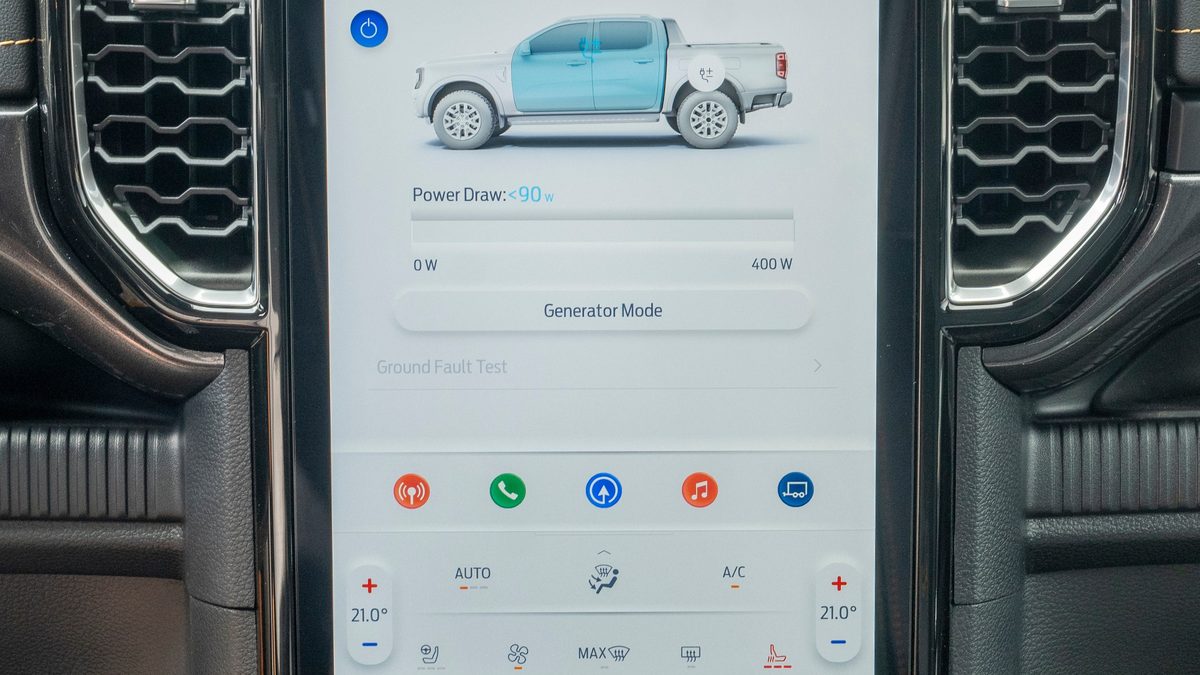
My advice: treat the Ford Ranger PHEV with Pro Power Onboard as a work tool first and a green badge second. If you actually use generators, tools, lights, pumps, camping gear, or mobile equipment, this plug-in hybrid pickup may solve a real problem. If you only want the PHEV badge, the added complexity needs a harder look.
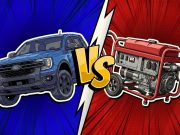
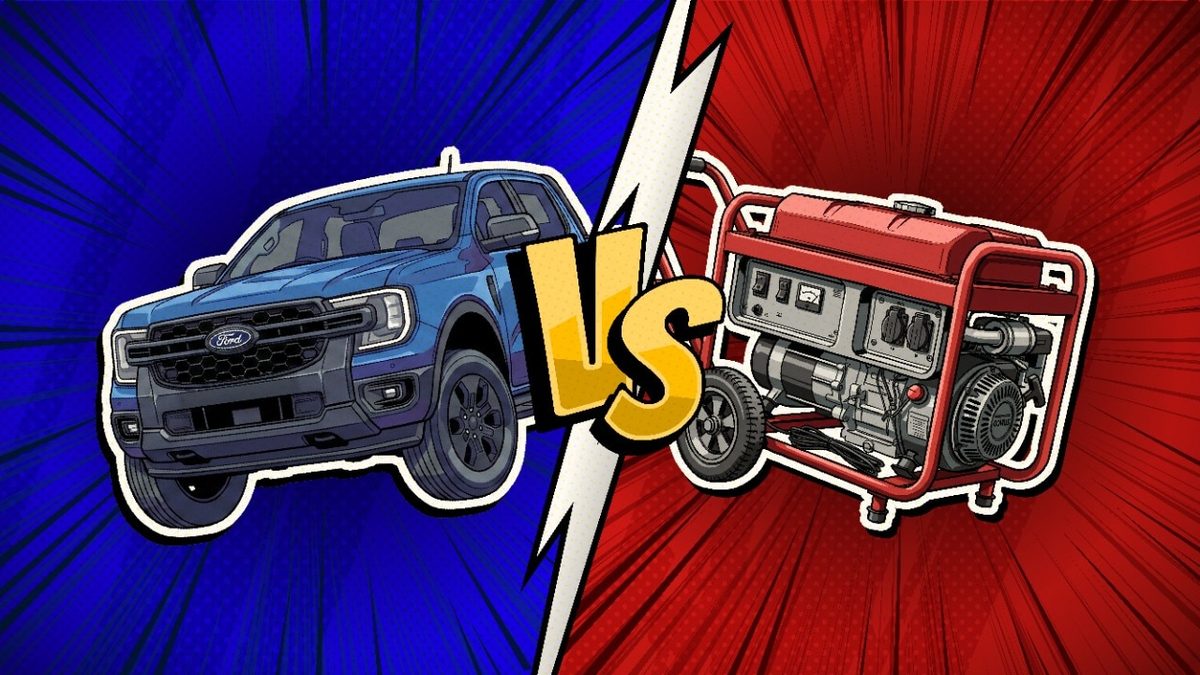
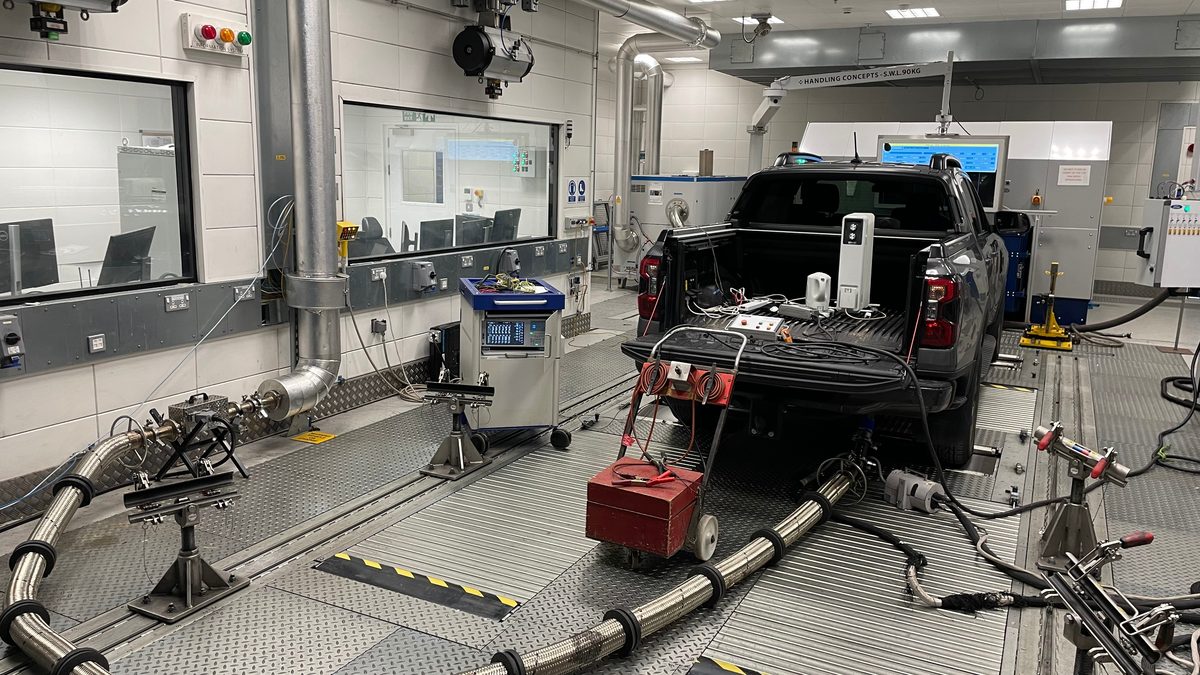
Ford’s European “From the Road” story compares a Ranger Plug-In Hybrid fitted with 6.9 kW Pro Power Onboard against a typical 4 kW portable petrol generator. Ford says its testing at the Dunton engineering center showed big reductions in nitrogen oxides, carbon monoxide, and hydrocarbons, and that Pro Power Onboard can use less fuel than a generator during the tested power-draw scenarios. That is a useful claim, but I would read it as a buyer prompt, not a magic trick.
For Southeast Asia, this is the kind of electrification that makes sense before perfect charging infrastructure arrives. Pickups already work hard here. A truck that can move people, haul gear, run tools, and reduce generator dependence is more relevant than another EV concept with no local service plan.
Quick takeaways
- Ford says Ranger PHEV Pro Power Onboard can deliver up to 6.9 kW in the tested setup.
- The comparison used a typical 4 kW portable petrol generator and common jobsite loads.
- Ford says the Ranger PHEV emitted far less NOx, carbon monoxide, and hydrocarbons in its test.
- The buyer value is strongest for contractors, outdoor users, event teams, and remote-property owners.
- My concern is not the idea. It is battery use, heat, warranty limits, and whether the local dealer understands the system.
Why built-in power matters
Anyone who has worked around a small generator knows the problem. It takes space, smells, makes noise, needs fuel, and can walk away if nobody watches it. Ford’s point is simple: if the truck already has a high-voltage battery and a controlled petrol engine, why drag a separate raw petrol generator to the site?
That is a practical argument. I like it more than most PHEV marketing because it is tied to a real task. In Vietnam, Thailand, Cambodia, and rural parts of the region, people use pickups for construction, farms, events, mobile food setups, and long camping trips. Exportable power can matter more than a 0-60 number.
What Ford’s test actually says
Ford says it ran a common 4 kW portable generator at loads including roughly 300 W for a tool battery, 1,500 W for a portable heater, 2,500 W for boiling a kettle, and 4,000 W for a high-load use case. Then it ran Ranger PHEV through the same power demands. According to Ford, the generator produced around 15 times more nitrogen oxide at low power and over 9,000 times more at very high output. Ford also says the generator averaged over 450 times more carbon monoxide, with a peak difference of over 1,200 times at very high output.
Those are Ford’s test figures, so I would not turn them into a universal promise for every generator, every climate, or every workload. But the direction is believable: a modern vehicle engine with emissions controls and battery buffering should be cleaner than a simple portable generator running hard. The more important buyer point is safety. Carbon monoxide is not something to treat casually, especially around enclosed stalls, tents, workshops, or homes.
The fuel-cost argument
Ford says Pro Power Onboard can use half as much fuel as the generator once the Ranger PHEV is warm, and that fuel cost can drop to one-third of the generator when the engine only switches on to maintain battery level. Again, I would call this a controlled-test result, not a guaranteed invoice. Still, it points to why the system could matter for business users.
Fuel is not the only cost. A separate generator means maintenance, storage, theft risk, fuel cans, exhaust positioning, and noise complaints. If the truck can replace that for many jobs, the saving may come from fewer things to manage, not just fewer liters burned.
What I would check before buying
- The exact Pro Power Onboard output available in your market, because specs vary by region.
- Warranty rules for stationary power use, long idling, and commercial operation.
- How the system behaves in tropical heat while powering sustained loads.
- Whether your tools need clean power, surge capacity, or grounding arrangements the truck supports.
- Dealer training for PHEV diagnostics, high-voltage battery service, and software updates.
- Charging access at home or depot so the truck starts work with useful battery charge.
I would also ask for a demonstration with real equipment. Bring the saw, charger, compressor, coffee machine, lights, or pump you actually use. A spec sheet does not tell you whether your workflow is smooth. A 15-minute demo with your own tools does.
SEA buyer angle: where it fits
The Ranger already has strong recognition across Southeast Asia. That helps because a PHEV pickup is easier to trust when the base truck has a service network and a familiar cabin. But the PHEV version still needs local support. A buyer in Bangkok or Ho Chi Minh City should not assume a dealer that services diesel Rangers is automatically ready for high-voltage diagnostics.
For city users, the electric-driving side may help with short trips and low-speed work. For rural users, the generator replacement story may be more valuable. For family buyers who never use exportable power, the system is harder to justify unless the PHEV price is close to the diesel alternative.
Internal comparisons worth reading
If you are comparing electrified utility against simpler hybrids, read my 2026 Jeep Cherokee Hybrid no-plug check and 2027 Kia Niro Hybrid value check. For bigger utility thinking, the Ram 1500 BackCountry off-road value check is a useful contrast.
FAQ
Can Ranger PHEV replace every generator?
No. It may replace many portable jobsite generators, but buyers must check output, surge load, runtime, grounding, and warranty conditions.
Is Pro Power Onboard useful for camping?
Yes, if your campsite rules and load needs match the system. I would still avoid running any combustion engine close to sleeping areas.
Is this better than a diesel Ranger?
For heavy towing and remote diesel familiarity, maybe not. For mixed city use and mobile power, the PHEV has a stronger argument.
Final recommendation
The Ford Ranger PHEV is most convincing when it replaces equipment you already own. My recommendation is to shortlist it if your work or travel genuinely uses portable power and you have a dealer prepared for PHEV support. If you only want a pickup that looks modern, a simpler Ranger may be the calmer long-term buy.