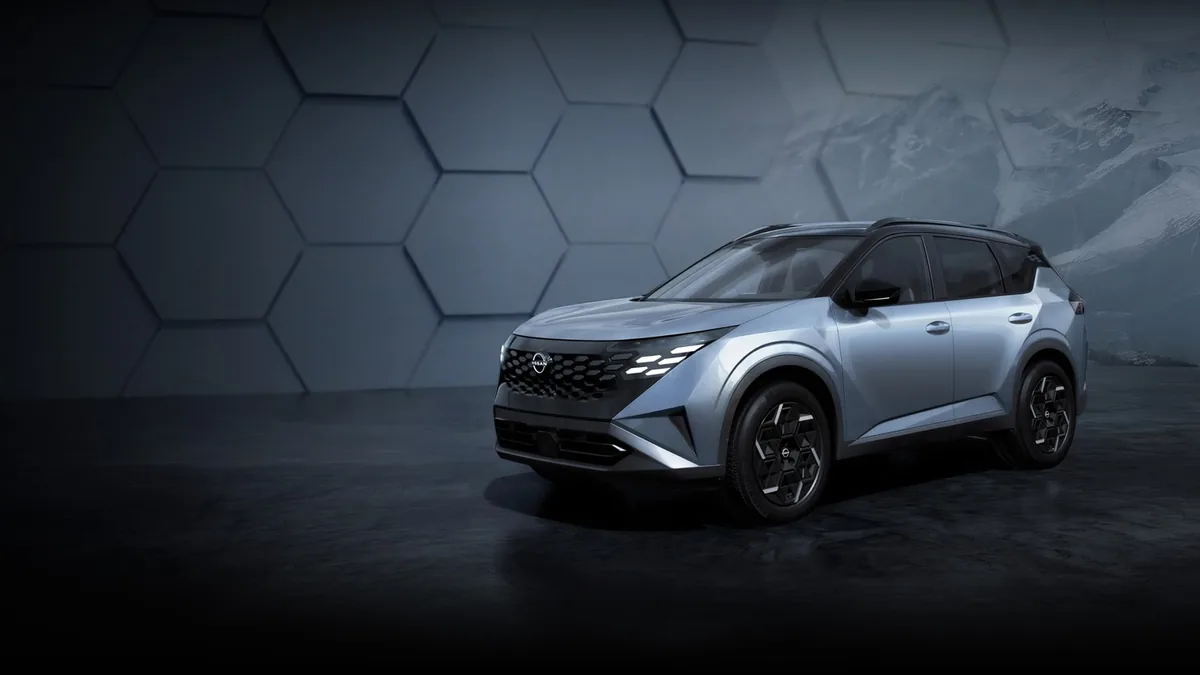
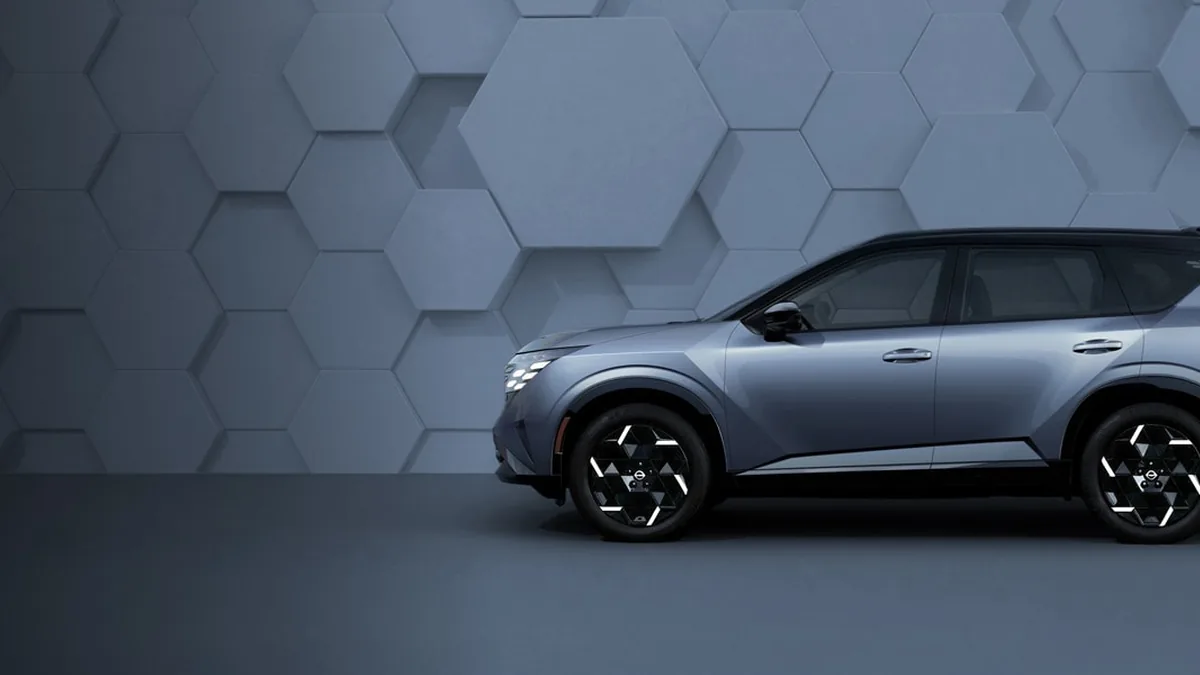
Dr. Worry’s verdict: the 2027 Nissan Rogue Hybrid e-POWER is interesting because it gives ordinary SUV buyers a taste of electric driving without asking them to install a charger. It is not a plug-in hybrid, not a full EV, and not a normal Toyota-style hybrid. It is a series hybrid: gasoline makes electricity, and electric motors drive the wheels.
That sounds technical, but the buyer question is simple. Do you want smoother EV-like response and better fuel economy without changing your refueling routine? If yes, the Rogue e-POWER deserves attention. If you want cheap home electricity, long electric-only range, or true zero-emissions commuting, this is not that kind of vehicle.
Quick Takeaways
- Core idea: the gas engine works as a generator, while electric motors drive the Rogue.
- No plug: you refuel with gasoline and do not need a home charger.
- Expected output: Car and Driver reports an all-wheel-drive e-POWER setup around 200 horsepower.
- Driving feel: early prototype impressions point to smooth, quiet response and useful one-pedal-style regenerative braking.
- Main unknowns: final pricing, EPA fuel economy, trim equipment, cargo specs, and long-term U.S. ownership data are still pending.
What Makes e-POWER Different?
Most hybrids sold by Toyota, Honda, Hyundai, and Kia blend gasoline and electric power in different ways. Sometimes the engine drives the wheels, sometimes the electric motor helps, and sometimes the vehicle can creep briefly on electricity alone.
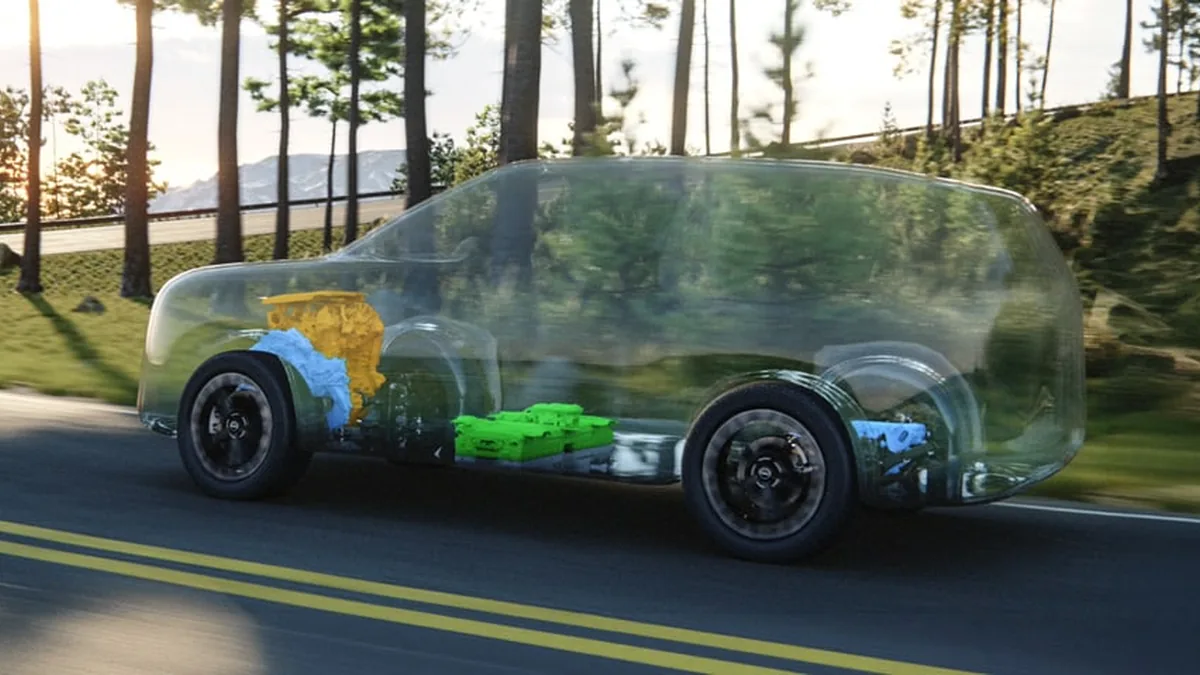
Nissan’s e-POWER approach is different. In the Rogue Hybrid, the gasoline engine is not mechanically driving the wheels. It generates electricity for the battery and electric motors. InsideEVs explains the key difference clearly: the system behaves like an EV in the way the wheels are driven, but the energy source is still gasoline, with no plug to charge a large battery.
That gives Nissan a clear pitch. You get electric-motor response without the charging behavior of a full EV. For drivers who live in apartments, park on the street, or do not trust public charging yet, that is a practical message.
The Big Benefit: EV Feel Without Charging Logistics
The best reason to care about the Rogue e-POWER is not that it sounds futuristic. It is that electric motors are good at daily driving. They respond quickly at low speed, feel smooth in traffic, and can make the SUV feel calmer than a conventional gas vehicle.
Car and Driver’s early coverage says the AWD Rogue Hybrid prototype felt quiet, refined, and responsive, with a one-pedal driving mode strong enough to bring the car to a complete stop. That matters for city driving because smooth low-speed behavior is what owners feel every day.
If you are still learning the difference between hybrids, EVs, and plug-ins, my WorryCars guide to hybrid engine efficiency is a useful companion. The short version: do not shop by badge alone. Shop by how the system behaves in your use case.
The No-Plug Advantage Is Real
A no-plug hybrid is easy to explain to normal buyers. You drive it like a gasoline SUV. You fill it at a gas station. You do not install a wallbox. You do not plan around chargers. You do not worry about your apartment garage, landlord, or old electrical panel.
That is a major advantage for people who want efficiency but are not ready for EV ownership. It is also useful for buyers who do long trips through areas where charging infrastructure is inconsistent.
But the tradeoff is equally real. Because you cannot plug in, you cannot use cheap home electricity for daily miles. A plug-in hybrid or full EV can be much cheaper to run if your home electricity rate is low and you charge consistently. The Rogue e-POWER is convenient, not necessarily the lowest possible energy-cost solution.
How It Compares With RAV4 Hybrid and CR-V Hybrid
Nissan is entering a tough field. The Toyota RAV4 Hybrid and Honda CR-V Hybrid are already familiar choices for buyers who want practical, efficient compact SUVs. Hyundai Tucson Hybrid and Kia Sportage Hybrid add more options. So the Rogue e-POWER has to win with personality and smoothness, not just the word “hybrid.”
The Rogue’s series-hybrid character could feel more EV-like than those rivals in some driving conditions. The engine-generator behavior may also let Nissan tune the cabin for quieter, smoother acceleration. But until final EPA numbers and full road tests arrive, I would avoid assuming it beats Toyota or Honda on real-world efficiency.
InsideEVs reports Nissan is targeting fuel economy north of 40 mpg, but that is not the same as an official EPA result. Treat it as promising, not final.
Standard AWD Could Be the Practical Hook
Car and Driver says the 2027 Rogue Hybrid uses an all-wheel-drive e-POWER setup with two electric motors. That matters because compact SUV buyers often want AWD for rain, snow, gravel, and general confidence. Electric AWD can also react quickly because motor torque is easier to control than a purely mechanical system.
Still, AWD does not replace good tires. If you buy the Rogue for winter, budget for the correct tires and test the drive modes. A clever powertrain cannot cheat physics.
What I Would Test Before Buying
- Engine noise: listen when the battery is low and the engine is generating power. Some series hybrids can sound disconnected from road speed.
- Highway behavior: test passing, hill climbs, and cabin noise at steady speed.
- One-pedal mode: decide whether e-Pedal-style driving feels natural or annoying in traffic.
- Fuel economy: wait for EPA ratings and early owner reports before paying a premium.
- Cargo and rear seat: the Rogue still has to work as a family compact SUV, not just a powertrain demo.
- Price gap: compare it against RAV4 Hybrid, CR-V Hybrid, Tucson Hybrid, Sportage Hybrid, and Forester Hybrid.
Who Should Wait?
Wait if you need a car immediately, because Nissan has described late-2026 availability. Wait if you want proven U.S. resale values and long-term ownership data. Wait if final pricing pushes too close to larger or more premium SUVs.
Also wait if your main goal is EV-style low operating cost through home charging. In that case, a plug-in hybrid or EV may fit better. The Rogue e-POWER is for people who want electrified smoothness without plug-in commitment.
FAQ
Is the 2027 Nissan Rogue Hybrid e-POWER a plug-in hybrid?
No. It has no plug. The gas engine generates electricity, and the electric motors drive the wheels.
Does the gas engine drive the wheels?
In the e-POWER setup described for the Rogue, the gas engine works as a generator rather than directly driving the wheels.
When will it arrive?
Nissan has described late-2026 availability for the 2027 Rogue Hybrid e-POWER.
Is it better than a Toyota RAV4 Hybrid?
Too early to say. The Nissan may feel more EV-like, but final fuel economy, pricing, reliability, and resale data still matter.
Dr. Worry’s Final Recommendation
The 2027 Rogue Hybrid e-POWER could be one of the more interesting compact SUVs for buyers who want electrification without changing their daily routine. The series-hybrid setup gives Nissan a different story from Toyota and Honda, and that matters in a crowded segment.
I would shortlist it if you want smooth city driving, no home charger, standard AWD, and a familiar compact SUV shape. I would not put money down until final pricing, EPA numbers, and full U.S. road tests are available. The idea is strong. The final value still has to be proven.