Dr. Worry’s verdict: Do not let the digital odometer or a single screenshot of ‘100%’ battery health dictate your buying decision for a used high-mileage EV. A 2022 Tesla Model Y that has traveled roughly 87,000 miles (about 140,000 km) reveals a critical reality often missed by buyers: range anxiety is not the only symptom of aging; charging performance degrades simultaneously.
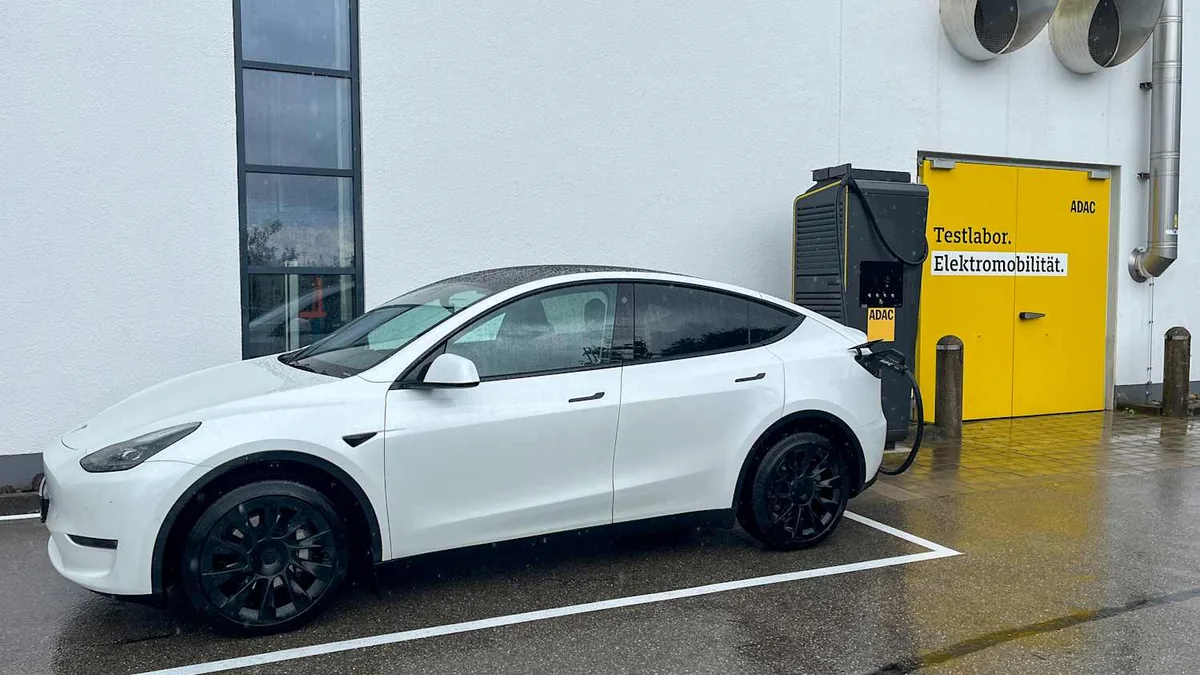
My advice remains strict: do not judge a high-mileage Tesla Model Y by the range number on the dashboard alone. Ask how much usable battery capacity remains and, more importantly, how the car holds charging power across a 20-to-80-percent session. ADAC’s long-term 2022 Model Y reached roughly 140,000 km with about 14 percent capacity loss. The German organization also measured a significant drop in energy added during fast-charging comparisons.
That does not prove every Model Y will follow the same curve. It is one heavily used test vehicle, and battery aging depends on temperature, charging habits, storage state of charge, driving load, and software updates. However, it proves something buyers often miss: an older EV can lose road-trip convenience through both reduced range and a weaker charging curve.
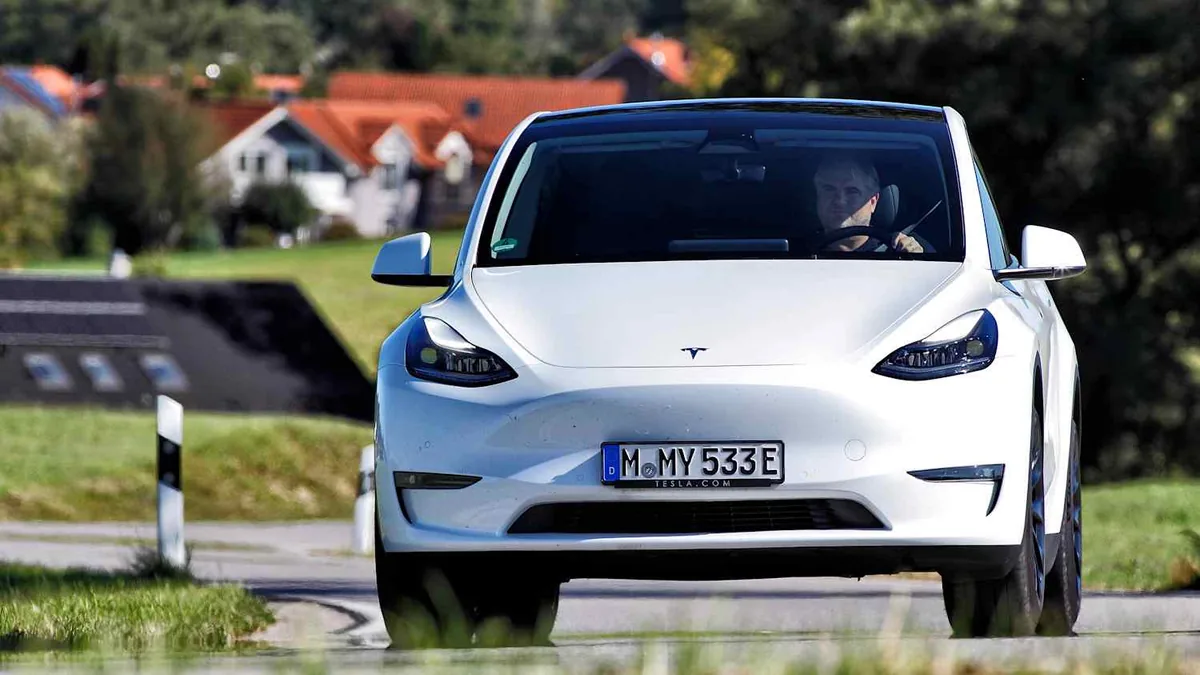
What the ADAC result means in daily life
The data from independent testers like ADAC provides a sobering look at what ‘normal’ degradation looks like under stress. Here is how it translates to your reality:
- Fourteen percent less capacity is noticeable but does not make the car unusable.
- A slower fast-charge session can add more time than the range loss suggests, impacting trip planning significantly in hot climates or during winter months.
- One vehicle is evidence, not a universal failure rate, but it sets an expectation for what to expect after 100k miles.
- A used buyer needs a repeatable test, not a seller’s screenshot from one morning.
The factual baseline for this guide comes from the primary official or regulatory source and independent automotive reporting. I use those published details as inputs; the buyer and ownership judgment is my own.
Capacity loss and charging slowdown are different problems
Battery capacity tells you how much energy the pack can hold. Charging performance tells you how quickly the pack accepts energy at different states of charge (SoC) and temperatures. A car could retain decent capacity yet charge slowly because of temperature control issues, cell limits, or software restrictions.
ADAC reports that its test car had about 78.1 kWh available when new and about 67.4 kWh at the later measurement. InsideEVs highlights the separate fast-charging result: over a typical 30-minute window, the older car took in about 13 percent less energy than it had earlier during peak performance years.
I would treat those as two lines on the same ownership spreadsheet. One measures storage; the other measures throughput. If you rely solely on home charging (Level 2), capacity loss is a slow bleed of daily range that might be manageable if your commute remains consistent. However, if you depend on public DC fast chargers for intercity travel or emergency top-ups, the slower ‘charging curve’ becomes a bottleneck.
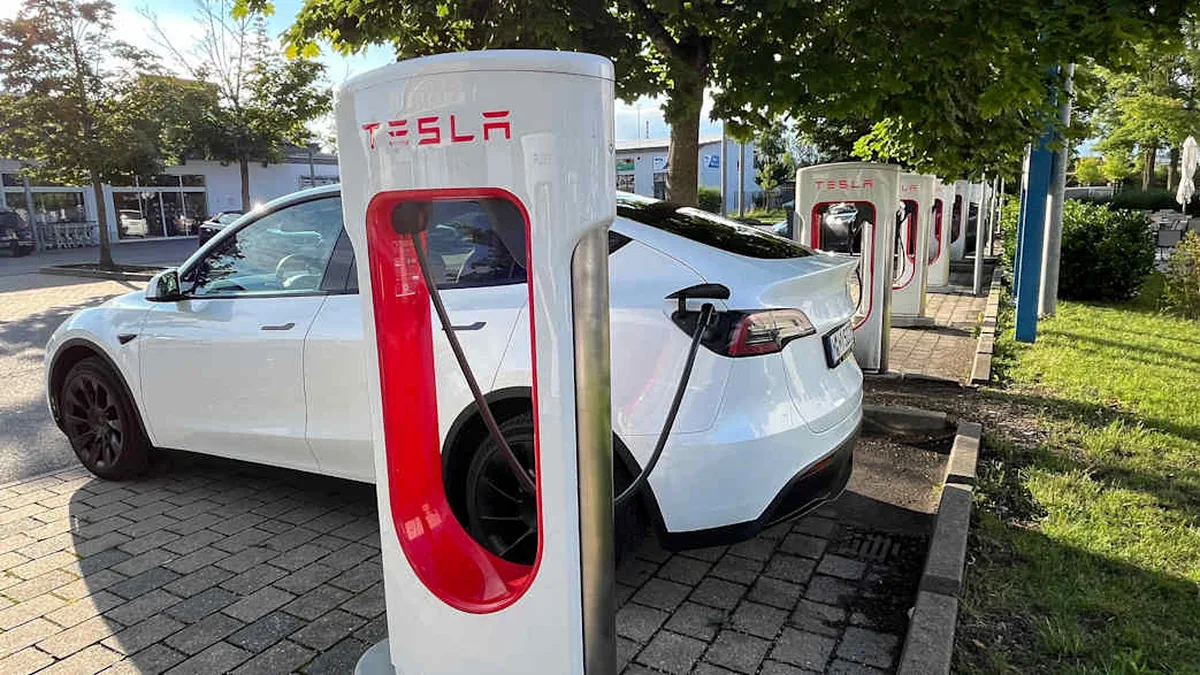
Why a dashboard estimate is not enough
The displayed range changes with recent driving patterns, weather conditions, wheel size selection, and climate control usage. It is not a laboratory measurement of pack health. A seller can also charge to 100 percent in the morning sun and show a reassuring number without proving what happens under load or at a public charger later that day.
I prefer a documented service history, energy-consumption data over several trips, and a controlled charging session. If the owner has invoices or app records spanning years, that is more useful than a single battery-health claim from Tesla’s interface. I would avoid any diagnostic service that promises an exact percentage without explaining its method.
How I would test a used Model Y
If you are inspecting a high-mileage unit, follow this protocol:
- Start with the battery at a moderate state of charge (around 50-60%).
- Drive long enough to warm it up. Cold lithium-ion cells do not accept power well. Navigate to a compatible fast charger so the car can precondition its thermal management system before plugging in.
- Record the starting percentage, ambient temperature, charging power (kW), and total energy added.
- Watch the curve as the state of charge rises, instead of celebrating one peak number. Look for where the kW drops off sharply near 80% or if it stalls early due to thermal limits.
Then drive a mixed route and compare consumption with conditions, speed, and wheel size. A car on large wheels in hot rain will not match a mild-weather test. I would also inspect tires carefully; poor alignment and worn inner shoulders can make a Model Y look inefficient while creating a separate safety bill.
Warranty questions matter before the test
Tesla battery and drive-unit warranty terms vary by variant, market region, and original in-service date. Buyers should verify the exact VIN, original in-service date, mileage limit (often 100k miles or equivalent), and capacity-retention threshold (usually 70% for standard warranties).
Do not assume an imported vehicle has the same local coverage as an officially sold one by a manufacturer. Fourteen percent loss does not automatically mean a warranty claim is valid immediately, but it brings you closer to the trigger point if retention drops further. Many warranties require the battery health to fall below 70% before activation and mandate specific diagnostic processes.
My approach is to value the car based on its measured condition today, not on the hope that a future claim will provide a new battery pack. If you are in Southeast Asia or other regions with inconsistent charging infrastructure, this caution applies even more heavily.
Southeast Asia relevance and regional context
Heat increases cooling demand significantly for EVs like the Model Y, which rely on active liquid cooling to manage cell temperatures. Charging infrastructure is also inconsistent across parts of Southeast Asia compared to Europe or North America.
A 14 percent capacity loss is easy to live with for an owner who charges at home and drives roughly 60 km a day in controlled conditions. It matters much more to someone who depends on sparse intercity fast chargers or lives in an apartment without reliable overnight charging access.
I would map the actual route you plan to take with a conservative reserve (aim for keeping above 20% buffer) and identify backup stations. In markets like Vietnam, also verify connector compatibility, payment access via local apps, and service support for the exact import model before committing funds. The battery can be healthy while ownership remains awkward because the charging ecosystem is wrong.
Direct alternatives: What else should you consider?
If a used Model Y with 87k miles feels too risky due to potential degradation, look at these factors:
- Newer Inventory: A car from the last two years will have significantly less wear.
- Different Platforms: Consider competitors like the Volkswagen ID. Cross, which offers a different thermal management strategy and warranty structure in some markets, or look at how models like the Hyundai Ioniq 5 handle aging cells.
- Hybrid Options: If range anxiety is your primary concern due to degraded battery performance, compare practical charging needs with third-row SUVs that offer hybrid powertrains. For example, families shopping used should also compare practical charging and third-row needs with the Kia Telluride Hybrid rather than assuming an EV is automatically cheaper for every route.
My high-mileage buying checklist
- Verify VIN, variant, battery warranty details, and in-service date.
- Review long-term consumption data and charging records when available from the seller’s app history.
- Run a warm-battery DC charging session. Record the full curve; do not accept peak kW numbers alone.
- Inspect underbody shields, cooling components (pumps/radiators), tires, and wheel alignment.
- Calculate winter or hot-weather range with a meaningful reserve.
- Price the car for current battery condition, not on the hope that a future warranty claim will provide a new pack.
FAQs
Is 14 percent degradation normal?
This is the measured result from this specific ADAC vehicle, which was driven aggressively over its lifetime. It is not necessarily a guaranteed fleet average for all Model Y owners who drive gently and keep their cars cool. Condition, usage patterns, and climate vary too much for one car to define ‘normal’ universally.
Does slower charging mean the battery is failing?
Not immediately. Temperature fluctuations, charger limits (especially older CCS or NACS stations), state of charge, and software updates affect power delivery. Repeated controlled tests are more informative than one session showing a slow curve.
Would I buy a Model Y with 87,000 miles?
Yes, if the price reflects measured range loss, charging performance data, warranty position (is it still active?), and physical condition. I would walk away from vague records or a seller who refuses to let you run a charging test.
Families shopping used: The Model Y L context
Our Tesla Model Y L buyer check focuses on six-seat packaging and launch pricing. This article is specifically about the aging curve of a 2022 long-term test car. Families shopping used must compare practical charging performance with third-row needs against other options, rather than assuming an EV is automatically cheaper for every route.
Dr. Worry’s Final Recommendation
The ADAC result makes me cautious, not alarmist. A Model Y with 14 percent less capacity can still be a very useful car if you adjust your expectations and charging habits accordingly, but slower charging changes the travel equation significantly.
Test both energy storage (usable kWh) and charging speed under realistic conditions. Calculate the routes you actually drive daily and negotiate from evidence rather than optimism. High-mileage EV buying rewards patience more than hope. Do not pay a premium for ‘potential’ warranty claims; value what is there today.
Remember, as noted in our broader analysis of future models like the Denza Z, charging ownership reality often dictates value more than raw horsepower or range numbers. Stay vigilant.
For those looking at budget-friendly future options, keep an eye on the 2027 Chevrolet Bolt, but understand that older EVs like this Model Y require a different vetting process than new releases. The battery can be healthy while ownership remains awkward because the charging ecosystem is wrong.
Final word: If you are buying used, demand data. Demand to see the curve. Do not buy on faith alone.